





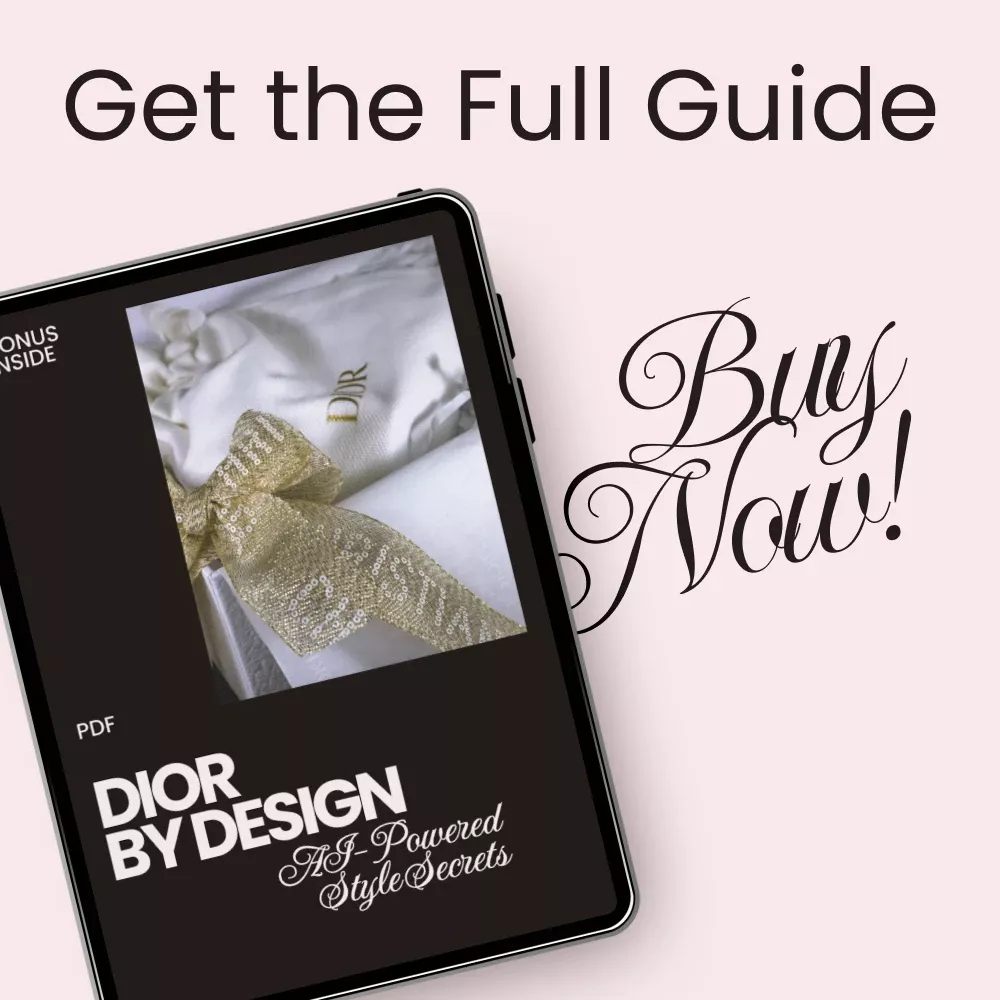

Elevate Your Wardrobe with Intelligent Luxury
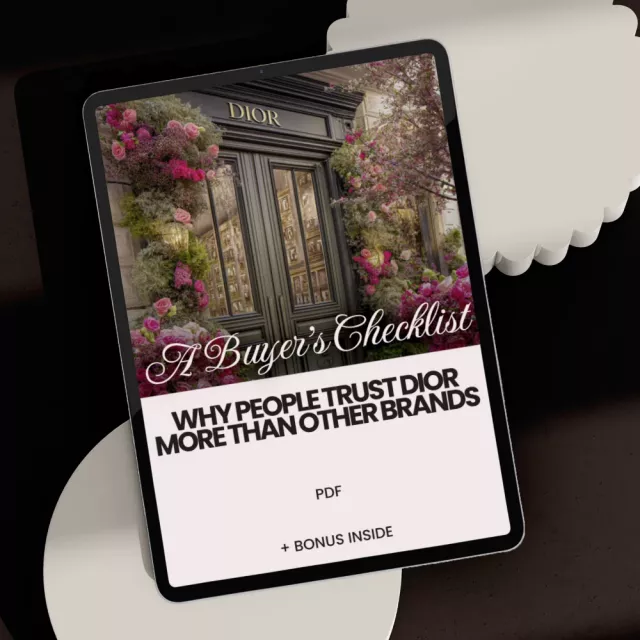
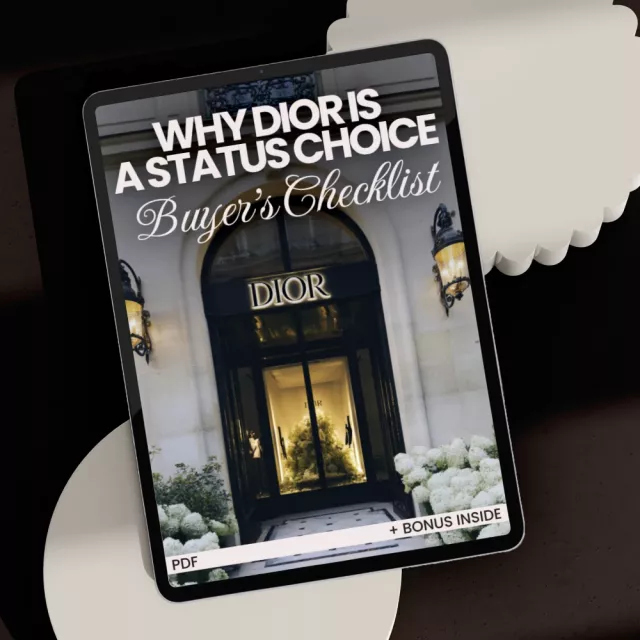
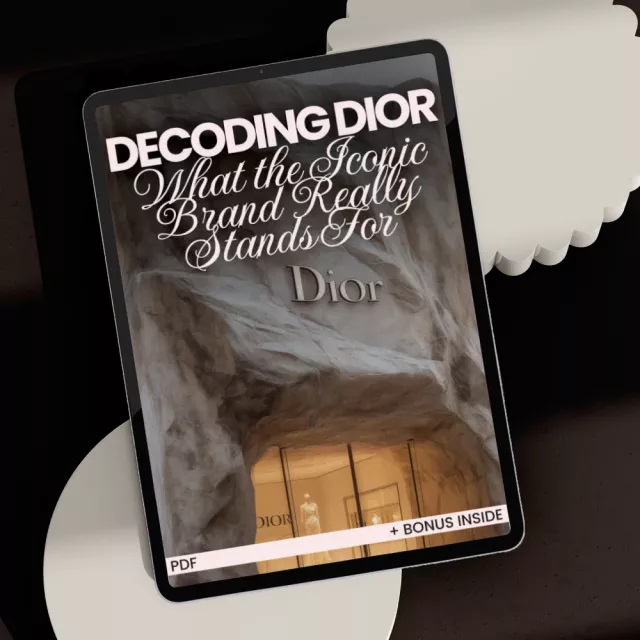
Step into the world of timeless elegance and modern innovation with Dior by Design: AI-Powered Style Secrets. This digital guide reveals how to blend the iconic sophistication of Dior with cutting-edge technology, using ai recommendations for dior style to curate outfits that feel polished, intentional, and unmistakably luxe. Whether you adore structured silhouettes, romantic fabrics, or refined color palettes, this guide shows you exactly how to recreate that signature look—without guesswork.
If you’ve ever wondered how to achieve the Dior aesthetic effortlessly, this comprehensive resource breaks it down step by step. From understanding the DNA of the brand to using AI tools to generate outfit ideas and shopping suggestions, you’ll discover a smarter, more personalized way to dress with confidence.
What’s Inside This Digital Guide
- Chapter 1: Understanding the Dior Aesthetic – Signature silhouettes, fabrics, and colors; the evolution from classic to modern; and how AI interprets luxury fashion.
- Chapter 2: AI Styling Tools for a Dior Look – How AI fashion assistants work, generating outfit ideas with AI, and a detailed case study on curating a Dior-inspired capsule wardrobe.
- Chapter 3: Common Mistakes and How AI Helps Avoid Them – Prevent over-accessorizing, fix proportion missteps, and refine your look with smart digital insights.
- Chapter 4: Next Steps – Create personalized lookbooks, use AI for shopping recommendations, and explore future trends in AI and haute couture.
- Actionable checklists and prompts you can use immediately.
- Practical examples of ai recommendations for dior style applied in real-life scenarios.
Why You’ll Love It
- Gain clarity on what truly defines Dior elegance.
- Save time with AI-generated outfit formulas tailored to your preferences.
- Avoid costly styling mistakes by using intelligent refinement tools.
- Build a cohesive, Dior-inspired capsule wardrobe with confidence.
- Learn how to integrate AI seamlessly into your everyday fashion routine.
Who Is This For?
This guide is perfect for fashion lovers, luxury enthusiasts, personal stylists, content creators, and modern professionals who want to master the Dior look using technology. If you appreciate timeless design but also love efficiency and personalization, this resource was created for you.
What Makes It Different?
Unlike generic styling eBooks, this guide doesn’t just describe luxury fashion—it shows you how to recreate it using ai recommendations for dior style. By combining classic couture principles with practical AI tools, it offers a unique bridge between heritage elegance and modern innovation. You’re not just reading about style; you’re building a smart system to achieve it.
Ready to Design Your Signature Look?
Download Dior by Design: AI-Powered Style Secrets today and start transforming your wardrobe with precision, elegance, and intelligent styling support. Your refined, Dior-inspired future begins now.
SHIPPING
We are proud to offer international shipping services that currently operate in over 200 countries and islands world wide. Nothing means more to us than bringing our customers great value and service. We will continue to grow to meet the needs of all our customers, delivering a service beyond all expectation anywhere in the world.
Do you ship worldwide?
Yes. We provide free shipping to over 200 countries around the world. However, there are some locations we are unable to ship to. If you happen to be located in one of those countries we will contact you.
What about customs?
We are not responsible for any custom fees once the items have been shipped. By purchasing our products, you consent that one or more packages may be shipped to you and may get custom fees when they arrive to your country.
How long does shipping take?
Shipping time varies by location. These are our estimates:| Location | *Estimated Shipping Time |
|---|---|
| United States | 5-20 Business days |
| Canada, Europe | 5-20 Business days |
| Australia, New Zealand | 5-20 Business days |
| Central & South America | 5-25 Business days |
| Asia | 5-20 Business days |
| Africa | 5-25 Business days |
Do you provide tracking information?
Yes, you will receive an email once your order ships that contains your tracking information. If you haven’t received tracking info within 5 days, please contact us.
My tracking says “no information available at the moment”.
For some shipping companies, it takes 2-5 business days for the tracking information to update on the system. If your order was placed more than 5 business days ago and there is still no information on your tracking number, please contact us.
Will my items be sent in one package?
For logistical reasons, items in the same purchase will sometimes be sent in separate packages, even if you've specified combined shipping.
If you have any other questions, please contact us and we will do our best to help you out.
RETURNS
Order cancellation
All orders can be cancelled until they are shipped. If your order has been paid and you need to make a change or cancel an order, you must contact us within 12 hours. Once the packaging and shipping process has started, it can no longer be cancelled.
Refunds
Your satisfaction is our #1 priority. Therefore, you can request a refund or reshipment for ordered products if:
- If you did not receive the product within the guaranteed time (45 days not including 1-3 day processing) you can request a refund or a reshipment.
- If you received the wrong item you can request a refund or a reshipment.
- If you do not want the product you’ve received you may request a refund but you must return the item at your expense and the item must be unused.
We do not issue the refund if:
- Your order did not arrive due to factors within your control (i.e. providing the wrong shipping address)
- Your order did not arrive due to exceptional circumstances outside the control of cyclonica.com (i.e. not cleared by customs, delayed by a natural disaster).
- Other exceptional circumstances outside the control of cyclonica.com.
*You can submit refund requests within 15 days after the guaranteed period for delivery (45 days) has expired. You can do it by sending a message on Contact Us page
If you are approved for a refund, then your refund will be processed, and a credit will automatically be applied to your credit card or original method of payment, within 14 days.
Exchanges
If for any reason you would like to exchange your product, perhaps for a different size in clothing, you must contact us first and we will guide you through the steps.
Please do not send your purchase back to us unless we authorise you to do so.
Order cancellation
All orders can be cancelled until they are shipped. If your order has been paid and you need to make a change or cancel an order, you must contact us within 12 hours. Once the packaging and shipping process has started, it can no longer be cancelled.
Refunds
Your satisfaction is our #1 priority. Therefore, you can request a refund or reshipment for ordered products if:
- If you did not receive the product within the guaranteed time( 45 days not including 2-5 day processing) you can request a refund or a reshipment.
- If you received the wrong item you can request a refund or a reshipment.
- If you do not want the product you’ve received you may request a refund but you must return the item at your expense and the item must be unused.
We do not issue the refund if:
- Your order did not arrive due to factors within your control (i.e. providing the wrong shipping address)
- Your order did not arrive due to exceptional circumstances outside the control of cyclonica.com (i.e. not cleared by customs, delayed by a natural disaster).
- Other exceptional circumstances outside the control of
*You can submit refund requests within 15 days after the guaranteed period for delivery (45 days) has expired. You can do it by sending a message on Contact Us page
If you are approved for a refund, then your refund will be processed, and a credit will automatically be applied to your credit card or original method of payment, within 14 days.
Exchanges
If for any reason you would like to exchange your product, perhaps for a different size in clothing. You must contact us first and we will guide you through the steps.
Please do not send your purchase back to us unless we authorise you to do so.
Customer Reviews
Write a Review
We Think You’ll Love
Top picks just for you











The capsule wardrobe case study in Chapter 2 gave me an actual step-by-step framework instead of vague inspiration — uploaded my closet photos and got a usable ten-piece plan back.
Chapter 3 on common mistakes caught me mid-crime — I was literally wearing a floral skirt with a patterned blouse when I read it.
The proportion advice alone is worth the read 👏
I've been trying to nail the Dior aesthetic for years and always ended up looking costumey. This guide finally explained why: I was ignoring waist definition and layering too many prints at once. The section on misaligning proportions was a revelation. I took the AI recommendation about adding a tailored belt to an oversized top and full skirt combo and the whole silhouette clicked. My friend asked if I'd hired a stylist. I just had a PDF and a chatbot.
Short, focused, and immediately actionable.
The ivory-and-beige clash example in Chapter 3 called out an outfit I wear weekly. Swapped in a pastel scarf like the guide suggested and the difference was instant 🤍
Solid overview of AI styling tools but Chapter 2 doesn't name any specific apps or platforms. It describes what they can do in general terms, which is helpful conceptually, but I had to do my own research to find actual tools to try.
The A-line skirt and structured jacket pairing suggestion sounds basic until you actually try it with Dior's color palette. Navy jacket, ivory silk blouse, pastel midi — I assembled this from pieces I already owned and got stopped on the street twice.
Read it in twenty minutes, reorganized my closet the same evening.
✨👗⭐
Chapter 1 breaks down the Dior DNA better than most fashion textbooks I've read. Silhouettes, fabrics, colors — each one gets a clear explanation with practical AI tips attached. The moodboard generator suggestion is particularly clever for visual learners.
The silk-blouse-with-sneakers tip in Chapter 2 sounded wild but it works.
I used the capsule wardrobe prompt almost word-for-word and the AI output was surprisingly coherent. Two structured jackets, two A-line skirts, silk blouses, tailored trousers, and accessories — exactly what the guide predicted. It felt like the guide had tested its own prompts before publishing, which is rare.
The evolution timeline from New Look to Chiuri's era is the most concise summary I've found anywhere.
Appreciate the structure but the guide oversells what current AI tools can actually do. The outfit analyzer concept described in Chapter 3 doesn't quite exist as a seamless one-click experience yet — you still need to describe your outfit in text and interpret suggestions manually. The styling principles themselves are excellent though.
The balance-and-refinement philosophy in Chapter 3 changed how I get dressed every morning.
I was pairing chunky jewelry with everything and wondering why my outfits felt off. The section on overdoing accessories explained it perfectly — Dior style leans minimalist on jewelry so the garment's line stays clean. Swapped my statement necklaces for simple studs and suddenly everything looked more intentional. Such a small shift with a huge visual impact 💫
Four chapters, zero filler.
The guide covers a lot of ground — aesthetic foundations, AI tools, common pitfalls, and future trends. It's well organized but tries to serve beginners and fashion-savvy readers simultaneously, which means some sections feel too basic if you already know the Dior look, while others assume familiarity with AI tools that newcomers might not have.
The prompt examples are copy-paste ready, which saves so much time.
I'm a visual merchandiser and used the color palette breakdown from Chapter 1 to rethink a window display. The classic neutrals with seasonal jewel tone pops framework translated directly to retail. My manager noticed the cohesion before I mentioned where the idea came from. The AI moodboard tip also helped me prototype layouts faster than sketching by hand.
The waist-definition advice sounds simple but it's the single most impactful styling tip in the entire guide 🔥
Clean writing, logical flow from understanding the aesthetic to actually using AI tools to apply it.
Chapter 4's shopping prompt for finding Dior-inspired pieces under $500 is incredibly practical. I ran it and got a curated list of silk blouses and tailored skirts that actually looked cohesive together. Before this I was just browsing aimlessly and overspending on pieces that didn't work with anything I owned.
The future trends section on sustainable fashion through AI prediction is the part I keep thinking about.
Good content but feels like it could be twice as long. Each chapter introduces a concept and gives one or two examples, then moves on. I wanted deeper case studies — the capsule wardrobe one in Chapter 2 is great but it's the only fully developed scenario in the entire guide.
Exactly the intersection of fashion and tech I've been looking for.
I've always loved Dior's aesthetic but could never articulate why certain outfits worked and others didn't. Chapter 1 gave me vocabulary — silhouette structure, fabric weight, color discipline — that I now use when shopping and styling. The AI interpretation section helped me understand that what I was responding to was pattern consistency across pieces. I described my favorite Dior looks to an AI tool using the language from this guide and got back outfit suggestions that actually matched my taste instead of generic results. It's like the guide taught me how to communicate with both AI and my own closet.
The garden party outfit prompt in Chapter 2 is the one I've reused most.
❤️👜✨⭐👌
The virtual lookbook concept in Chapter 4 is brilliant — planning outfits for the whole week without buying anything new forced me to actually use what I have. Three weeks in and I've worn pieces that had been sitting untouched for months.
The section on how AI interprets luxury fashion answered questions I didn't know how to ask.
Wish the guide included more visual examples alongside the text. The concepts are clear but a side-by-side of a proportion mistake versus a corrected version would make Chapter 3 land even harder. The writing does most of the heavy lifting, but fashion is visual and some readers will want to see the difference rather than imagine it.
The color clash catch in Chapter 3 — ivory blouse with beige skirt — is something I see everywhere and never registered as a problem until now.
The step-by-step capsule wardrobe process is the most practical thing I've read about Dior styling.
I teach a personal styling course and pulled the proportion alignment section into my curriculum. The Dior Way framework — waist definition plus flowing silhouettes — gives students a concrete reference point instead of abstract advice about body types. The AI refinement suggestions also gave them a way to self-check outfits between sessions. Several students told me that single chapter improved their eye faster than anything else in the course. I've since assigned the whole guide as supplementary reading.
Tight, well-structured, and respects the reader's intelligence 👗
The AI tips sprinkled throughout are helpful but sometimes feel detached from the styling advice. Chapter 1 explains silhouettes beautifully, then the AI tip jumps to image recognition tools without connecting the two clearly. Better integration between the fashion knowledge and the tech suggestions would strengthen the whole guide.
Started using AI for outfit planning the same day I finished reading this.
The floral skirt plus patterned blouse example in Chapter 3 is so specific it felt personal — because I own that exact combination and wear it constantly. The guide's suggestion to swap in a solid silk top was such a small change but the result looked intentionally styled instead of thrown together. I've since applied the same logic to three other outfits. The principle of one statement element at a time is now my default rule.
Each chapter builds logically on the last — aesthetic first, then tools, then mistakes, then next steps.
The sustainable fashion angle in Chapter 4 is underrated — AI predicting which pieces will last season-to-season means fewer regret purchases and less waste. That reframe alone justifies reading the guide even if you're not into the AI styling tools yet.
👗🤍🔥
Honestly expected fluff from the title but Chapter 3 delivers real, specific corrections I could apply immediately.
The guide mentions virtual try-on technology in Chapter 4 but doesn't explain how to actually access or use any of these tools. It reads more like a preview of what's possible than a practical walkthrough. The historical and aesthetic content in Chapters 1 and 3 is strong enough to carry the guide, but the AI sections feel like they're describing a future that hasn't fully arrived yet.
This replaced my Pinterest boards for outfit planning.
The tailored belt recommendation from Section 3.2 fixed an outfit I'd given up on — boxy top, A-line skirt, no waist definition. One belt, completely different silhouette 🙌
Chapter 2 on generating outfit ideas with AI prompts is where this guide separates itself from generic fashion advice. The prompts are specific enough to get coherent results but flexible enough to customize for different body types and occasions.
Quick read, practical output, no padding between chapters.
I've read three other AI-meets-fashion guides this year and this is the only one that teaches the underlying aesthetic before jumping to tools. Understanding why Dior uses certain silhouettes and color combinations made the AI suggestions feel grounded rather than random. The progression from Chapter 1 foundations through Chapter 3 corrections to Chapter 4 integration is really well thought out.
The Chiuri timeline in Chapter 1 connects modern streetwear influences to heritage in a way that finally makes sense to me.
Good on principles, thin on execution. The common mistakes chapter identifies real problems — clashing prints, proportion misalignment, over-accessorizing — but the AI solutions are described generically. I wanted to see actual screenshots or output examples rather than hypothetical exchanges.
Concise and smart — treats Dior as a design system rather than just a brand name.
I used the capsule wardrobe prompt on a Saturday afternoon and by Sunday I had a ten-piece rotation that covered work, weekends, and one formal event. The structured jackets plus A-line skirts core that the guide recommends gave me a foundation I've been mixing and matching for six weeks straight without repeating an outfit. Before this I was staring at a full closet every morning feeling like I had nothing to wear. The guide didn't just organize my clothes — it organized how I think about getting dressed. The AI refinement loop described in Chapter 3 also helped me catch two color clashes I'd been blind to for months.
The tweed jacket with pastel pleated midi recommendation is now my go-to formula.
The balance philosophy in Chapter 3 is Dior styling distilled to its essence — one statement element, everything else supports it.
The AI trend analyzer concept in Chapter 1 is interesting but the guide doesn't point to any specific tools that do this well. Would benefit from a resource list or appendix linking to actual platforms. The fashion education throughout is excellent — the AI layer just needs more concrete grounding.
Every prompt in this guide produced usable results on the first try 💎
Chapter 4's lookbook planning approach turned my Sunday evening into a productive styling session instead of a Monday morning panic.
I manage a small boutique and adapted the color palette breakdown for our buying decisions. The neutrals-with-seasonal-pops framework from Chapter 1 gave our spring collection a cohesion it's never had. Two customers specifically commented that the store felt more curated. The common mistakes section also helped me advise customers against combinations that would undermine the pieces they were buying.
The New Look breakdown is the clearest two paragraphs on the topic I've encountered.
Taught me that Dior style is a system of rules, not just an aspiration.
The refinement loop in Chapter 3 — upload, analyze, adjust, repeat — is simple but I'd never thought to use AI iteratively for styling. Running the same outfit through twice with small tweaks each time gets you to a polished result faster than starting from scratch.
⭐👌🤍✨
I wanted more depth on fabric selection. Chapter 1 lists silk, taffeta, tweed, and lace but doesn't explain when to choose one over another or how fabric weight affects the silhouette differently. The styling guidance is strong but for someone actually shopping for materials, more specificity on this front would help.
The alternatives-to-expensive-couture concept in Chapter 4 is the quiet star of this guide.
My partner gave me this as a casual read and I ended up restructuring my entire approach to occasion dressing. The capsule wardrobe walkthrough in Chapter 2 showed me I could build a complete formal rotation from seven core pieces and three accessories. I tested the AI prompt that evening and the results aligned perfectly with the guide's framework — structured jackets, silk blouses, clean accessories. Two months later I've attended three events and gotten compliments at each without buying a single new item. The proportion correction from Chapter 3 also fixed a blazer-and-skirt combination I'd retired because it always looked off. Turned out I just needed to define the waist.
The way it explains AI interpreting luxury fashion demystifies something that sounds intimidating.
Practical without being prescriptive — gives you a framework and lets you customize.
The guide occasionally conflates what AI can do now with what it might do eventually. Virtual try-ons and real-time outfit analyzers are presented alongside copy-paste chatbot prompts as if they're equally accessible. The chatbot prompts work great. The rest is aspirational. Splitting those two categories more clearly would strengthen the reader's trust.
The spring garden party prompt from Chapter 2 gave me the best outfit I wore all season 🌸
Finally understands that knowing the rules matters more than having the budget.
I run a fashion content account and the AI moodboard generator tip from Chapter 1 cut my planning time in half. I describe a Dior-inspired color story, get a visual reference back, and build my content around it. The common mistakes chapter also gave me a whole series idea — showing the before-and-after of proportional corrections. My audience responded to it more than anything I've posted this quarter.
Chapter 3 is worth more than most styling courses I've paid for.
The texture recommendation engine concept — pairing complementary fabrics through AI — is genuinely useful once you figure out how to prompt for it. The guide gives you enough vocabulary to describe what you want clearly, which is half the battle with AI tools.
Readable, structured, and doesn't assume you already know fashion terminology.
The layering advice in Chapter 3 solved a problem I'd been fighting with for two winters — how to add warmth without losing the Dior line. The AI suggestion to use a slightly tapered top under a structured coat instead of bulky knitwear was so obvious in retrospect but I never would have arrived there on my own.
Wish Chapter 4 had been twice as long — the future trends section barely scratches the surface of where AI and fashion are headed. Virtual try-ons, design assistants, and sustainability prediction each deserve their own section. What's there is interesting but it ends right when it gets compelling.
The minimalist studs swap suggestion has been my most-used takeaway.
I study fashion design and this guide connected aesthetic theory to practical AI application better than any resource I've found in my program. The breakdown of how AI identifies patterns in silhouette, texture, and color gave me a framework for analyzing collections systematically. I used the approach from Chapter 1 on three different runway shows for an assignment and my professor asked where I'd learned the methodology. The capsule wardrobe case study also became a template for a client project — the step-by-step structure is clean enough to adapt to any brand's aesthetic, not just Dior's.
The guide's strongest move is teaching you the aesthetic first and the tools second — most AI fashion content does it backwards.
Useful and well-written but the AI suggestions assume access to tools that don't all exist yet as described. The outfit analyzer, the wardrobe scanner, the virtual fitting tool — some of these are real, some are conceptual, and the guide doesn't distinguish between them. Readers who try to find every tool mentioned will hit dead ends on a few.
The scarf-to-harmonize-the-palette trick from Chapter 3 works every time 🧣
Compact enough to reference before getting dressed, detailed enough to actually learn from.
The shopping recommendation prompt in Chapter 4 — Dior-inspired pieces under $500 — returned results I'm still wearing three months later. The guide taught me how to ask AI for specific aesthetic qualities rather than just brand names, and the output quality improved dramatically.
Chapter 1 is fashion education. Chapter 3 is fashion correction. Together they're worth more than the sum.
I appreciate the principle that AI should refine rather than replace personal style. The guide positions technology as a tool for catching mistakes and suggesting improvements, not for dictating what to wear. That philosophy runs through every chapter and keeps the advice feeling empowering rather than prescriptive.
The structured jacket obsession this guide gave me is never going away.
Good content but overlaps significantly with other Dior-focused style guides in this series. The aesthetic breakdown and capsule wardrobe concepts are covered with slightly different framing in the companion PDFs. If you've read the others, about half of this will feel redundant. On its own, though, it's well done.
The mix-and-match combinations the AI generated from the capsule wardrobe prompt gave me twenty-plus outfits from ten pieces. That math alone justifies reading the guide.
I'd like more on menswear and gender-neutral Dior styling. The guide leans heavily toward traditionally feminine silhouettes — cinched waists, A-line skirts, flowing gowns — which tracks with classic Dior but doesn't reflect how the brand has expanded. The AI tools section could easily accommodate broader styling without changing the framework.
Every AI tip box adds something concrete — none of them feel like filler.
The seasonal outfit planning concept from Chapter 4 turned my closet from chaotic to functional in one weekend. I mapped out four weeks of outfits using AI suggestions and the Dior color principles from Chapter 1. No new purchases, just better combinations of what I already had. The guide's real value isn't in telling you what to buy — it's in teaching you how to see what you already own through a more intentional lens 👁️
Chapter 2's case study is the template I send to every friend who asks how I put outfits together.
The guide assumes everyone has the same body proportions as a runway model. The proportion advice in Chapter 3 is sound in theory — define the waist, balance volumes — but doesn't address how these principles translate across different body types. AI tools could help bridge that gap, but the guide doesn't go there.
The complementary textures concept unlocked something in my brain about why certain outfits feel right.
Smart, useful, and exactly as long as it needs to be.