





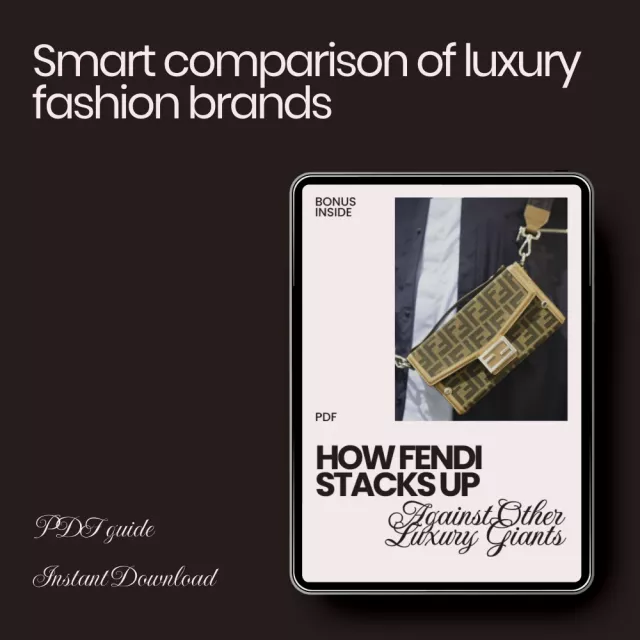
Discover Where Fendi Truly Stands in the World of Luxury
Ever wondered how fendi compares to other luxury powerhouses like Louis Vuitton, Gucci, and Prada? In a market filled with heritage houses, trend-driven icons, and investment-worthy pieces, choosing the right brand can feel overwhelming. This professionally crafted digital guide breaks it all down in a clear, honest, and easy-to-understand way. Whether you are planning your first designer purchase or refining a curated collection, this guide gives you the insight you need to shop smarter and invest with confidence.
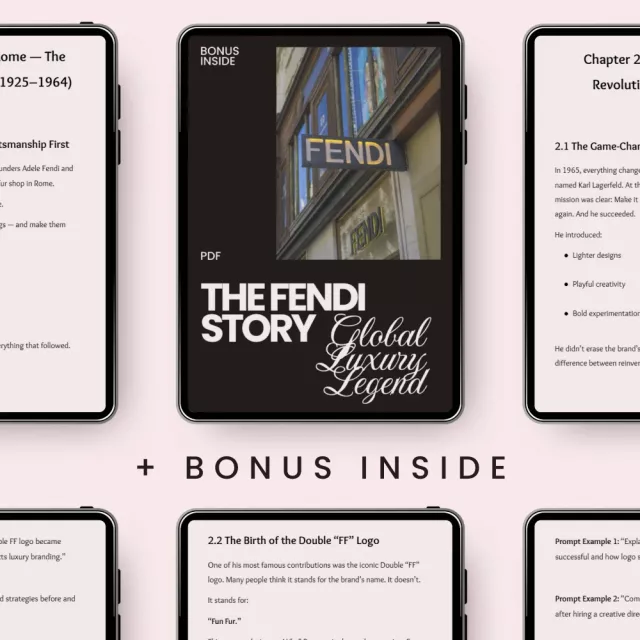
What’s Inside This Digital Guide
- Chapter 1: What Defines a Luxury Brand in the First Place?
- Deep dive into the core pillars of true luxury
- Heritage vs. hype and why history matters
- Where Fendi fits in the luxury landscape
- Case study comparing heritage strength and trend-driven popularity
- Chapter 2: Fendi vs. Its Biggest Competitors
- Fendi vs. Louis Vuitton: Craftsmanship vs. global scale
- Fendi vs. Gucci: Bold creativity vs. cultural trend power
- Fendi vs. Prada: Expressive luxury vs. intellectual minimalism
- Common mistakes buyers make when comparing luxury brands
- How to use AI to compare luxury brands smarter
- Chapter 3: Price, value, and investment potential analysis
- Is Fendi worth the price?
- Resale value compared to competitors
- What smart buyers prioritize before purchasing
- Chapter 4: Choosing the right brand for your personality and lifestyle
- Clear next steps for making your first or next luxury purchase
Why This Guide Is Different
Unlike surface-level blog posts or brand-biased reviews, this guide delivers structured comparisons, practical buying logic, and real-world value analysis. It does not just tell you which brand is popular — it explains why. You will gain a clear understanding of how fendi compares to other luxury competitors across craftsmanship, branding power, pricing, resale value, and long-term investment appeal.
This resource is perfect for:
- First-time luxury buyers
- Fashion enthusiasts researching before investing
- Resale-focused shoppers who care about value retention
- Collectors deciding between Fendi and other luxury giants
- Anyone who wants a smarter framework for comparing designer brands
Practical Benefits You’ll Gain
- Shop with clarity instead of emotional impulse
- Avoid common comparison mistakes
- Understand price vs. long-term value
- Identify which brand aligns with your personality and goals
- Make confident, informed luxury purchases
Download Today and Compare Luxury Brands Smarter
Luxury is not just about logos — it is about legacy, craftsmanship, identity, and smart decision-making. If you are serious about understanding how fendi compares to other luxury brands before spending thousands on your next piece, this guide gives you the clarity you need.
Download How Fendi Stacks Up Against Other Luxury Giants today and take the guesswork out of your next luxury investment.
SHIPPING
We are proud to offer international shipping services that currently operate in over 200 countries and islands world wide. Nothing means more to us than bringing our customers great value and service. We will continue to grow to meet the needs of all our customers, delivering a service beyond all expectation anywhere in the world.
Do you ship worldwide?
Yes. We provide free shipping to over 200 countries around the world. However, there are some locations we are unable to ship to. If you happen to be located in one of those countries we will contact you.
What about customs?
We are not responsible for any custom fees once the items have been shipped. By purchasing our products, you consent that one or more packages may be shipped to you and may get custom fees when they arrive to your country.
How long does shipping take?
Shipping time varies by location. These are our estimates:| Location | *Estimated Shipping Time |
|---|---|
| United States | 5-20 Business days |
| Canada, Europe | 5-20 Business days |
| Australia, New Zealand | 5-20 Business days |
| Central & South America | 5-25 Business days |
| Asia | 5-20 Business days |
| Africa | 5-25 Business days |
Do you provide tracking information?
Yes, you will receive an email once your order ships that contains your tracking information. If you haven’t received tracking info within 5 days, please contact us.
My tracking says “no information available at the moment”.
For some shipping companies, it takes 2-5 business days for the tracking information to update on the system. If your order was placed more than 5 business days ago and there is still no information on your tracking number, please contact us.
Will my items be sent in one package?
For logistical reasons, items in the same purchase will sometimes be sent in separate packages, even if you've specified combined shipping.
If you have any other questions, please contact us and we will do our best to help you out.
RETURNS
Order cancellation
All orders can be cancelled until they are shipped. If your order has been paid and you need to make a change or cancel an order, you must contact us within 12 hours. Once the packaging and shipping process has started, it can no longer be cancelled.
Refunds
Your satisfaction is our #1 priority. Therefore, you can request a refund or reshipment for ordered products if:
- If you did not receive the product within the guaranteed time (45 days not including 1-3 day processing) you can request a refund or a reshipment.
- If you received the wrong item you can request a refund or a reshipment.
- If you do not want the product you’ve received you may request a refund but you must return the item at your expense and the item must be unused.
We do not issue the refund if:
- Your order did not arrive due to factors within your control (i.e. providing the wrong shipping address)
- Your order did not arrive due to exceptional circumstances outside the control of cyclonica.com (i.e. not cleared by customs, delayed by a natural disaster).
- Other exceptional circumstances outside the control of cyclonica.com.
*You can submit refund requests within 15 days after the guaranteed period for delivery (45 days) has expired. You can do it by sending a message on Contact Us page
If you are approved for a refund, then your refund will be processed, and a credit will automatically be applied to your credit card or original method of payment, within 14 days.
Exchanges
If for any reason you would like to exchange your product, perhaps for a different size in clothing, you must contact us first and we will guide you through the steps.
Please do not send your purchase back to us unless we authorise you to do so.
Order cancellation
All orders can be cancelled until they are shipped. If your order has been paid and you need to make a change or cancel an order, you must contact us within 12 hours. Once the packaging and shipping process has started, it can no longer be cancelled.
Refunds
Your satisfaction is our #1 priority. Therefore, you can request a refund or reshipment for ordered products if:
- If you did not receive the product within the guaranteed time( 45 days not including 2-5 day processing) you can request a refund or a reshipment.
- If you received the wrong item you can request a refund or a reshipment.
- If you do not want the product you’ve received you may request a refund but you must return the item at your expense and the item must be unused.
We do not issue the refund if:
- Your order did not arrive due to factors within your control (i.e. providing the wrong shipping address)
- Your order did not arrive due to exceptional circumstances outside the control of cyclonica.com (i.e. not cleared by customs, delayed by a natural disaster).
- Other exceptional circumstances outside the control of
*You can submit refund requests within 15 days after the guaranteed period for delivery (45 days) has expired. You can do it by sending a message on Contact Us page
If you are approved for a refund, then your refund will be processed, and a credit will automatically be applied to your credit card or original method of payment, within 14 days.
Exchanges
If for any reason you would like to exchange your product, perhaps for a different size in clothing. You must contact us first and we will guide you through the steps.
Please do not send your purchase back to us unless we authorise you to do so.
Customer Reviews
Write a Review
We Think You’ll Love
Top picks just for you










The comparison between heritage-driven and trend-driven growth paths was the most useful framing I've seen for understanding why some luxury brands feel stable and others feel volatile. I was torn between two bags from different houses and this framework made the decision obvious — I went with the heritage pick and haven't looked back.
The five pillars of true luxury — heritage, craftsmanship, exclusivity, design identity, emotional value — gave me a real lens for evaluating brands instead of just going by hype.
The Prada comparison was the one I needed most. Expressive vs intellectual minimalism clicked instantly 🖤
Finally a guide that says visibility and superiority are not the same thing.
The case study comparing the trend-focused buyer vs the heritage-focused buyer should be required reading before anyone drops serious money on luxury. Watching one lose resale value while the other held steady told a clearer story than any price chart could.
The personality-brand fit section near the end is what sets this apart — it doesn't tell you which brand is best, it helps you figure out which one is best for you.
Thorough comparison framework but some of the competitor analyses stay at a high level. The LV and Gucci sections cover positioning well without going deep into specific product comparisons. The resale analysis and the smart buyer checklist make up for it.
I used the AI prompt about which luxury brand fits a creative professional and got an answer that matched everything this guide describes. That combo of reading the analysis and then verifying it with AI made me feel genuinely informed for the first time.
The insider appeal point about Fendi explained something I'd always felt but never articulated.
⭐🔥👏
The three common comparison mistakes — choosing based on popularity, ignoring personal fit, confusing visibility with superiority — described exactly how I used to shop. I'd pick the most recognized brand every time and wonder why the piece felt wrong six months later. After reading this I bought something that matched my personality instead of my Instagram feed and it's the first luxury purchase I've worn every single week.
Well-structured analysis overall. I would have liked more concrete resale data — specific percentages or price comparisons by item category — rather than general principles. The strategic framework is sound though, especially the smart buyer checklist.
The Gucci comparison landed perfectly — cultural moments vs design legacy is the clearest way I've heard that explained.
Bought this before my first serious luxury purchase and it completely shaped how I approached it. I used the define-your-purpose step, ran two of the AI comparison prompts, and walked into the store knowing exactly what I wanted. No hesitation, no regret.
Heritage creates trust, trust creates longevity — that sequence stuck with me.
Smart, balanced, doesn't trash any brand to make its case.
The comparisons are fair but experienced luxury buyers may find some of the distinctions oversimplified. The heritage vs hype framing is helpful for newcomers, and the AI prompts section is the most practical addition. I'd recommend it more for someone entering the luxury space than someone already deep in it.
The smart buyer checklist — longevity, versatility, identity match, quality, emotional return — replaced every vague instinct I used to rely on when shopping.
The section on Fendi's position in the LVMH ecosystem was the context I'd been missing.
Reading this alongside the AI prompt about comparing craftsmanship and design philosophy across brands gave me more clarity in thirty minutes than years of browsing forums. The guide frames the right questions and AI fills in the details.
❤️👌✨🔥
Good comparison guide but the Prada section felt shorter than the other two matchups, which left that comparison less developed. The LV and Gucci analyses are strong, and the buying roadmap at the end ties everything together well.
I teach a luxury branding elective and this PDF nails the distinction between creative individuality and global consistency better than most textbooks I've assigned. The heritage-driven vs trend-driven case study is especially useful for classroom discussion because it doesn't declare a winner — it just makes the trade-offs visible. My students responded to the personality-fit framework immediately. Several of them said it was the first time they understood why they were drawn to certain brands over others.
Buying for alignment, not approval — that reframe alone was worth it 🤎
The point about Fendi pieces feeling more distinctive because they're not as widely owned is exactly the kind of insight that changes how you think about value.
Quick, objective, no brand worship anywhere.
I was wavering between two brands and the personality-fit framework resolved it in about five minutes. If you value creativity and artistic expression, the guide is very clear about where that points. Felt right the moment I tried the piece on.
The resale value section is nuanced and fair — it doesn't pretend any single brand dominates, it shows you the factors that actually drive long-term value across all of them. The three resale factors — brand demand, product recognizability, market saturation — gave me a way to evaluate any item, not just Fendi.
Helpful framework but I wish it included one or two more brands in the direct comparisons — Hermès or Dior would have added useful context. The three that are covered are well done, though, and the overall structure is easy to follow.
The LV comparison made me realize I'd been confusing global scale with personal fit this whole time.
Shared this with three friends who kept asking me which luxury brand to buy. Now they have a framework instead of needing my opinion.
👏💛👍
I've been collecting luxury for a decade and the five pillars still made me rethink how I evaluate new purchases. Heritage and emotional value were always in my head but seeing them framed alongside exclusivity and design identity gave structure to instincts I never examined. Ran the AI prompt about which brand fits a creative personality after reading the personality-fit section and the answer aligned perfectly with the guide's analysis. That confirmation made me trust both the PDF and my own taste more. Already planning my next purchase using the smart buyer checklist.
The distinction between architectural creativity and trend-focused creativity made the Gucci comparison click.
Solid guide for comparison shopping. A few more real-world price examples or specific item matchups would strengthen the value argument — the analysis stays strategic rather than practical in places. The AI prompts help bridge that gap somewhat.
The four-step buying roadmap at the end — purpose, research, AI comparison, buy for alignment — turned something overwhelming into something manageable.
This PDF talked me out of a purchase I would have regretted and into one I wear constantly.
The balance between honoring each brand's strengths while making Fendi's unique position clear is well done. I would have liked the Prada and Gucci sections to go as deep as the LV comparison, but the overall framework is sharp.
Clarity prevents regret — simplest line, biggest impact 🔥
I spent years defaulting to the most popular brand at any price point because I assumed visibility meant quality. The section on common comparison mistakes — especially the one about confusing visibility with superiority — made me realize I'd never once evaluated craftsmanship or design identity on their own. Used the AI prompt to compare long-term value across three brands I was considering and the results surprised me. Ended up with a piece from a brand I'd overlooked and it's the most complimented item I own.
The emotional return question in the smart buyer checklist is the one most guides skip and the one that matters most.
Clean analysis, fair to every brand, and it actually helped me decide.