





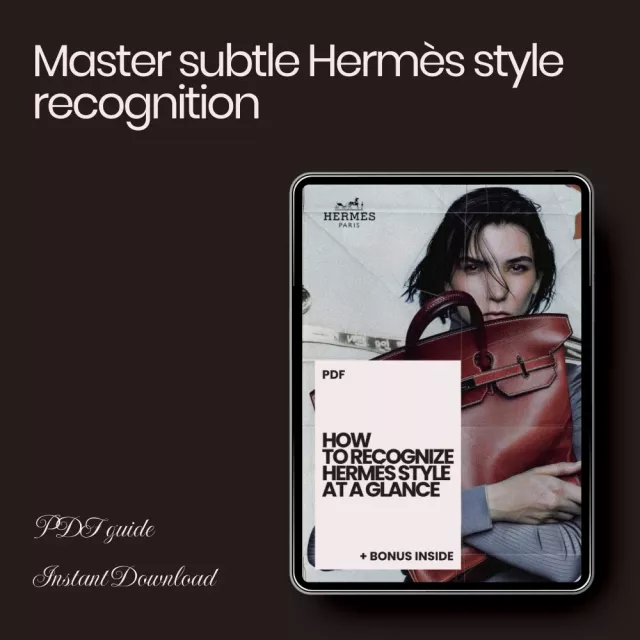
See Hermès the Way Insiders Do
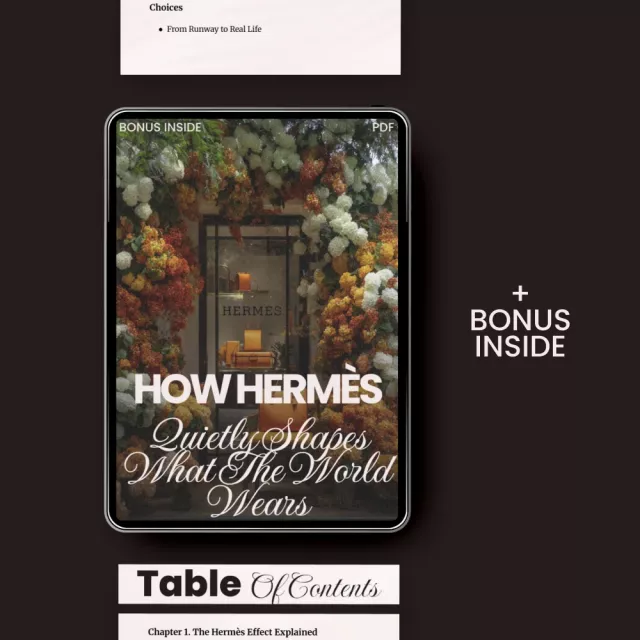
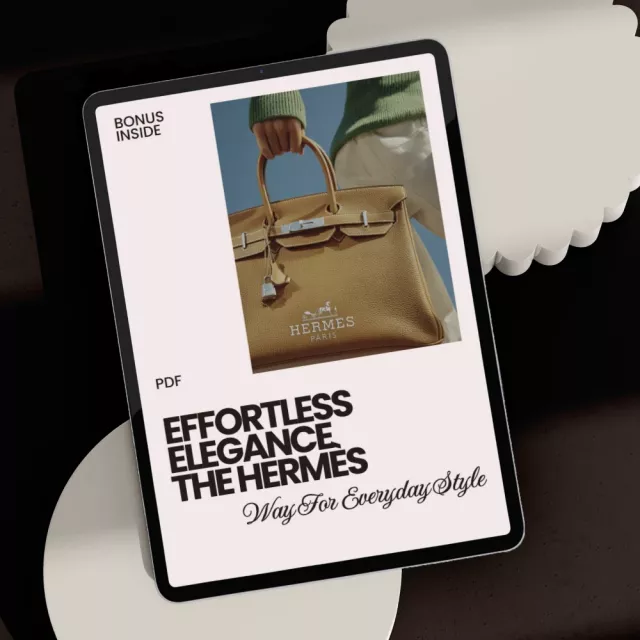
Ever wondered how some people can instantly spot Hermès from across the room? How to Recognize Hermès Style at a Glance is your complete digital guide to understanding the subtle, refined design language behind one of the world’s most respected luxury houses. If you’ve been searching for how to recognize hermès style without relying on obvious logos or guesswork, this guide gives you the trained eye you’ve been missing.
This carefully structured guide breaks down Hermès aesthetics into clear, easy-to-follow visual cues. Whether you’re a fashion enthusiast, reseller, stylist, or luxury lover, you’ll gain the confidence to identify authentic Hermès style in seconds.
What’s Inside This Digital Guide
- Chapter 1: The Visual DNA of Hermès
- The Signature Design Language
- Materials That Signal Authentic Luxury
- The Role of Subtle Branding
- Chapter 2: Key Pieces That Define the Look
- Iconic Hermès Silhouettes
- Case Study of a Classic Hermès Outfit
- How Hermès Differs From Other Luxury Brands
- Chapter 3: Common Mistakes When Identifying Hermès
- Visual Traps to Avoid
- Fast Checks That Save Time
- Building Your Recognition Eye
- Chapter 4: Using AI to Spot Hermès Faster
- AI Tools for Visual Analysis
- Smart Prompt Ideas
Why You’ll Love This Guide
- Learn exactly how to recognize hermès style without depending on obvious logos
- Understand the difference between true quiet luxury and imitation
- Develop a sharper fashion eye for resale, styling, or personal shopping
- Avoid common identification mistakes that even experienced buyers make
- Discover modern AI techniques to speed up visual analysis
Who Is This For?
This guide is perfect for luxury resellers, fashion students, stylists, collectors, content creators, and anyone passionate about high-end fashion. If you want to confidently explain how to recognize hermès style or simply appreciate the craftsmanship at a deeper level, this resource was designed for you.
What Makes It Different?
Unlike generic fashion guides, this digital download focuses specifically on visual recognition. It doesn’t just list products—it teaches you a repeatable method. You’ll learn patterns, materials, silhouette clues, and subtle brand signatures that make Hermès distinct. Plus, the dedicated AI chapter gives you modern tools most style guides completely ignore.
Instant Download – Start Training Your Eye Today
This is a digital download, so you can start learning immediately. No waiting, no shipping—just actionable insight at your fingertips.
If you’re ready to confidently identify luxury like an insider and finally master how to recognize hermès style, download How to Recognize Hermès Style at a Glance today and elevate your fashion expertise.
SHIPPING
We are proud to offer international shipping services that currently operate in over 200 countries and islands world wide. Nothing means more to us than bringing our customers great value and service. We will continue to grow to meet the needs of all our customers, delivering a service beyond all expectation anywhere in the world.
Do you ship worldwide?
Yes. We provide free shipping to over 200 countries around the world. However, there are some locations we are unable to ship to. If you happen to be located in one of those countries we will contact you.
What about customs?
We are not responsible for any custom fees once the items have been shipped. By purchasing our products, you consent that one or more packages may be shipped to you and may get custom fees when they arrive to your country.
How long does shipping take?
Shipping time varies by location. These are our estimates:| Location | *Estimated Shipping Time |
|---|---|
| United States | 5-20 Business days |
| Canada, Europe | 5-20 Business days |
| Australia, New Zealand | 5-20 Business days |
| Central & South America | 5-25 Business days |
| Asia | 5-20 Business days |
| Africa | 5-25 Business days |
Do you provide tracking information?
Yes, you will receive an email once your order ships that contains your tracking information. If you haven’t received tracking info within 5 days, please contact us.
My tracking says “no information available at the moment”.
For some shipping companies, it takes 2-5 business days for the tracking information to update on the system. If your order was placed more than 5 business days ago and there is still no information on your tracking number, please contact us.
Will my items be sent in one package?
For logistical reasons, items in the same purchase will sometimes be sent in separate packages, even if you've specified combined shipping.
If you have any other questions, please contact us and we will do our best to help you out.
RETURNS
Order cancellation
All orders can be cancelled until they are shipped. If your order has been paid and you need to make a change or cancel an order, you must contact us within 12 hours. Once the packaging and shipping process has started, it can no longer be cancelled.
Refunds
Your satisfaction is our #1 priority. Therefore, you can request a refund or reshipment for ordered products if:
- If you did not receive the product within the guaranteed time (45 days not including 1-3 day processing) you can request a refund or a reshipment.
- If you received the wrong item you can request a refund or a reshipment.
- If you do not want the product you’ve received you may request a refund but you must return the item at your expense and the item must be unused.
We do not issue the refund if:
- Your order did not arrive due to factors within your control (i.e. providing the wrong shipping address)
- Your order did not arrive due to exceptional circumstances outside the control of cyclonica.com (i.e. not cleared by customs, delayed by a natural disaster).
- Other exceptional circumstances outside the control of cyclonica.com.
*You can submit refund requests within 15 days after the guaranteed period for delivery (45 days) has expired. You can do it by sending a message on Contact Us page
If you are approved for a refund, then your refund will be processed, and a credit will automatically be applied to your credit card or original method of payment, within 14 days.
Exchanges
If for any reason you would like to exchange your product, perhaps for a different size in clothing, you must contact us first and we will guide you through the steps.
Please do not send your purchase back to us unless we authorise you to do so.
Order cancellation
All orders can be cancelled until they are shipped. If your order has been paid and you need to make a change or cancel an order, you must contact us within 12 hours. Once the packaging and shipping process has started, it can no longer be cancelled.
Refunds
Your satisfaction is our #1 priority. Therefore, you can request a refund or reshipment for ordered products if:
- If you did not receive the product within the guaranteed time( 45 days not including 2-5 day processing) you can request a refund or a reshipment.
- If you received the wrong item you can request a refund or a reshipment.
- If you do not want the product you’ve received you may request a refund but you must return the item at your expense and the item must be unused.
We do not issue the refund if:
- Your order did not arrive due to factors within your control (i.e. providing the wrong shipping address)
- Your order did not arrive due to exceptional circumstances outside the control of cyclonica.com (i.e. not cleared by customs, delayed by a natural disaster).
- Other exceptional circumstances outside the control of
*You can submit refund requests within 15 days after the guaranteed period for delivery (45 days) has expired. You can do it by sending a message on Contact Us page
If you are approved for a refund, then your refund will be processed, and a credit will automatically be applied to your credit card or original method of payment, within 14 days.
Exchanges
If for any reason you would like to exchange your product, perhaps for a different size in clothing. You must contact us first and we will guide you through the steps.
Please do not send your purchase back to us unless we authorise you to do so.
Customer Reviews
Write a Review
We Think You’ll Love
Top picks just for you













The three-step fast check — structure, stitching, visual balance — is now burned into my brain every time I browse resale listings.
I used to think I could spot Hermès easily because of the brand's reputation, which is exactly the visual trap Chapter 3 warns about. Last year I nearly bought a convincing look-alike at a consignment shop because it had the right general shape and color. After reading this guide I went back and looked at the listing photos with fresh eyes — the proportions were slightly off, the stitching lacked that deliberate precision, and the leather had an overly uniform texture. All red flags I would have caught instantly if I'd known what to look for. The section on focusing on proportion over logos completely rewired how I evaluate pieces.
The visual DNA chapter is the best explanation of Hermès design language I've found anywhere.
Clean, focused, and actually teaches you something in under an hour.
The case study about one Hermès accessory outperforming multiple logo-heavy luxury pieces in style perception really stuck with me. That's the whole brand thesis in one example.
The color depth section was a revelation — Hermès shades look refined rather than saturated, even in bold tones. Now I notice the difference immediately when scrolling through listings.
I work as a personal shopper in Stockholm and this guide formalized instincts I'd been developing for years. The section on the signature design language — restraint, precision, quiet authority — gives me the exact vocabulary I need when explaining to clients why a particular bag reads as Hermès from across a room. The point about calibrated proportions and nothing feeling accidental is especially useful. I've started referencing the three fast checks during client consultations and it's dramatically improved how quickly we evaluate pieces together during shopping trips. The comparison to logo-heavy brands in Chapter 2 also helps clients understand why less truly is more with this house.
Subtle authority — that phrase captures the entire Hermès aesthetic perfectly.
The materials section on texture being the first thing to evaluate visually was a shift for me. I was always looking at shape first and missing the leather quality signals entirely.
⭐🔥👏🧡
The point about Hermès branding being what you don't see — that reframed everything for me. I spent years looking for logos when I should have been reading silhouettes.
My mother gave me her 1990s Kelly and I never fully appreciated it until reading Chapter 1. The design language section explains why a bag from thirty years ago still looks completely current — Hermès maintains a consistent visual identity year after year instead of chasing seasonal shapes. I pulled it out, looked at the controlled lines, the clean edge finishing, the balanced proportions, and finally understood why strangers compliment it constantly. It's not just old luxury — it's timeless luxury, and this guide taught me to see the difference.
The equestrian-inspired lines section helped me see the design heritage beyond just bags.
Short and dense — every paragraph earns its spot.
The insider effect concept from the subtle branding section explains exactly why Hermès feels different from other luxury brands. Recognition comes from knowledge, not from reading a logo across a room. I tested this theory after reading the guide — wore my Constance to a dinner and counted how many people recognized it versus my friend's very obviously branded designer bag. The people who noticed mine were all fashion-aware; the ones who noticed hers were everyone. That split is precisely the dynamic this guide describes, and understanding it changed how I think about what luxury signals actually communicate.
The AI prompt ideas at the end were surprisingly practical — tried the structural proportions one on a listing and it flagged issues I missed.
Building your recognition eye through side-by-side comparison is exactly the approach that worked for me. After two weeks of studying authentic reference images alongside similar pieces, I started spotting differences automatically. The guide's advice about paying attention to handle proportions, hardware tone, and silhouette discipline gave me specific anchors to focus on instead of just vaguely staring at bags. My accuracy on resale listings jumped noticeably — I now scroll past fakes in seconds that would have fooled me a month ago.
The comparison section between Hermès and other luxury brands is the sharpest I've read.
Loved the focus on architectural structure and symmetry as recognition cues 🔥
Read it before my first consignment store visit and felt completely prepared.
The visual traps section is critical reading. I was absolutely making the mistake of relying on logo presence to identify pieces, which the guide correctly points out is the least reliable signal with Hermès. I'd been scrolling past authentic items because they looked too understated and nearly bought two fakes because they had convincing stamps. Once I shifted my focus to proportion, material quality, and construction precision — the three things this guide drills into you — my accuracy on resale platforms improved overnight. The point about authentic items sometimes looking understated enough to be overlooked was the biggest lightbulb moment.
Recognized by discipline, not volume — that line sums up the entire brand.
The stitching and edge finishing fast check alone improved my scanning speed on Vestiaire.
The case study outfit — neutral coat, tailored trousers, one Hermès bag — is exactly the formula I follow. Seeing it validated with style perception data was satisfying 👌
Smart and concise without dumbing anything down.
I teach a luxury brand management course at a business school in Madrid and I've been looking for a concise, well-written resource that captures the Hermès visual identity without academic jargon. This is it. Chapter 1 on the signature design language and Chapter 2 on how the brand differs from competitors are exactly the supplementary reading my students need. The framework of restraint, precision, and quiet authority as design principles — rather than just brand mythology — makes it teachable. Already added it to my next semester's reading list.
The section about Hermès rarely producing overly complicated shapes was an insight I'd never articulated before — perfect execution of classic forms is the whole strategy.
Timeless over trendy is a simple principle but this guide shows exactly how to see it in practice.
Excellent 👍
My friend and I took a trip to Paris last fall specifically to visit luxury consignment shops. Before leaving I read this guide and drilled the three fast checks — structure, stitching, visual balance. We found a pre-loved Evelyne at a shop near Le Marais and I was able to evaluate it confidently on the spot. The leather had that structured-yet-supple quality the guide describes, the edges were immaculate, and the overall proportions felt balanced without being stiff. Bought it for a fraction of boutique price and had it authenticated when we got home — genuine. My friend was floored that I caught all that in under a minute.
The guide's point about bold Hermès colors still appearing controlled and sophisticated rather than loud is something I now notice everywhere.
Material signals reveal more than logos ever could — that line reframed my entire approach to identifying luxury.
The AI tools section is a nice modern addition that ties everything together.
Quick read, permanent impact on how I see luxury.
I'm a photographer who shoots luxury fashion editorials and this guide articulated what I've been trying to capture in images for years — that Hermès communicates through clean structure and impeccable balance rather than logos. The description of the design language as disciplined is exactly right. When I light and compose shots of Hermès pieces they practically style themselves because the proportions are so resolved. After reading Chapter 2 on iconic silhouettes I changed how I frame bag shots entirely, focusing on the architectural structure and smooth surfaces rather than trying to feature the stamp. The work improved immediately.
The recognition eye section is the most practical advice — study, compare, repeat.
That detail about authentic Hermès design never feeling crowded or decorative is the simplest and most useful recognition cue in the whole guide.
The section comparing logo-heavy brands versus Hermès made the distinction crystal clear — immediate recognition versus rewarding a trained eye.
Every chapter built on the last perfectly — visual DNA, key pieces, common mistakes, then AI tools. Smart structure.
The structured top-handle bags and equestrian lines as recognition markers was new to me — now I can't unsee it.
Restrained, precise, and quietly authoritative — the guide itself reads exactly like the brand it describes.
The leather texture tip about looking structured yet supple is the single most useful visual cue I've picked up this year.
I run a luxury resale account on Instagram and use the three fast checks from Chapter 3 to screen every item that comes through. Before this guide I was spending fifteen to twenty minutes evaluating each piece visually. Now I can do a confident first pass in under two minutes by checking structure, stitching consistency, and overall visual balance. The section on building your recognition eye through repeated exposure to authentic references is exactly how I trained myself, and I recommend the same method to my followers constantly. This condenses months of self-taught pattern recognition into one focused read.
💯✨🧡
The consistency point is key — once you know the visual language, Hermès becomes surprisingly easy to spot in any setting.
Polished and quietly expensive — if that's the look you're going for, this guide teaches you to see it and build toward it.