





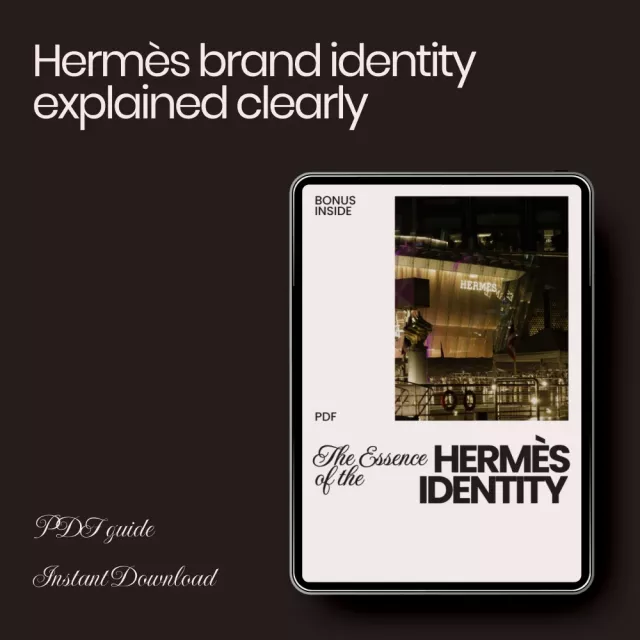
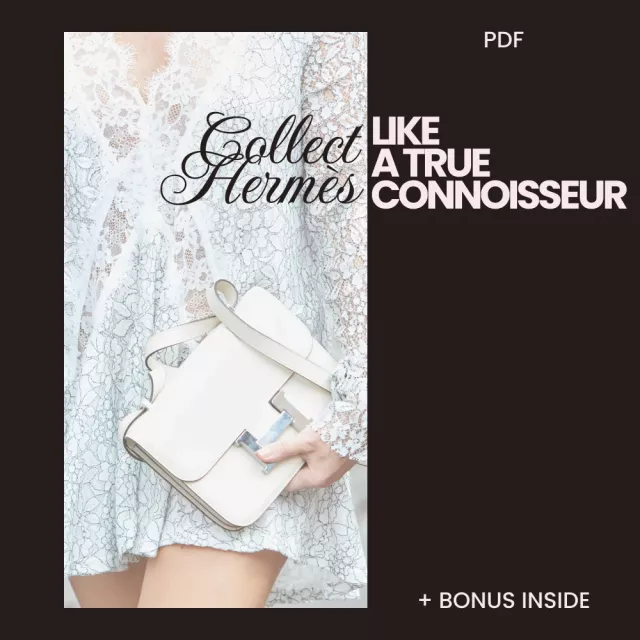
Discover What Truly Defines Iconic Luxury
What makes Hermès one of the most respected and mysterious luxury houses in the world? Why does scarcity increase desire, and how does understated design command global attention? The Essence of the Hermès Identity is a carefully crafted digital guide that unpacks the philosophy, structure, and strategic depth behind one of the most powerful luxury brands in history. If you have ever searched for hermès brand identity explained in a clear, structured, and practical way, this guide delivers exactly that—without fluff or surface-level commentary.
What’s Inside This Digital Guide
- Chapter 1: The Foundations of the Hermès Brand
- Heritage and Original Purpose
- Core Values That Shape the Brand
- The Quiet Luxury Positioning
- Chapter 2: Visual and Emotional Brand Signals
- Signature Design Language
- The Power of Scarcity
- Case Study of the Birkin Effect
- Chapter 3: Where Brands Often Misread Hermès
- Common Identity Mistakes
- Lessons for Modern Luxury Brands
- Building Authentic Prestige
- Chapter 4: Using AI to Decode Luxury Branding
- AI Tools for Brand Analysis
- Smart Prompt Examples
Who Is This For?
This guide is designed for brand strategists, fashion entrepreneurs, marketing students, luxury startup founders, designers, and curious thinkers who want hermès brand identity explained in a strategic and analytical way. It is ideal for anyone building a premium or luxury brand and seeking to understand how timeless prestige is constructed.
Why This Guide Is Different
Unlike generic branding eBooks, The Essence of the Hermès Identity combines heritage analysis, emotional branding psychology, scarcity economics, and modern AI tools in one cohesive resource. It does not just describe Hermès—it breaks down the structure behind its authority and shows you how to interpret those signals for your own brand strategy.
- Clear frameworks instead of vague inspiration
- Strategic breakdown of quiet luxury positioning
- Real analysis of the Birkin effect and scarcity power
- Practical AI prompts you can immediately apply
- Structured insights you can adapt to your own brand
Practical Benefits You’ll Gain
- Understand how authentic prestige is built and protected
- Learn how scarcity increases perceived value
- Avoid common luxury identity mistakes
- Strengthen your own brand positioning with confidence
- Use AI as a strategic tool for high-end brand analysis
Download and Elevate Your Brand Thinking
If you are ready to move beyond surface-level branding advice and truly understand what makes iconic luxury endure, this guide is your next step. Download The Essence of the Hermès Identity today and gain a deeper, sharper perspective on luxury strategy, positioning, and brand psychology.
Your journey into mastering prestige begins now.
SHIPPING
We are proud to offer international shipping services that currently operate in over 200 countries and islands world wide. Nothing means more to us than bringing our customers great value and service. We will continue to grow to meet the needs of all our customers, delivering a service beyond all expectation anywhere in the world.
Do you ship worldwide?
Yes. We provide free shipping to over 200 countries around the world. However, there are some locations we are unable to ship to. If you happen to be located in one of those countries we will contact you.
What about customs?
We are not responsible for any custom fees once the items have been shipped. By purchasing our products, you consent that one or more packages may be shipped to you and may get custom fees when they arrive to your country.
How long does shipping take?
Shipping time varies by location. These are our estimates:| Location | *Estimated Shipping Time |
|---|---|
| United States | 5-20 Business days |
| Canada, Europe | 5-20 Business days |
| Australia, New Zealand | 5-20 Business days |
| Central & South America | 5-25 Business days |
| Asia | 5-20 Business days |
| Africa | 5-25 Business days |
Do you provide tracking information?
Yes, you will receive an email once your order ships that contains your tracking information. If you haven’t received tracking info within 5 days, please contact us.
My tracking says “no information available at the moment”.
For some shipping companies, it takes 2-5 business days for the tracking information to update on the system. If your order was placed more than 5 business days ago and there is still no information on your tracking number, please contact us.
Will my items be sent in one package?
For logistical reasons, items in the same purchase will sometimes be sent in separate packages, even if you've specified combined shipping.
If you have any other questions, please contact us and we will do our best to help you out.
RETURNS
Order cancellation
All orders can be cancelled until they are shipped. If your order has been paid and you need to make a change or cancel an order, you must contact us within 12 hours. Once the packaging and shipping process has started, it can no longer be cancelled.
Refunds
Your satisfaction is our #1 priority. Therefore, you can request a refund or reshipment for ordered products if:
- If you did not receive the product within the guaranteed time (45 days not including 1-3 day processing) you can request a refund or a reshipment.
- If you received the wrong item you can request a refund or a reshipment.
- If you do not want the product you’ve received you may request a refund but you must return the item at your expense and the item must be unused.
We do not issue the refund if:
- Your order did not arrive due to factors within your control (i.e. providing the wrong shipping address)
- Your order did not arrive due to exceptional circumstances outside the control of cyclonica.com (i.e. not cleared by customs, delayed by a natural disaster).
- Other exceptional circumstances outside the control of cyclonica.com.
*You can submit refund requests within 15 days after the guaranteed period for delivery (45 days) has expired. You can do it by sending a message on Contact Us page
If you are approved for a refund, then your refund will be processed, and a credit will automatically be applied to your credit card or original method of payment, within 14 days.
Exchanges
If for any reason you would like to exchange your product, perhaps for a different size in clothing, you must contact us first and we will guide you through the steps.
Please do not send your purchase back to us unless we authorise you to do so.
Order cancellation
All orders can be cancelled until they are shipped. If your order has been paid and you need to make a change or cancel an order, you must contact us within 12 hours. Once the packaging and shipping process has started, it can no longer be cancelled.
Refunds
Your satisfaction is our #1 priority. Therefore, you can request a refund or reshipment for ordered products if:
- If you did not receive the product within the guaranteed time( 45 days not including 2-5 day processing) you can request a refund or a reshipment.
- If you received the wrong item you can request a refund or a reshipment.
- If you do not want the product you’ve received you may request a refund but you must return the item at your expense and the item must be unused.
We do not issue the refund if:
- Your order did not arrive due to factors within your control (i.e. providing the wrong shipping address)
- Your order did not arrive due to exceptional circumstances outside the control of cyclonica.com (i.e. not cleared by customs, delayed by a natural disaster).
- Other exceptional circumstances outside the control of
*You can submit refund requests within 15 days after the guaranteed period for delivery (45 days) has expired. You can do it by sending a message on Contact Us page
If you are approved for a refund, then your refund will be processed, and a credit will automatically be applied to your credit card or original method of payment, within 14 days.
Exchanges
If for any reason you would like to exchange your product, perhaps for a different size in clothing. You must contact us first and we will guide you through the steps.
Please do not send your purchase back to us unless we authorise you to do so.
Customer Reviews
Write a Review
We Think You’ll Love
Top picks just for you

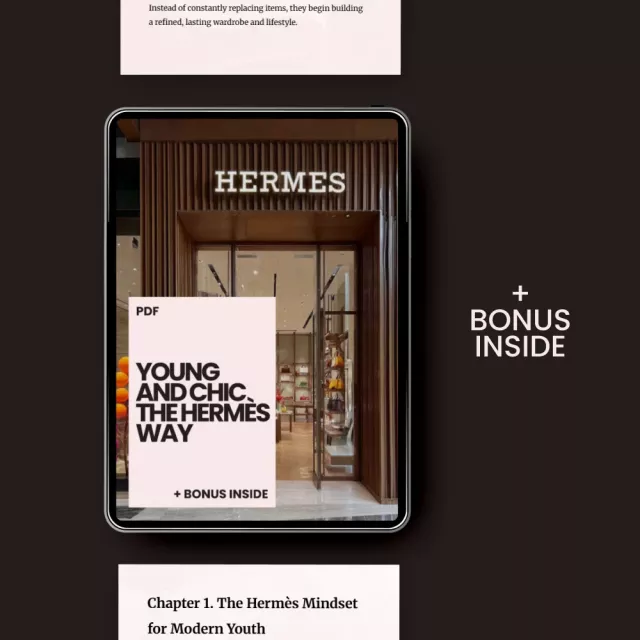

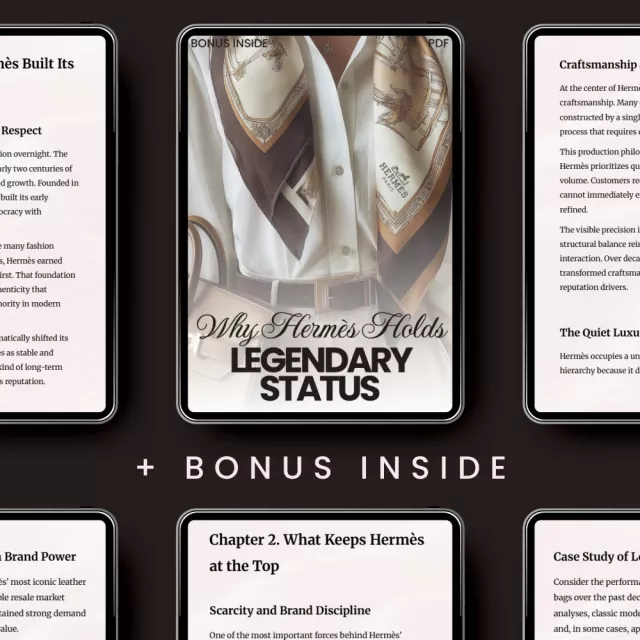













The Birkin case study in Chapter 2 made the entire scarcity strategy click for me. Understanding that ownership signals insider access rather than just purchasing power completely changed how I evaluate luxury brands.
Chapter 3 on where brands misread Hermès is the sharpest section — reducing logos without the system behind it just looks generic, not elite.
The dual-layer recognition concept from the quiet luxury section is brilliant. Insiders recognize the brand instantly while everyone else just sees something beautifully made. That framing alone shifted how I think about positioning my own products.
I run a small leather goods label and have spent the last two years trying to figure out why our minimalist approach wasn't landing the way Hermès minimalism does. Chapter 3 spelled it out: we were copying the surface without building the system underneath. Reducing our logo didn't create quiet luxury because we hadn't invested in the materials, consistency, or controlled distribution that earn that understatement. After reading the section on building authentic prestige, I restructured our production to focus on fewer styles with better leather and limited seasonal releases. Three months in and customer perception has already shifted — people describe our pieces as elevated now instead of just simple. The guide is written about Hermès but the lessons transfer directly to any brand trying to build real credibility 🤎
The 1837 equestrian heritage context adds depth that most luxury analyses skip entirely.
🧡📘✨
The distinction between evolving through fashion trends versus evolving through functional excellence is the clearest explanation I've read for why Hermès feels different from every other house. Applied that lens to a brand audit I was running at work and it surfaced gaps I'd missed.
Discipline over noise — that's the theme across all four chapters and it resonates.
I teach a luxury marketing course at a business school and stumbled on this while looking for supplementary reading. The section on common identity mistakes is exactly what my students need — the point about minimalism looking generic without foundational credibility is something I've been trying to articulate for semesters. The Birkin case study is concise but covers the key mechanics: craftsmanship, controlled availability, timeless design, and the psychological effect of scarcity. I've already incorporated the AI prompt examples from Chapter 4 into a class exercise where students analyze brand consistency. The guide packs a surprising amount of strategic thinking into a compact format.
The overexpansion warning in Chapter 3 should be printed and framed in every brand strategist's office.
Read the whole thing during a flight and it made me rethink my entire brand direction before landing.
I've been fascinated by the Hermès approach to scarcity for years but never saw it explained this clearly. The guide breaks down how limited production, relationship-building for access, and avoidance of overexposure all work together to protect brand equity. It's not just about making fewer items — it's about engineering the entire experience around patience and exclusivity. The insight that this strategy protects against trend fatigue was the part I keep returning to. I work in brand consulting and I've already referenced the coherence framework from Chapter 3 in two client presentations. Visual identity, product quality, pricing, and distribution all telling the same story — that's the test most brands fail without realizing it.
Hardware that looks substantial but never flashy — that one line in the design language section describes perfectly what I've been trying to source for my own line.
Strong guide with real strategic depth. The heritage chapter and Birkin case study are excellent. I do wish the AI chapter had gone a bit deeper with more specific tool recommendations alongside the prompts — the prompt examples themselves are useful but the section felt shorter than the others. The first three chapters more than justify the read though.
The concept of accumulated trust through nearly two centuries of consistent standards hit differently when you're trying to build a brand from scratch. Patience isn't just a virtue — it's the actual strategy.
Concise and strategic. No filler across any of the four chapters.
I manage brand identity for a mid-tier accessories company and we'd been chasing the quiet luxury trend by pulling logos off everything. Sales flatlined and I couldn't figure out why. Chapter 3 diagnosed the problem in two paragraphs — we removed the visible branding but hadn't upgraded materials, tightened distribution, or built decades of design consistency. Without those foundations our products just looked anonymous. After reading the lessons for modern luxury brands section I proposed three changes to our leadership team: better leather sourcing, a smaller seasonal release calendar, and visual consistency across all touchpoints. Six months later our customer feedback has shifted from "clean" to "elevated" and our sell-through rate on core products is up. This guide gave me the framework I was missing 💡
Quality over speed as a brand message — that framing from the core values section is deceptively powerful.
The AI prompt about listing elements that communicate quiet luxury in a product image is now part of my weekly content review process.
🧡🔍👜
The section on how controlled accessibility strengthens desire applies to so much more than fashion. I used the same logic to restructure how I release digital products and saw immediate results in perceived value.
Balance, symmetry, and refined simplicity — those three words from the design language section became my visual audit checklist overnight.
The point about Hermès not manufacturing its reputation overnight but accumulating trust through consistent standards is the kind of perspective that reframes how you think about building anything long-term. I've shared that section with three people this week.
I came in expecting a surface-level brand overview and got a genuine strategic framework instead. The three lessons for modern luxury brands in Chapter 3 — consistency over reinvention, quality visibly supporting the story, and controlled accessibility — are applicable to any premium positioning, not just fashion. I work in tech and the parallels to product launch strategy are striking. The Birkin case study also does a great job illustrating how all the abstract principles show up in a single product. Worth reading slowly and taking notes.
The insight that when products are too easy to obtain they lose symbolic power stopped me mid-scroll.
Restraint over constant visibility — that's the core lesson and every chapter reinforces it from a different angle.
The guide is well-structured and the content is insightful, especially the Birkin case study and scarcity analysis. I found the AI chapter slightly brief compared to the depth of Chapters 1 through 3 — a few concrete examples of brand comparison outputs would have strengthened it. Still, the strategic thinking in the first three chapters is well worth the read.
Using AI to compare brand visual consistency side by side is something I hadn't thought to do before Chapter 4 suggested it. Ran it on two competing labels and the inconsistency gap was immediately visible 😮
I started a handbag brand last year and was growing as fast as possible — wholesale, pop-ups, every marketplace I could reach. This guide made me rethink everything. The overexpansion section in Chapter 3 described exactly what I was doing wrong: chasing rapid growth while diluting perceived exclusivity. I pulled back from two wholesale accounts, reduced my product line from twelve styles to five, and invested the savings into better hardware and leather. Within two months my direct customers started describing the brand differently — words like refined and intentional replaced affordable and cute. The section on coherence was the turning point: visual identity, product quality, pricing, and distribution all telling the same story. When mine weren't aligned, people could feel it even if they couldn't name it.
Rich neutrals and controlled statement shades — that palette description from the design language section gave me a concrete filter for my next collection.
Every chapter builds logically — heritage to signals to mistakes to AI tools. Reads like a brand strategy curriculum compressed into a short guide.
The insider effect concept from the quiet luxury section is the most elegant explanation of why Hermès branding works on two levels simultaneously.
Spent a decade in luxury retail and this guide articulated things I've observed but never had the framework to explain. Sent it to my entire team.