





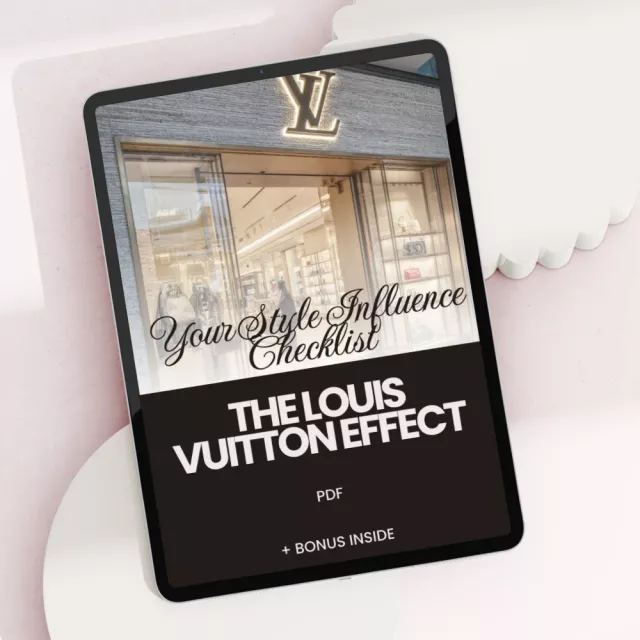
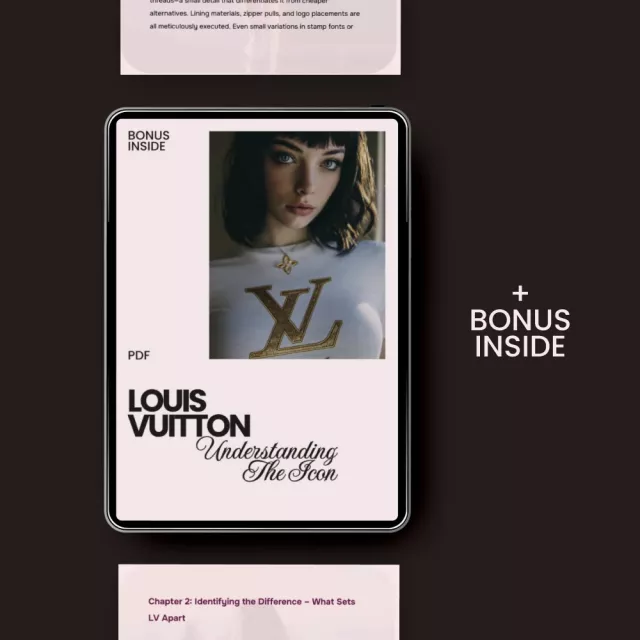
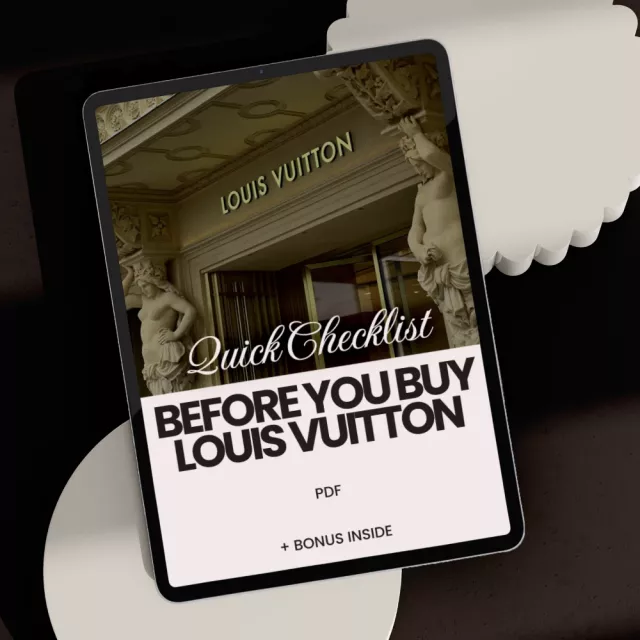
Unlock the Secrets Behind Louis Vuitton’s Iconic Brand Evolution
Discover the fascinating journey of one of the world’s most recognized luxury brands with “The Evolution of Louis Vuitton’s Iconic Identity.” This eBook takes you through the transformation of Louis Vuitton from its humble beginnings to becoming a global icon in fashion. Learn how the brand’s rich heritage and constant reinvention have shaped its prestigious identity over time. Whether you’re a brand strategist, a fashion enthusiast, or a business owner, this detailed guide provides invaluable insights into the evolution of Louis Vuitton’s brand identity.
Key Features:
- In-depth exploration of Louis Vuitton’s origins and early identity
- Case studies on the brand’s marketing strategies and celebrity endorsements
- Exclusive insights on collaborations with renowned artists like Takashi Murakami and Supreme
- A look at how Louis Vuitton embraced digital transformation and AI in design
- Comprehensive lessons on maintaining heritage while embracing modern trends
- Practical steps for applying Louis Vuitton’s branding strategies to your own brand
Why Choose This eBook?
This eBook stands out for its deep dive into Louis Vuitton’s brand identity evolution, providing more than just historical facts. It goes beyond surface-level analysis by offering actionable lessons and practical takeaways for emerging brands. With real-life case studies, the guide shows how Louis Vuitton’s early logos, celebrity connections, and strategic collaborations helped define its iconic identity. Additionally, you’ll explore the modern approaches the brand uses to stay relevant in the digital age.
Who is This eBook For?
This guide is perfect for:
- Brand managers and marketers looking to learn from the best
- Fashion enthusiasts curious about the evolution of a luxury brand
- Entrepreneurs and startups aiming to build a memorable, lasting brand identity
- Anyone interested in the intersection of art, design, and business strategy
Practical Benefits:
- Understand how Louis Vuitton’s early identity set the stage for global success
- Learn how to balance traditional craftsmanship with modern trends
- Gain a clear understanding of the role of collaborations in strengthening brand identity
- Discover the key to maintaining brand relevance in an increasingly digital world
- Receive actionable insights on applying Louis Vuitton’s strategies to your brand
Get Your Copy Today!
Ready to learn how Louis Vuitton revolutionized the world of branding? Download “The Evolution of Louis Vuitton’s Iconic Identity” now and uncover the powerful strategies that helped turn a small trunk maker into a global luxury giant. Don’t miss out on this chance to gain expert-level insights that will set your brand apart!
SHIPPING
We are proud to offer international shipping services that currently operate in over 200 countries and islands world wide. Nothing means more to us than bringing our customers great value and service. We will continue to grow to meet the needs of all our customers, delivering a service beyond all expectation anywhere in the world.
Do you ship worldwide?
Yes. We provide free shipping to over 200 countries around the world. However, there are some locations we are unable to ship to. If you happen to be located in one of those countries we will contact you.
What about customs?
We are not responsible for any custom fees once the items have been shipped. By purchasing our products, you consent that one or more packages may be shipped to you and may get custom fees when they arrive to your country.
How long does shipping take?
Shipping time varies by location. These are our estimates:| Location | *Estimated Shipping Time |
|---|---|
| United States | 5-20 Business days |
| Canada, Europe | 5-20 Business days |
| Australia, New Zealand | 5-20 Business days |
| Central & South America | 5-25 Business days |
| Asia | 5-20 Business days |
| Africa | 5-25 Business days |
Do you provide tracking information?
Yes, you will receive an email once your order ships that contains your tracking information. If you haven’t received tracking info within 5 days, please contact us.
My tracking says “no information available at the moment”.
For some shipping companies, it takes 2-5 business days for the tracking information to update on the system. If your order was placed more than 5 business days ago and there is still no information on your tracking number, please contact us.
Will my items be sent in one package?
For logistical reasons, items in the same purchase will sometimes be sent in separate packages, even if you've specified combined shipping.
If you have any other questions, please contact us and we will do our best to help you out.
RETURNS
Order cancellation
All orders can be cancelled until they are shipped. If your order has been paid and you need to make a change or cancel an order, you must contact us within 12 hours. Once the packaging and shipping process has started, it can no longer be cancelled.
Refunds
Your satisfaction is our #1 priority. Therefore, you can request a refund or reshipment for ordered products if:
- If you did not receive the product within the guaranteed time (45 days not including 1-3 day processing) you can request a refund or a reshipment.
- If you received the wrong item you can request a refund or a reshipment.
- If you do not want the product you’ve received you may request a refund but you must return the item at your expense and the item must be unused.
We do not issue the refund if:
- Your order did not arrive due to factors within your control (i.e. providing the wrong shipping address)
- Your order did not arrive due to exceptional circumstances outside the control of cyclonica.com (i.e. not cleared by customs, delayed by a natural disaster).
- Other exceptional circumstances outside the control of cyclonica.com.
*You can submit refund requests within 15 days after the guaranteed period for delivery (45 days) has expired. You can do it by sending a message on Contact Us page
If you are approved for a refund, then your refund will be processed, and a credit will automatically be applied to your credit card or original method of payment, within 14 days.
Exchanges
If for any reason you would like to exchange your product, perhaps for a different size in clothing, you must contact us first and we will guide you through the steps.
Please do not send your purchase back to us unless we authorise you to do so.
Order cancellation
All orders can be cancelled until they are shipped. If your order has been paid and you need to make a change or cancel an order, you must contact us within 12 hours. Once the packaging and shipping process has started, it can no longer be cancelled.
Refunds
Your satisfaction is our #1 priority. Therefore, you can request a refund or reshipment for ordered products if:
- If you did not receive the product within the guaranteed time( 45 days not including 2-5 day processing) you can request a refund or a reshipment.
- If you received the wrong item you can request a refund or a reshipment.
- If you do not want the product you’ve received you may request a refund but you must return the item at your expense and the item must be unused.
We do not issue the refund if:
- Your order did not arrive due to factors within your control (i.e. providing the wrong shipping address)
- Your order did not arrive due to exceptional circumstances outside the control of cyclonica.com (i.e. not cleared by customs, delayed by a natural disaster).
- Other exceptional circumstances outside the control of
*You can submit refund requests within 15 days after the guaranteed period for delivery (45 days) has expired. You can do it by sending a message on Contact Us page
If you are approved for a refund, then your refund will be processed, and a credit will automatically be applied to your credit card or original method of payment, within 14 days.
Exchanges
If for any reason you would like to exchange your product, perhaps for a different size in clothing. You must contact us first and we will guide you through the steps.
Please do not send your purchase back to us unless we authorise you to do so.
Customer Reviews
Write a Review
We Think You’ll Love
Top picks just for you












This broke down LV's branding strategy in a way my MBA courses never did.
I run a small leather goods brand and this PDF gave me more actionable ideas in 20 pages than most branding books give in 300. The section on how Vuitton used flat-topped trunks as both a functional innovation and a brand statement completely reframed how I think about product design. I've already started a heritage audit of my own line.
Loved the comparison table of traditional vs. modern brand metrics — printed it and pinned it above my desk.
The Murakami and Supreme collaboration analysis alone was worth the read.
Clean, well-structured, and surprisingly deep for a free PDF. The chapter on digital transformation and AI integration really opened my eyes to how luxury houses are using data to predict trends without losing their handcrafted feel. Shared it with my entire marketing team.
Read it on a flight and immediately started sketching logo concepts for my startup.
The point about scarcity driving desire hit hard 🔥
Really solid overview of how LV built recognition through the monogram. I appreciated the practical insight about making your logo carry meaning rather than just slapping initials on things. Would have liked a bit more depth on their recent sustainability initiatives though — that section felt surface-level compared to the rest.
I'm a brand consultant and I've been sending this to every client who asks me why their rebrand flopped. The common mistakes section nails the three biggest pitfalls I see over and over: over-diversifying, ignoring heritage, and picking collaborators that don't fit. Before reading this I struggled to articulate why some refreshes work and others don't. Now I literally reference the LV framework in my presentations.
Short but packed with substance — no fluff anywhere.
The early marketing campaigns case study was fascinating. Vuitton was basically doing lifestyle branding with travel catalogues a century before Instagram existed. It made me rethink how I photograph my own products — I've been showing items on white backgrounds when I should be telling a story around them.
Wish it went deeper on the AI design tools — that chapter felt more like an intro than a deep dive.
⭐❤️🔥👏👌
The heritage audit idea at the end is something every founder should do on day one. Really practical takeaway that I haven't seen in other branding resources.
Finally someone explains why LV collabs work without just calling them hype.
I've been struggling with how to modernize my family's jewelry business without alienating our longtime customers. This PDF basically gave me a playbook. The idea that innovation should amplify your core identity rather than replace it sounds obvious but I needed to see it laid out with real examples. The LV approach to limited editions — layering new stories over heritage — is exactly what I'm going to try this quarter. Already ordered new packaging that nods to our original 1970s designs.
The craftsmanship-as-identity section is pure gold for anyone in artisan goods.
Good content overall but the AI prompt examples felt a bit generic. The rest of the guide is specific and grounded in LV's actual history, so that section stuck out as less polished.
The way it connects 1854 trunk-making to 2024 e-commerce strategy is seamless.
Quick read, real insights, no corporate jargon — exactly what I needed.
I teach a fashion marketing course at the university level and this is now required pre-reading for my students. The progression from origins to digital transformation follows a logical arc that's easy to discuss in class. The table comparing traditional and modern approaches is especially useful for sparking debate. Only wish it included more quantitative data on LV's market performance to complement the qualitative analysis.
Didn't expect a PDF about Louis Vuitton to change how I run my candle business but here we are 😅
Smart breakdown of how exclusivity and aspiration work together in luxury branding.
The section on celebrity endorsements before influencer culture even existed put things into perspective. Vuitton didn't invent the concept but they executed it with intention, and the guide explains that distinction really well.
Solid fundamentals, well-written, applicable beyond luxury.
I run a Scandinavian design studio and was skeptical this would feel relevant to me. It absolutely was. The core argument — that identity comes from the quality and care in your products — transcends industry. Before this I was obsessing over visual rebrands when the real issue was inconsistency in my client touchpoints. Now I'm reworking our onboarding process to reflect our actual values, not just our color palette.
👍🔥💎
The monogram history was new to me — 1896 and still iconic.
Decent guide with some strong moments. The early chapters on origins and craftsmanship are genuinely compelling. The later chapters on AI and digital feel more like they were added to check a box. Still worth reading for the first half alone.
I highlighted so many lines my PDF reader ran out of colors.
Really resonated with the idea that a logo works best when it carries meaning, communicates quality, and enhances desirability. That framing helped me realize my own brand's logo is decorative but doesn't actually say anything. Rethinking the whole visual system now.
Engaging read for branding nerds — concise without being shallow.
The common mistakes section needs to be tattooed on every CMO's forehead. Over-diversifying, ignoring heritage, misaligned partnerships — I've watched three companies I've worked at make all three of these errors in sequence.
Would love a follow-up that does this same deep-dive for Hermès or Chanel.
Clean formatting and the writing keeps moving — no sections where it drags.
I launched a handbag line two years ago that went nowhere because I kept chasing trends instead of building an identity. Reading about how Vuitton's flat-topped trunks were simultaneously practical and aspirational made me realize I'd been thinking about product design all wrong. I've since gone back to basics — one signature silhouette, one hero material, one story — and my last collection outsold everything before it combined. This PDF didn't just teach me about LV; it taught me about focus.
The bit about intentional market positioning is underrated advice.
Nicely connects branding principles to things you can actually go do tomorrow. The next steps section isn't just theory — it gives you a checklist. Heritage audit, signature symbols, strategic collaborations. I started mine the same day I finished reading.
A few sections feel like they skim the surface, especially sustainability. LV has done meaningful work there and it deserved more than a few paragraphs. That said, the guide is clearly aimed at branding strategy rather than corporate responsibility, so it still delivers on its promise.
If you care about brand longevity this is essential reading.
Been in luxury retail for 12 years and still picked up new angles from this.
The emotional connection idea — that owning a trunk was about pride and belonging, not just function — is the part that stuck with me. I sell custom furniture and I've been marketing durability and materials. After reading this I rewrote all my product descriptions to focus on how it feels to own something built specifically for you. Sales bumped noticeably within weeks.
I sent this to three friends before I even finished it.
Good primer on luxury branding. Not groundbreaking if you already study the space closely, but extremely well-organized and accessible for someone newer to these concepts.
The storytelling-over-promotion insight is something most brands still get wrong 💯
Practical, beautiful layout, and it doesn't talk down to you.
The guide does a great job showing how LV stayed relevant across completely different eras. From aristocratic travelers to Gen Z streetwear fans — that range is wild when you think about it. The collaborations chapter explains the mechanics behind that adaptability better than anything else I've read.
Read it expecting surface-level fluff about luxury logos and got a genuine strategy framework instead.
Some of the AI sections feel bolted on rather than integrated. The historical analysis is clearly where the author's expertise lies, and those chapters shine. The prompt examples at the end are fine but feel like a different document. Still rating four stars because the core content is strong.
Every emerging brand founder needs to read the part about balancing tradition and innovation. That tension is real and this guide doesn't pretend it's easy — it just shows you how one of the best in the world navigates it.
Sharp, focused, no padding — rare for a PDF like this.
Picked this up on a whim and ended up restructuring my entire brand strategy over the following weekend. I own a skincare line and had been trying to appeal to everyone. The section on LV's deliberate exclusivity and aspirational positioning made me realize I was diluting my own brand by chasing volume. I've since narrowed my target audience, raised my price point, and leaned into my origin story. Three months later my margins are up and my customers feel more connected to what we're building.
Great companion piece if you're studying fashion business or brand management.
The monogram serving triple duty — security, branding, and aesthetics — is such a clever insight. Most people think logos are just about recognition.
Wished for more case studies beyond LV itself. The principles are universal but seeing them applied to other brands would strengthen the argument. Still a worthwhile read that I've returned to multiple times.
Gave me vocabulary to explain brand decisions to clients who only think in terms of logos.
I wasn't expecting the sustainability angle but it ties in naturally.
The early identity chapters are where this really shines. Understanding that Vuitton's brand was built on an actual innovation — stackable flat-topped trunks — rather than just aesthetics, changes how you think about what a brand foundation should be.
Straightforward writing, zero fluff, useful framework at the end 👏
I manage brand partnerships for a mid-size retailer and the misaligned collaborations warning hit close to home. We nearly signed a deal last year that would have confused our entire customer base. Reading LV's approach to collabs — making sure they reinforce rather than dilute — gave me a framework to evaluate future opportunities. Practical stuff.
Worth it for the traditional vs. modern metrics table alone — such a clear snapshot.
Tight writing, smart structure, useful even if you're not in fashion.
🔥👜✨💫❤️
The idea that online shopping is a new canvas for brand identity, not just a convenience layer, is something a lot of e-commerce brands still haven't internalized. Good wake-up call.
Some repetition between the lessons chapter and earlier sections, but the content is strong enough that it didn't bother me much. Would have preferred a tighter edit on the final chapter rather than restating points already made.
This is the branding PDF I'll actually re-read.
I'm a graphic designer who's been treating brand identity as purely visual for years. This shifted my perspective entirely. The argument that identity is inseparable from product quality and customer experience made me realize I've been designing logos and style guides without asking the harder questions about what the brand actually stands for. Now I start every client engagement with a heritage audit conversation before I open Illustrator. It's changed my work and my clients can feel the difference.
Useful, well-paced, and actually respects the reader's time.