





Product Overview
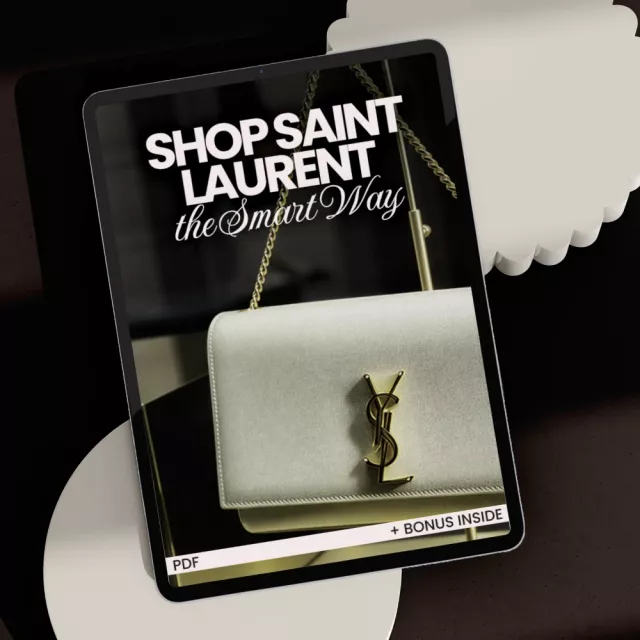
Step into the world of fashion influence with How Saint Laurent Quietly Shapes What We Wear, an insightful eBook that unveils the subtle yet powerful ways Saint Laurent has shaped the global fashion landscape. Explore how this iconic brand drives consumer choices, the psychology behind luxury fashion, and how you can apply these strategies to your own style or brand. Whether you’re an emerging fashion brand or an everyday shopper seeking smarter fashion decisions, this guide is your key to understanding the force that defines modern style.
Key Features
- Chapter 1: The Influence Engine Behind Saint Laurent – Learn why luxury brands like Saint Laurent are pivotal in shaping consumer choices and the psychology of fashion authority.
- Chapter 2: Signature Codes That Guide Buying Decisions – Discover the power of the Saint Laurent silhouette, color discipline, and how one jacket influenced wardrobes around the world.
- Chapter 3: Cultural Power and Celebrity Impact – Understand the strategic celebrity alignments and how runway trends are translated to street fashion.
- Chapter 4: Retail and Pricing Psychology – Dive into the premium pricing strategy, retail experience, and how scarcity signals value in luxury fashion.
- Chapter 5: Digital Era Influence – Explore how social media, e-commerce presentation, and AI are reshaping fashion trends in the digital world.
- Chapter 6: Applying the Influence to Your Own Style or Brand – Learn practical steps for applying Saint Laurent’s strategies to your own fashion decisions or emerging brand.
Practical Benefits
- Gain a deep understanding of how Saint Laurent shapes fashion choices and why its influence is unmatched.
- Learn actionable tips that will help you align your personal style or brand with proven strategies from one of the most iconic luxury brands in the world.
- Apply psychology-based retail and pricing strategies to boost the appeal and value of your fashion products or wardrobe.
- Stay ahead of trends by understanding the digital era’s impact on fashion and how to use e-commerce to your advantage.
- Get inspired by celebrity influence and media tactics that make Saint Laurent’s designs timeless.
Why You Need This Guide
Whether you’re a fashion enthusiast or an aspiring brand, How Saint Laurent Quietly Shapes What We Wear is more than just a guide; it’s an essential resource for understanding the complex dynamics behind the fashion choices that define modern culture. This eBook provides you with insider knowledge that no other digital resource offers, helping you see the bigger picture of luxury fashion’s power. Discover the strategies that make Saint Laurent a leader in the industry and learn how you can use these principles to make smarter fashion decisions, elevate your style, or build a brand that resonates with today’s consumers.
Take Action Now
Download your copy of How Saint Laurent Quietly Shapes What We Wear today and start unlocking the secrets to fashion’s biggest influence. Whether you’re looking to refine your personal style or elevate your brand, this guide will give you the tools to succeed in a competitive fashion world.
SHIPPING
We are proud to offer international shipping services that currently operate in over 200 countries and islands world wide. Nothing means more to us than bringing our customers great value and service. We will continue to grow to meet the needs of all our customers, delivering a service beyond all expectation anywhere in the world.
Do you ship worldwide?
Yes. We provide free shipping to over 200 countries around the world. However, there are some locations we are unable to ship to. If you happen to be located in one of those countries we will contact you.
What about customs?
We are not responsible for any custom fees once the items have been shipped. By purchasing our products, you consent that one or more packages may be shipped to you and may get custom fees when they arrive to your country.
How long does shipping take?
Shipping time varies by location. These are our estimates:| Location | *Estimated Shipping Time |
|---|---|
| United States | 5-20 Business days |
| Canada, Europe | 5-20 Business days |
| Australia, New Zealand | 5-20 Business days |
| Central & South America | 5-25 Business days |
| Asia | 5-20 Business days |
| Africa | 5-25 Business days |
Do you provide tracking information?
Yes, you will receive an email once your order ships that contains your tracking information. If you haven’t received tracking info within 5 days, please contact us.
My tracking says “no information available at the moment”.
For some shipping companies, it takes 2-5 business days for the tracking information to update on the system. If your order was placed more than 5 business days ago and there is still no information on your tracking number, please contact us.
Will my items be sent in one package?
For logistical reasons, items in the same purchase will sometimes be sent in separate packages, even if you've specified combined shipping.
If you have any other questions, please contact us and we will do our best to help you out.
RETURNS
Order cancellation
All orders can be cancelled until they are shipped. If your order has been paid and you need to make a change or cancel an order, you must contact us within 12 hours. Once the packaging and shipping process has started, it can no longer be cancelled.
Refunds
Your satisfaction is our #1 priority. Therefore, you can request a refund or reshipment for ordered products if:
- If you did not receive the product within the guaranteed time (45 days not including 1-3 day processing) you can request a refund or a reshipment.
- If you received the wrong item you can request a refund or a reshipment.
- If you do not want the product you’ve received you may request a refund but you must return the item at your expense and the item must be unused.
We do not issue the refund if:
- Your order did not arrive due to factors within your control (i.e. providing the wrong shipping address)
- Your order did not arrive due to exceptional circumstances outside the control of cyclonica.com (i.e. not cleared by customs, delayed by a natural disaster).
- Other exceptional circumstances outside the control of cyclonica.com.
*You can submit refund requests within 15 days after the guaranteed period for delivery (45 days) has expired. You can do it by sending a message on Contact Us page
If you are approved for a refund, then your refund will be processed, and a credit will automatically be applied to your credit card or original method of payment, within 14 days.
Exchanges
If for any reason you would like to exchange your product, perhaps for a different size in clothing, you must contact us first and we will guide you through the steps.
Please do not send your purchase back to us unless we authorise you to do so.
Order cancellation
All orders can be cancelled until they are shipped. If your order has been paid and you need to make a change or cancel an order, you must contact us within 12 hours. Once the packaging and shipping process has started, it can no longer be cancelled.
Refunds
Your satisfaction is our #1 priority. Therefore, you can request a refund or reshipment for ordered products if:
- If you did not receive the product within the guaranteed time( 45 days not including 2-5 day processing) you can request a refund or a reshipment.
- If you received the wrong item you can request a refund or a reshipment.
- If you do not want the product you’ve received you may request a refund but you must return the item at your expense and the item must be unused.
We do not issue the refund if:
- Your order did not arrive due to factors within your control (i.e. providing the wrong shipping address)
- Your order did not arrive due to exceptional circumstances outside the control of cyclonica.com (i.e. not cleared by customs, delayed by a natural disaster).
- Other exceptional circumstances outside the control of
*You can submit refund requests within 15 days after the guaranteed period for delivery (45 days) has expired. You can do it by sending a message on Contact Us page
If you are approved for a refund, then your refund will be processed, and a credit will automatically be applied to your credit card or original method of payment, within 14 days.
Exchanges
If for any reason you would like to exchange your product, perhaps for a different size in clothing. You must contact us first and we will guide you through the steps.
Please do not send your purchase back to us unless we authorise you to do so.
Customer Reviews
Write a Review
We Think You’ll Love
Top picks just for you















The case study on how one jacket reshaped an entire market was the moment this clicked for me. Silhouette leadership is real.
I started reading this thinking it was just another fashion appreciation piece, but the pricing psychology chapter completely shifted my perspective. The idea that price communicates meaning before a customer even touches the product made me rethink how I evaluate luxury purchases and how I price my own work. The scarcity and controlled distribution section also explained something I'd felt but couldn't articulate — why certain Saint Laurent pieces feel more desirable specifically because they're harder to find. By the time I reached the personal style alignment framework in chapter six, I had a concrete filter for every future wardrobe decision. Read the whole thing in one sitting.
Chapter 2 on color discipline made me understand why my all-black wardrobe gets so many compliments.
The rock-chic identity breakdown is the best explanation of that polished-but-not-stiff tension I've ever read. Tailoring plus subtle rebellion — that's the whole formula and this ebook unpacks it beautifully.
Read this as someone building a menswear brand and the chapter on common mistakes brands make when copying luxury was painfully accurate. I was doing half of those things.
The psychology of fashion authority section alone is worth the download.
🖤📖⭐✨🔥
Runway to street translation — that's the chapter I keep going back to. The idea that Saint Laurent's influence spreads because the looks are both distinctive and practical explains so much about why their aesthetic ends up everywhere within a season.
Shape travels faster through the market than labels do. That one line rewired my brain.
The digital era chapter nails something most fashion writing ignores — how visual consistency on social media compounds authority over time. I went straight to my own brand's feed after reading it and saw every inconsistency the book warned about.
Finished it during a long flight. Most useful fashion ebook I've read this year.
The section on community perception versus mass appeal articulates something I've noticed but couldn't name — that sweet spot between being recognized and staying aspirational. Saint Laurent's controlled exposure strategy is the blueprint 🤌
I work in retail buying and the chapter on how premium pricing signals value explained dynamics I see play out every quarter. Mid-tier brands absolutely adjust their price architecture based on luxury benchmarks. This book codifies what the industry already knows but rarely says out loud.
The personal style alignment framework in chapter six turned abstract fashion theory into something I actually use when shopping.
Not just for Saint Laurent fans — this is a masterclass in how any strong brand shapes culture from the inside out.
The AI prompt examples for fashion analysis were a surprise bonus. I tried the silhouette analysis prompt immediately and got genuinely useful results for my own brand positioning work. The suggestion to compare Saint Laurent palettes with mid-market trends also surfaced patterns I'd missed entirely. Chapter four bridges fashion thinking and practical tools in a way I haven't seen elsewhere. My only note is that the prompts could have gone even deeper — a few more advanced examples for brand builders would have been welcome. But what's here is already miles ahead of most fashion content.
Clean, elongated lines instantly elevate an outfit — I tested this and it's embarrassingly true.
The store experience chapter made me realize that even the physical space is doing persuasion work. Dark tones, carefully spaced displays, calm atmosphere — it all reinforces the product before you even try anything on.
Depth and discipline outperform imitation. That sentence is the entire book compressed into six words.
Chapter three on strategic celebrity alignment completely changed how I interpret celebrity fashion content. The distinction between aspirational styling and promotional styling is obvious once you see it but I'd never thought about it before. Now I notice which partnerships feel natural versus forced, and it's everywhere.
I bought this for the style advice but honestly the brand strategy chapters are what stayed with me. The section on how emerging brands can adapt the strategy — define a clear visual identity, maintain disciplined positioning, control distribution — is advice I'm applying to my own startup right now. The framework about how pricing, imagery, packaging, and messaging all need to tell the same story hit close to home because I realized my own brand was sending mixed signals. I've since overhauled our product photography and social media to be more visually disciplined, and the engagement difference in just three weeks has been noticeable. This reads like a business strategy book disguised as fashion analysis.
The ripple effect concept from chapter two — one brand's color discipline gradually recalibrating consumer preferences — is fascinating and I see the evidence every time I walk into Zara.
Six chapters that flow like a conversation, not a lecture.
Sent chapter six to every founder in my network.
The e-commerce presentation section made me realize how much Saint Laurent's clean product pages have trained my expectations for online shopping everywhere else. I now find cluttered retail sites borderline unusable 😂
The idea that luxury influence compounds across the fashion ecosystem is the thread that ties every chapter together. Brilliant structure.
👏🖤📚⭐👌
I study consumer psychology professionally and this is one of the clearest applied examples I've encountered. The familiarity authority concept in the media chapter is textbook but the way it's applied to editorial fashion coverage makes it click instantly.
Reading the chapter on common mistakes brands make felt like a personal callout. I was guilty of the overexposure trap — flooding social with aggressive promotions thinking more visibility meant more credibility. This book made me pull back and get disciplined about my posting strategy instead.
Restraint as a strategy, not a limitation. That's the core message and it comes through in every chapter.
The personal style alignment filter is deceptively simple — does this piece support a clean silhouette, controlled color story, and confident mood? If not, skip it. I've saved hundreds already.
Chapter one sets up the entire framework so well that the rest of the book feels like watching a thesis proven in real time.
The jacket case study is proof that one consistent visual idea can reshape how an entire market builds outfits. Read that section twice.
✨📖🖤🔥⭐💎
What I appreciate most is the balance — this respects Saint Laurent without being sycophantic. The analysis of how the brand's codes travel across price levels is journalistic in the best way.
The lessons for everyday shoppers chapter is proof you don't need a luxury budget to think like a luxury brand. Silhouette clarity, simplified palette, restraint. Three principles, zero cost.
Inconsistent posting weakens influence while visual discipline compounds it. Screenshotted that and made it my desktop wallpaper.
I'm a fashion design student and this gave me more strategic thinking tools than an entire semester of branding classes. The section on how scarcity needs to feel organic rather than forced was a perspective none of my professors have articulated this clearly. The book also made me realize why my portfolio aesthetic kept shifting — I was reinventing instead of refining. Since reading chapter six's advice about repeating core visual codes consistently, I've locked in a cohesive direction and my portfolio finally feels like it belongs to one designer. Also used the AI prompts from chapter four to analyze my color choices against YSL's palette and found I was using way too many competing tones.
Strong brands don't reinvent themselves every season — they refine. That's the sentence I needed to hear.
The analysis of how editorial reinforcement builds familiarity authority is sharp. Dark palettes, clean compositions, confident poses — once the book names the pattern you can't unsee it in every magazine spread.
Removing one unnecessary detail often improves a look more than adding something new. Applying this filter daily now.
The chapters on cultural power and digital influence are strong, but I wish the book explored how Saint Laurent's approach has evolved under different creative directors. The analysis treats the brand as monolithic when the shifts between eras are part of what makes the strategy interesting. That said, as a snapshot of how luxury influence works today, it's very well done.
My wardrobe has never been more intentional since I started using the style alignment framework from this book. Every purchase goes through the filter now — silhouette, color story, mood.
The best fashion writing doesn't tell you what to buy — it teaches you how to see. This does that.
Neutral-heavy wardrobes look more cohesive and intentional. Simple truth, massive impact once you commit to it.
Used the AI trend-tracking suggestions from chapter five and found that YSL-inspired slim blazers showed up across three mid-market brands within weeks of the last runway show. The ripple effect is measurable.
The point about aspirational distance — feeling close enough to admire but far enough to perceive status — explains why some brands stay magnetic while others burn out from overexposure.
This ebook has more strategic depth than most full-length business books on branding.
I run a small accessories label and I was making every mistake listed in the luxury-copying section — surface imitation, overexposure, inconsistent visuals. I've since stripped back our social media to a disciplined palette, reduced our influencer partnerships to only those who genuinely fit our mood, and stopped discounting. It's only been two months but our engagement quality has noticeably improved and we've had our first organic press mention. The chapter on how emerging brands can adapt the strategy is essentially a free consulting session. The advice about how pricing, imagery, packaging, and messaging must all tell the same story forced me to audit every touchpoint of my brand and fix the misalignments I'd been ignoring.
The way this explains how runway decisions become mainstream buying habits made me finally understand why I gravitate toward certain silhouettes without knowing why 🖤
Predictive styling with AI is something I hadn't considered before reading chapter five. Fed my wardrobe details into an AI tool using the book's suggestions and got outfit combinations I wouldn't have tried otherwise but that completely fit the mood I was going for.
Consumers interpret calm confidence as expertise. That's not just fashion — that's everything.
Saint Laurent sells a recognizable attitude, not just products. And attitudes spread. That framing changed how I think about influence entirely.
The outfit formula idea from chapter six — refine one look and repeat with small variations — sounds limiting until you try it. Turns out constraints make getting dressed faster and better.
Bought this on a whim and ended up highlighting half the pages. The blend of fashion analysis, consumer psychology, and brand strategy is unlike anything else in this space.
Act gradually and strategically. Build around existing anchors. That advice applies well beyond fashion and the book knows it.