





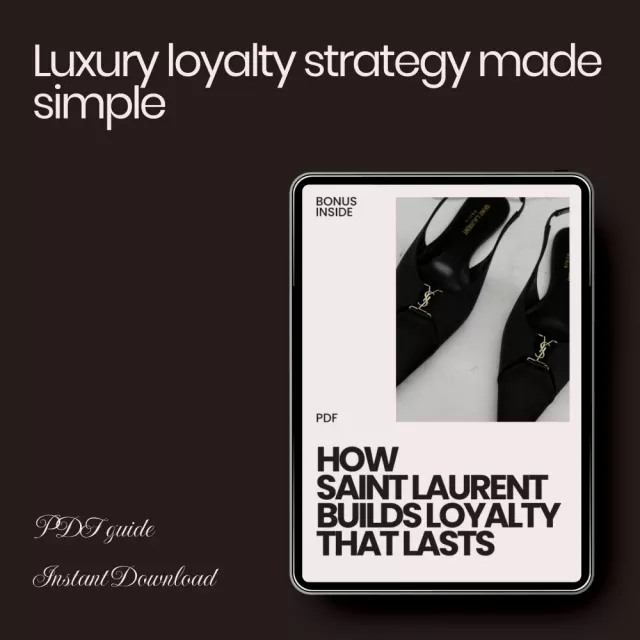
Discover the Strategy Behind Iconic Luxury Loyalty
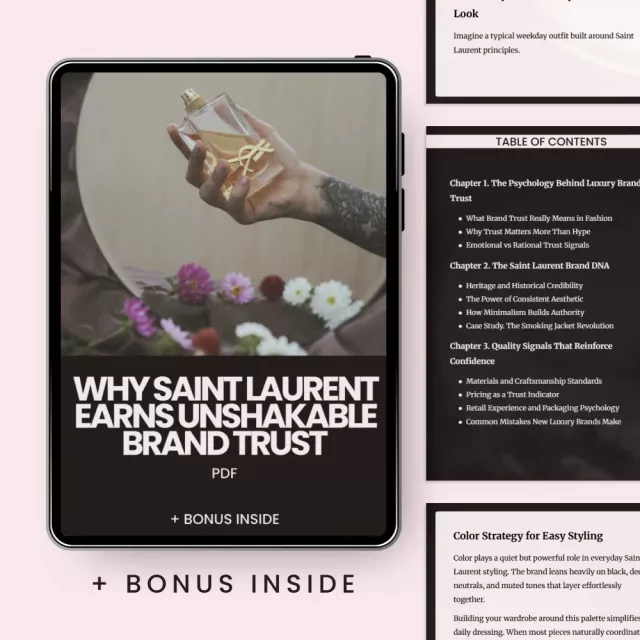
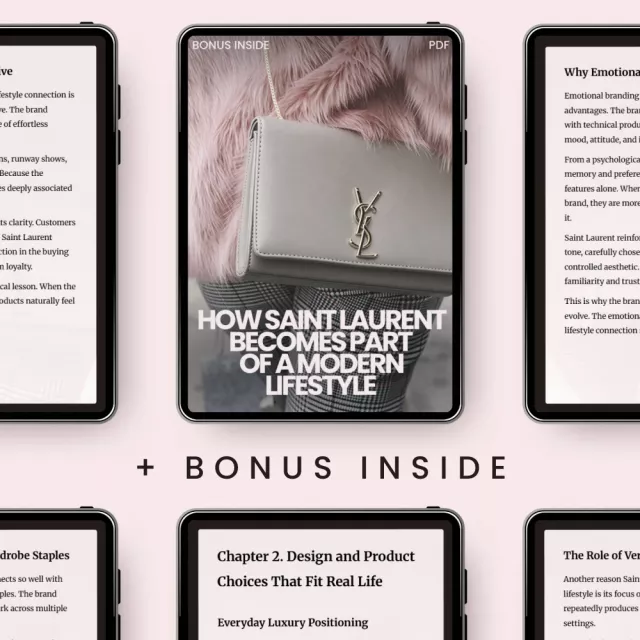
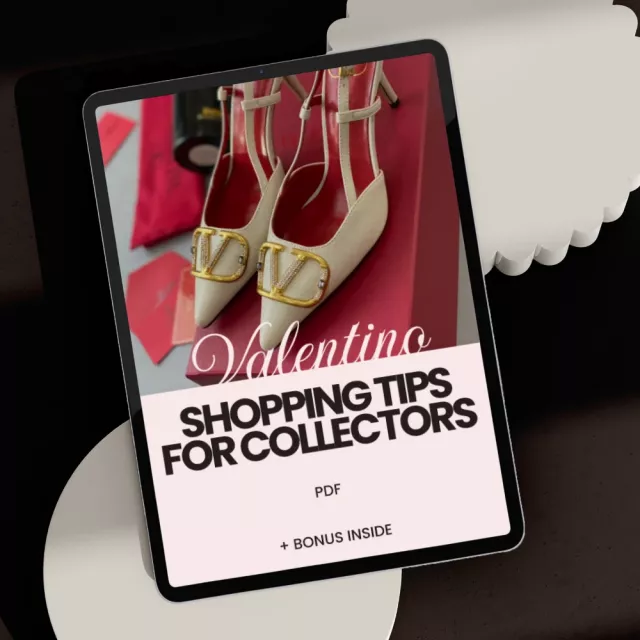
What makes customers return to a luxury brand again and again, even when prices rise and trends change? How Saint Laurent Builds Loyalty That Lasts is a powerful, insight-packed ebook that breaks down the exact psychological, branding, and strategic elements behind one of the world’s most influential fashion houses. If you’ve ever wondered how saint laurent builds loyalty and how your brand can replicate that magnetic pull, this guide delivers clear, practical answers you can apply immediately.
This digital download goes beyond surface-level branding advice. It explores the emotional architecture, disciplined pricing strategy, cultural positioning, and data-driven retention tools that keep customers deeply connected to the brand year after year.
What’s Inside This eBook
- In-depth analysis of the psychology behind luxury loyalty and emotional vs functional attachment
- Breakdown of brand foundations that build long-term trust and perceived value
- Case study: The Power of the Black Blazer and product consistency as a loyalty anchor
- Insights into boutique atmosphere, service culture, and unboxing psychology
- Common loyalty mistakes brands make and how to avoid them
- Celebrity alignment, cultural relevance, and social media consistency strategies
- AI prompt examples for loyalty analysis and retention optimization
- Modern retention tools, personalization strategies, and repeat purchase signals to track
- Step-by-step guidance to build your own retention strategy
Who This Is For
This ebook is designed for fashion entrepreneurs, ecommerce store owners, brand strategists, marketers, creative directors, and business students who want to understand how saint laurent builds loyalty and apply those principles to their own brands. Whether you run a luxury label, a premium Shopify store, or a growing personal brand, the lessons are clear, adaptable, and actionable.
What Makes This Different
Unlike generic branding guides, this resource focuses on one iconic case study and extracts transferable loyalty principles you can use immediately. It combines psychology, real-world brand analysis, and modern AI-powered retention techniques in one structured roadmap. You won’t just learn theory—you’ll gain a framework for sustainable brand growth.
- Clear, organized chapters with practical examples
- Strategic insights tailored to premium and luxury positioning
- Modern retention and data tracking guidance
- Actionable “quick wins” to strengthen customer bonds fast
Practical Benefits You’ll Gain
- Build deeper emotional connections with your audience
- Increase repeat purchases and lifetime customer value
- Strengthen brand trust through consistency and pricing discipline
- Develop a long-term retention strategy instead of chasing short-term sales
- Confidently position your brand in a competitive market
Download and Start Building Loyalty That Lasts
If you’re ready to move beyond discounts and short-term tactics, this ebook gives you the blueprint. Learn how saint laurent builds loyalty, understand why it works, and apply the same strategic thinking to your own business.
Download your copy today and start building a brand your customers never want to leave.
SHIPPING
We are proud to offer international shipping services that currently operate in over 200 countries and islands world wide. Nothing means more to us than bringing our customers great value and service. We will continue to grow to meet the needs of all our customers, delivering a service beyond all expectation anywhere in the world.
Do you ship worldwide?
Yes. We provide free shipping to over 200 countries around the world. However, there are some locations we are unable to ship to. If you happen to be located in one of those countries we will contact you.
What about customs?
We are not responsible for any custom fees once the items have been shipped. By purchasing our products, you consent that one or more packages may be shipped to you and may get custom fees when they arrive to your country.
How long does shipping take?
Shipping time varies by location. These are our estimates:| Location | *Estimated Shipping Time |
|---|---|
| United States | 5-20 Business days |
| Canada, Europe | 5-20 Business days |
| Australia, New Zealand | 5-20 Business days |
| Central & South America | 5-25 Business days |
| Asia | 5-20 Business days |
| Africa | 5-25 Business days |
Do you provide tracking information?
Yes, you will receive an email once your order ships that contains your tracking information. If you haven’t received tracking info within 5 days, please contact us.
My tracking says “no information available at the moment”.
For some shipping companies, it takes 2-5 business days for the tracking information to update on the system. If your order was placed more than 5 business days ago and there is still no information on your tracking number, please contact us.
Will my items be sent in one package?
For logistical reasons, items in the same purchase will sometimes be sent in separate packages, even if you've specified combined shipping.
If you have any other questions, please contact us and we will do our best to help you out.
RETURNS
Order cancellation
All orders can be cancelled until they are shipped. If your order has been paid and you need to make a change or cancel an order, you must contact us within 12 hours. Once the packaging and shipping process has started, it can no longer be cancelled.
Refunds
Your satisfaction is our #1 priority. Therefore, you can request a refund or reshipment for ordered products if:
- If you did not receive the product within the guaranteed time (45 days not including 1-3 day processing) you can request a refund or a reshipment.
- If you received the wrong item you can request a refund or a reshipment.
- If you do not want the product you’ve received you may request a refund but you must return the item at your expense and the item must be unused.
We do not issue the refund if:
- Your order did not arrive due to factors within your control (i.e. providing the wrong shipping address)
- Your order did not arrive due to exceptional circumstances outside the control of cyclonica.com (i.e. not cleared by customs, delayed by a natural disaster).
- Other exceptional circumstances outside the control of cyclonica.com.
*You can submit refund requests within 15 days after the guaranteed period for delivery (45 days) has expired. You can do it by sending a message on Contact Us page
If you are approved for a refund, then your refund will be processed, and a credit will automatically be applied to your credit card or original method of payment, within 14 days.
Exchanges
If for any reason you would like to exchange your product, perhaps for a different size in clothing, you must contact us first and we will guide you through the steps.
Please do not send your purchase back to us unless we authorise you to do so.
Order cancellation
All orders can be cancelled until they are shipped. If your order has been paid and you need to make a change or cancel an order, you must contact us within 12 hours. Once the packaging and shipping process has started, it can no longer be cancelled.
Refunds
Your satisfaction is our #1 priority. Therefore, you can request a refund or reshipment for ordered products if:
- If you did not receive the product within the guaranteed time( 45 days not including 2-5 day processing) you can request a refund or a reshipment.
- If you received the wrong item you can request a refund or a reshipment.
- If you do not want the product you’ve received you may request a refund but you must return the item at your expense and the item must be unused.
We do not issue the refund if:
- Your order did not arrive due to factors within your control (i.e. providing the wrong shipping address)
- Your order did not arrive due to exceptional circumstances outside the control of cyclonica.com (i.e. not cleared by customs, delayed by a natural disaster).
- Other exceptional circumstances outside the control of
*You can submit refund requests within 15 days after the guaranteed period for delivery (45 days) has expired. You can do it by sending a message on Contact Us page
If you are approved for a refund, then your refund will be processed, and a credit will automatically be applied to your credit card or original method of payment, within 14 days.
Exchanges
If for any reason you would like to exchange your product, perhaps for a different size in clothing. You must contact us first and we will guide you through the steps.
Please do not send your purchase back to us unless we authorise you to do so.
Customer Reviews
Write a Review
We Think You’ll Love
Top picks just for you













The emotional versus functional attachment framework changed how I think about every brand I buy from. I always assumed my loyalty to SL was about the product quality — and it is — but this guide showed me the emotional layer underneath. The confidence, the edge, the mood I'm buying into. Once I saw that clearly, I understood why I keep going back even when other brands offer similar pieces. That dual-layer concept is something I now use when evaluating any premium purchase.
The unboxing psychology section was spot on. That moment matters more than people realize.
Confident loyalty — that phrase captures exactly why I've bought SL four times in three years without ever feeling pressured to.
I run a DTC brand and the section on common loyalty mistakes called out everything we were doing wrong. Over-discounting, inconsistent visuals, too many promotional emails. We pulled back, tightened our identity, and saw repeat purchases climb within two months. This guide was the catalyst.
Clean writing, sharp insights, zero wasted pages.
The black blazer case study is the perfect example of how signature items drive repeat buying. I own two variations myself and never questioned why until this spelled it out.
Good overall read. The loyalty psychology section is strong but the AI chapters feel a bit tacked on compared to the rest. Would have preferred more depth on the brand experience side instead.
I've read dozens of brand strategy guides and most of them recycle the same surface-level advice. This one actually breaks down the mechanics — why consistency reduces decision friction, how pricing discipline compounds trust, why restraint outperforms noise. The section on personalization without overexposure is especially relevant right now. Every brand is overdoing it with retargeting and this guide explains why that backfires in luxury.
Loyalty grows from discipline, not noise. That line alone was worth the download 🖤
The boutique atmosphere breakdown made me realize why I always feel calmer shopping at SL than at other luxury stores. Intentional restraint in the environment mirrors the clothing. Smart.
Sent this to my entire marketing team on Monday morning.
The pricing discipline section is underrated. I never connected the lack of sales with why the brand feels more trustworthy, but once you see it, you can't unsee it.
Well-structured guide but some of it feels repetitive if you've read the other PDFs in this series. The loyalty psychology angle is fresh though, and the retention signals section adds something new.
⭐🖤🔥👏
I bought my first SL piece five years ago — a slim black blazer — and I've been back three times since. This guide explained the exact mechanics behind why that happened. Visual consistency, wardrobe integration, cultural credibility. It's not accidental loyalty, it's engineered. Reading this felt like someone reverse-engineered my own purchasing behavior and showed me the blueprint.
The social media consistency point is something most luxury brands get wrong. SL doesn't.
Short enough to finish in one sitting, dense enough to revisit multiple times.
The section on maintaining edge without losing trust is the tightrope every premium brand walks. This guide explains how SL manages it better than most strategy textbooks I've read.
Interesting take but leans too heavily on SL as a case study without enough counterexamples. Would be stronger with more comparison to brands that got loyalty wrong and why. The concepts are solid though.
Product quality as a loyalty anchor sounds obvious but the way it's framed here — that reliability must be consistent, not occasional — really hit. One bad experience eroding years of goodwill is so true.
The quick wins section at the end is surprisingly practical for how strategic the rest of the guide is.
My partner and I are launching a jewelry brand and we've been struggling with retention. The guide's framework — consistency, emotional clarity, restraint — gave us three concrete pillars to build around. We immediately audited our packaging and found it was sending mixed signals. Fixed it within a week. The point about every physical touchpoint either strengthening or weakening attachment is now taped above our shipping station.
Finally someone explains why loyalty programs don't work in luxury. It's about identity, not points.
The digital experience section is relevant beyond fashion. Any premium brand with a clunky website is leaking loyalty.
Decent guide. Wish the retention signals section had more specific metrics or benchmarks instead of keeping things general. The emotional attachment framework is the strongest part by far.
I keep returning to SL and this guide finally showed me why — it's the wardrobe integration effect. Each piece makes the next purchase feel logical instead of indulgent.
That packaging section though 🔥 Dust bags and structured boxes really do extend the brand story.
Read it as a consumer, reread it as a brand strategist. Works both ways.
I appreciated the nuance on personalization without overexposure. So many brands cross that line and wonder why customers disengage. The luxury buyer wants to feel recognized, not surveilled. SL's restraint in communication is as strategic as its product design.
The concept of long-cycle devotion perfectly describes my relationship with this brand. I buy once a year at most but always SL.
Stability with measured innovation — that framing is going straight into my next brand strategy deck.
Useful but I wish it spent more time on what SL gets wrong or where competitors outperform them on loyalty. The analysis is well-written but tilts positive throughout.
Three years into building my own fashion label and the transferable loyalty principles section is the most actionable brand advice I've encountered. Consistency as the foundation, emotional clarity next, restraint on top. I printed those three words and stuck them on my design wall. Every decision now gets filtered through that lens — does this feel consistent, does it sharpen our emotional territory, does it show restraint? Revenue hasn't changed overnight but customer feedback has shifted noticeably. People say they trust us more.
The over-discounting trap is real. Once you train customers to wait for sales, the brand loses its anchor.
Tight, focused, no filler. Every chapter builds on the last.
👜❤️✨🖤👌
The service culture section resonated hard. Attentive but non-intrusive is exactly the balance that keeps me coming back to SL boutiques. Other luxury stores either ignore you or hover. SL finds the middle.
Read this back to back with the competitive analysis guide and they complement each other perfectly.
The celebrity alignment strategy is consistent across all these guides but this one frames it specifically around loyalty rather than just brand image. That angle adds something.
The section on how brands that pivot too dramatically confuse loyal buyers — I've watched three brands I used to love do exactly that. SL's discipline is what keeps me here.
Good content but the AI sections still feel like they belong in a separate guide. The core loyalty analysis is excellent — the psychology chapter and the brand foundations chapter are both strong. But every time it pivots to AI prompts it breaks the flow.
Customers return because the brand continues to validate their taste over time — that's the most precise definition of luxury loyalty I've read anywhere.
Applied the quick wins section to my Shopify store last week. Upgraded packaging, cleaned up the checkout flow, added a thoughtful post-purchase email. Already got two comments from customers noticing the difference.
Every physical touchpoint either strengthens or weakens attachment. Simple but devastating if you're not paying attention.
This guide treats loyalty as an engineering problem, not a vibes problem. Respect.
The focused audit suggestion at the end is practical and doable. Most guides end with vague inspiration — this one ends with a clear next step.
I underestimated packaging until this guide broke down the psychology. Now I keep every SL box and dust bag 🤍
Strong for brand builders, slightly less for pure consumers. The loyalty mechanics are well explained but the second half leans toward a business audience. Not a complaint — just a heads up on who gets the most from this.
The distinction between reactive retention and proactive loyalty management is something I'm now evangelizing at work.
Downloaded for curiosity, stayed for the brand strategy. Genuinely useful.
My SL blazer is five years old and still gets compliments every time I wear it. This guide explained why that consistency matters for loyalty — when the product holds up, the trust compounds. I've since bought boots and a bag from the same house. The wardrobe integration point is not theoretical for me, it's my actual closet.
The calm confidence framing is perfect. SL never begs for attention and that's the whole point.
Solid read overall but the repetition of core themes across chapters could be tightened. The loyalty psychology section and the brand foundations section both make similar points about consistency. Still valuable, just could be more concise.
This is the third guide in the series I've read and the loyalty angle is by far the strongest. It explains why SL's strategy works over time, not just in the moment.
The note about how SL treats social media as a controlled brand environment rather than a creative playground is the sharpest social media advice I've seen in a fashion context.
I work in luxury retail and the boutique atmosphere section perfectly described the experience we try to create. Calm, sharp, intentional. Customers feel it even if they can't name it.
❤️🔥👔
I was skeptical another SL guide could add something new after the first two. But the loyalty lens really does reframe everything. Understanding why I keep buying from the same brand — and seeing the deliberate engineering behind it — made this the most personally impactful one in the series.
The retention signals section is gold for anyone running a premium brand. Repeat purchase rate plus rising average order value — track both.
Concise, smart, and applicable far beyond fashion.
The idea that follow-up purchases should feel logical rather than indulgent is such a clean reframe for how luxury wardrobe building works.
My mother has been buying SL since the 90s. I started three years ago. This guide explains why we both feel at home with the same brand despite being different generations — the visual consistency creates a stable universe that ages well. She sent me the first guide and I sent her this one. Full circle.
The overcommunication trap is something I wish more brands understood. Less email, more trust.
Loyalty built on identity alignment hits different than loyalty built on discounts. This guide gets that.
The building your own retention strategy section is the most practical part. Start with an audit, find friction, fix consistency. Simple and doable.
Worth reading twice. Once for the SL insights, once for the transferable principles.
Helpful as a shopper and as a brand person. The emotional attachment framework alone is worth more than most paid marketing courses. I just wish the data and retention tools chapter went deeper into specific tools and platforms rather than staying conceptual.
The clear sizing guidance and smooth checkout point under digital experience sounds basic but it's where so many luxury sites fail. SL's online experience matches the store and this guide explains why that matters for repeat visits.
Short guide, long-lasting impact. Changed how I evaluate every brand I spend money with 🧠
The one-loyalty-lever-per-quarter approach at the end is refreshingly modest. No grand overhaul, just steady refinement. That itself mirrors the SL philosophy — discipline over drama.
Familiarity strengthens trust. Four words that explain everything about why SL works.
👏🖤⭐✨