





Product Description
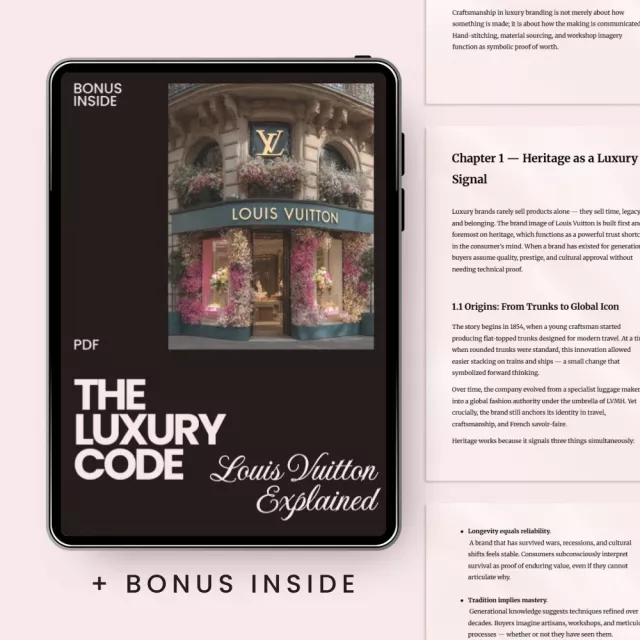
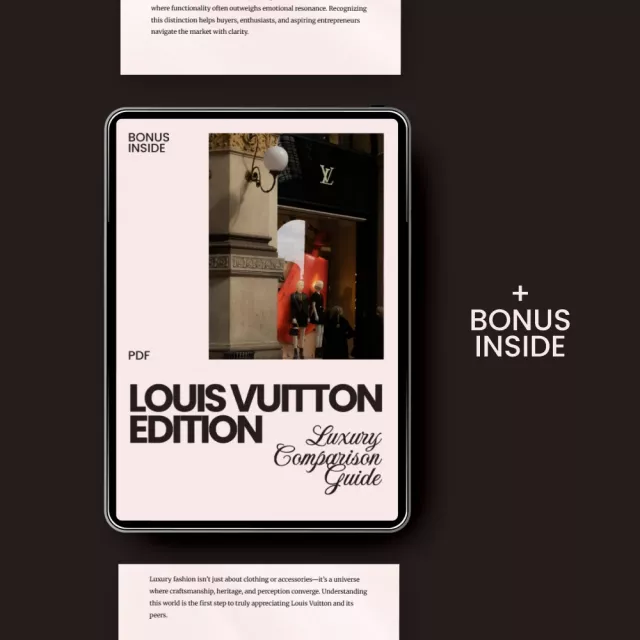
Unlock the world of timeless luxury with Curate Your Louis Vuitton Wardrobe, your go-to guide to mastering the art of Louis Vuitton style for a modern look. Whether you’re a seasoned fashionista or just beginning to explore the realm of high-end fashion, this digital download is designed to help you build a wardrobe that radiates sophistication, elegance, and cutting-edge style. Featuring expert advice, insightful tips, and practical tools, this guide is the perfect resource for anyone looking to infuse their closet with the iconic Louis Vuitton flair.
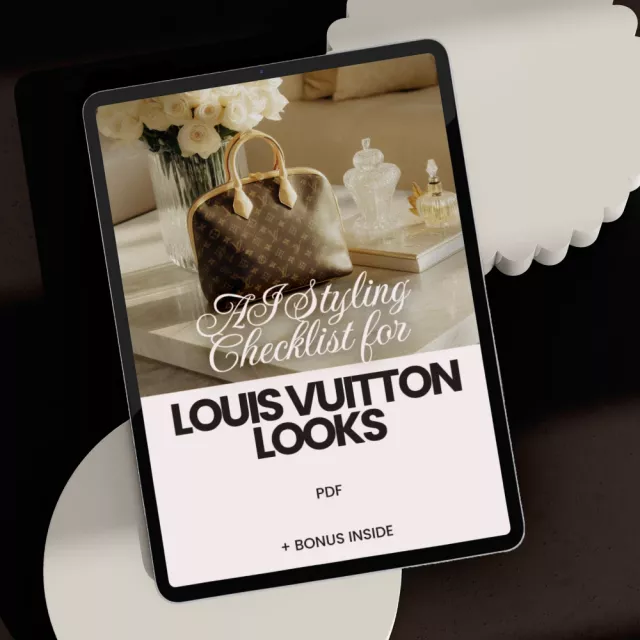
Curate Your Louis Vuitton Wardrobe offers a comprehensive exploration of the brand’s heritage and how it seamlessly blends with contemporary fashion trends. Inside, you’ll discover how to mix signature Louis Vuitton pieces with your personal style, while avoiding common fashion missteps. With bonus guidance on using AI to enhance your outfit planning, this guide is perfect for those seeking to elevate their everyday looks with ease and confidence.
Key Features
- Chapter 1: The Essence of Louis Vuitton Style – Dive into the history of Louis Vuitton, from its heritage to modern adaptations, and learn about the signature pieces that define the brand.
- Chapter 2: Crafting Your Own Louis Vuitton Look – Get expert advice on building a cohesive wardrobe, mixing and matching styles, and explore real-life case studies of everyday Louis Vuitton outfits.
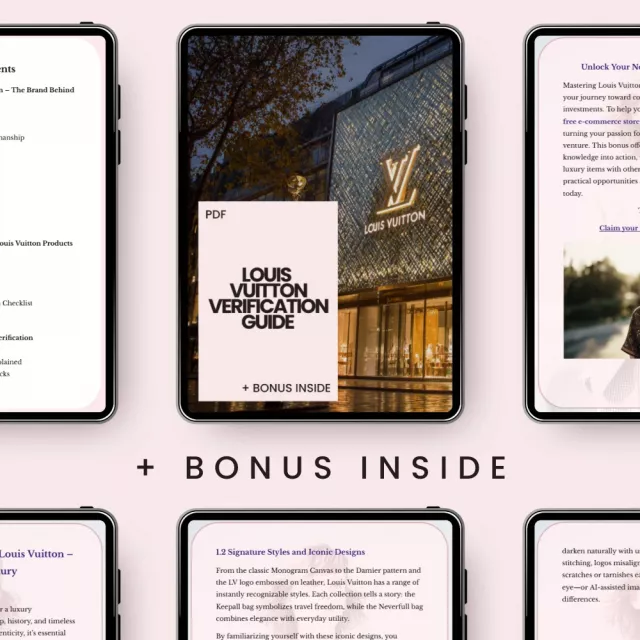
- Chapter 3: Avoiding Common Pitfalls – Discover style mistakes to watch out for and learn how to spot authenticity issues in Louis Vuitton items.
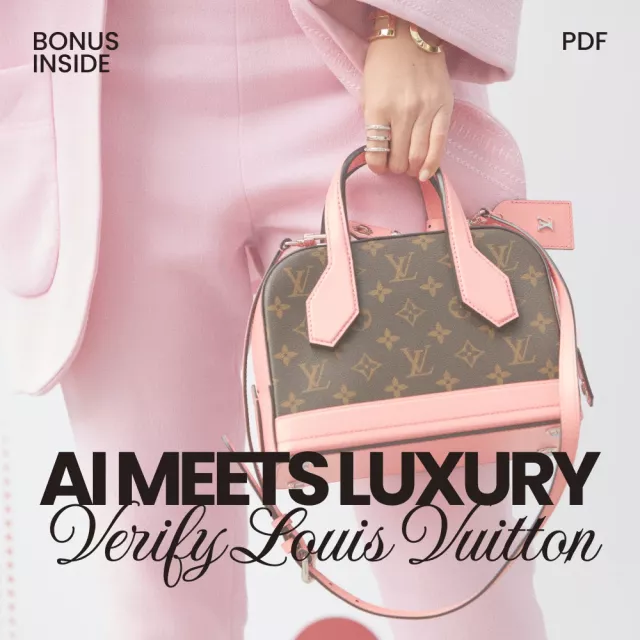
- Chapter 4: Enhancing Your Style with AI – Learn how AI can assist you in planning outfits and providing style guidance, with prompt examples for your own fashion journey.
Why You Need This Guide
- For Fashion Lovers: Whether you’re a Louis Vuitton enthusiast or new to luxury fashion, this guide is packed with insights to help you curate a wardrobe that reflects your style.
- Practical and Modern: This is more than just a style guide; it’s a modern approach to incorporating Louis Vuitton’s timeless pieces into your everyday wardrobe with confidence.
- AI Integration: With the addition of AI-powered outfit planning, this guide ensures you’re always a step ahead when it comes to fashion-forward choices.
Get Started Today
Ready to transform your wardrobe? Curate Your Louis Vuitton Wardrobe offers an in-depth and personalized approach to building a stylish and modern closet, perfectly suited to today’s fashion world. Don’t wait – download this essential guide and begin crafting your own Louis Vuitton look today!
SHIPPING
We are proud to offer international shipping services that currently operate in over 200 countries and islands world wide. Nothing means more to us than bringing our customers great value and service. We will continue to grow to meet the needs of all our customers, delivering a service beyond all expectation anywhere in the world.
Do you ship worldwide?
Yes. We provide free shipping to over 200 countries around the world. However, there are some locations we are unable to ship to. If you happen to be located in one of those countries we will contact you.
What about customs?
We are not responsible for any custom fees once the items have been shipped. By purchasing our products, you consent that one or more packages may be shipped to you and may get custom fees when they arrive to your country.
How long does shipping take?
Shipping time varies by location. These are our estimates:| Location | *Estimated Shipping Time |
|---|---|
| United States | 5-20 Business days |
| Canada, Europe | 5-20 Business days |
| Australia, New Zealand | 5-20 Business days |
| Central & South America | 5-25 Business days |
| Asia | 5-20 Business days |
| Africa | 5-25 Business days |
Do you provide tracking information?
Yes, you will receive an email once your order ships that contains your tracking information. If you haven’t received tracking info within 5 days, please contact us.
My tracking says “no information available at the moment”.
For some shipping companies, it takes 2-5 business days for the tracking information to update on the system. If your order was placed more than 5 business days ago and there is still no information on your tracking number, please contact us.
Will my items be sent in one package?
For logistical reasons, items in the same purchase will sometimes be sent in separate packages, even if you've specified combined shipping.
If you have any other questions, please contact us and we will do our best to help you out.
RETURNS
Order cancellation
All orders can be cancelled until they are shipped. If your order has been paid and you need to make a change or cancel an order, you must contact us within 12 hours. Once the packaging and shipping process has started, it can no longer be cancelled.
Refunds
Your satisfaction is our #1 priority. Therefore, you can request a refund or reshipment for ordered products if:
- If you did not receive the product within the guaranteed time (45 days not including 1-3 day processing) you can request a refund or a reshipment.
- If you received the wrong item you can request a refund or a reshipment.
- If you do not want the product you’ve received you may request a refund but you must return the item at your expense and the item must be unused.
We do not issue the refund if:
- Your order did not arrive due to factors within your control (i.e. providing the wrong shipping address)
- Your order did not arrive due to exceptional circumstances outside the control of cyclonica.com (i.e. not cleared by customs, delayed by a natural disaster).
- Other exceptional circumstances outside the control of cyclonica.com.
*You can submit refund requests within 15 days after the guaranteed period for delivery (45 days) has expired. You can do it by sending a message on Contact Us page
If you are approved for a refund, then your refund will be processed, and a credit will automatically be applied to your credit card or original method of payment, within 14 days.
Exchanges
If for any reason you would like to exchange your product, perhaps for a different size in clothing, you must contact us first and we will guide you through the steps.
Please do not send your purchase back to us unless we authorise you to do so.
Order cancellation
All orders can be cancelled until they are shipped. If your order has been paid and you need to make a change or cancel an order, you must contact us within 12 hours. Once the packaging and shipping process has started, it can no longer be cancelled.
Refunds
Your satisfaction is our #1 priority. Therefore, you can request a refund or reshipment for ordered products if:
- If you did not receive the product within the guaranteed time( 45 days not including 2-5 day processing) you can request a refund or a reshipment.
- If you received the wrong item you can request a refund or a reshipment.
- If you do not want the product you’ve received you may request a refund but you must return the item at your expense and the item must be unused.
We do not issue the refund if:
- Your order did not arrive due to factors within your control (i.e. providing the wrong shipping address)
- Your order did not arrive due to exceptional circumstances outside the control of cyclonica.com (i.e. not cleared by customs, delayed by a natural disaster).
- Other exceptional circumstances outside the control of
*You can submit refund requests within 15 days after the guaranteed period for delivery (45 days) has expired. You can do it by sending a message on Contact Us page
If you are approved for a refund, then your refund will be processed, and a credit will automatically be applied to your credit card or original method of payment, within 14 days.
Exchanges
If for any reason you would like to exchange your product, perhaps for a different size in clothing. You must contact us first and we will guide you through the steps.
Please do not send your purchase back to us unless we authorise you to do so.
Customer Reviews
Write a Review
We Think You’ll Love
Top picks just for you










The Sofia case study is basically my daily life now — Neverfull for commute, scarf for weekends, clutch for evenings.
The wardrobe-as-toolkit concept clicked immediately. I'd been buying LV pieces randomly — a belt here, sneakers there — without thinking about how they'd work together. After reading the cohesive wardrobe section, I mapped out my existing pieces and realized I had gaps where one versatile bag could replace three I barely used. Sold two on consignment and bought a neutral-toned tote that pairs with everything from jeans to a blazer.
One standout LV item per outfit — that rule fixed everything.
Monogram belt with tailored joggers and a white tee — tried it, got compliments within an hour. The mix-and-match section is full of combinations like that, ones you wouldn't think of on your own but make total sense once you read them.
Solid guide with practical advice throughout. The heritage-to-modernity section sets the tone well and the styling case study makes abstract advice concrete. I would have liked more occasion-specific guidance beyond the three scenarios given — what about travel, formal events, or working from home days? The framework is strong but the examples feel limited.
Started a style journal because of this and it's been surprisingly revealing.
Neutral palettes as a canvas for LV pieces — such obvious advice that I'd never actually followed.
I was the poster child for color overload before this guide. Monogram bag with a printed blouse, bold shoes, patterned scarf — I thought more meant more interesting. The pitfalls chapter called it out without being condescending and gave me a clear alternative: muted blacks, creams, earth tones as the base, then let one piece do the talking. I tested it on a work outfit last month — Speedy with a cream knit and tailored gray trousers — and my manager asked if I'd been shopping in Paris. I had not. I'd been reading a PDF 😅
The authenticity section covers materials, monogram alignment, and date codes clearly. Good baseline knowledge for anyone browsing resale. I docked a star because the guide references AI outfit planning without walking you through what the output actually looks like — it tells you to use prompts but doesn't show example results, so you're guessing at quality.
Logos for branding vs. logos for style — that distinction matters more than people think.
👜✨🤌🔥
The evolving toolkit idea for wardrobe building is the smartest framing I've seen.
Clean guide that covers heritage, styling, and common mistakes without dragging. The mixing-and-matching section is where it earns its keep — practical combos you can try today. The AI chapter feels tacked on though. It reads like a different guide bolted onto an otherwise cohesive fashion resource. Would've preferred that space used for more outfit formulas or seasonal guidance.
Monogram scarf over a monochrome outfit — tried it Saturday, felt untouchable.
The Archlight mention surprised me — nice to see sneakers treated as real LV pieces.
I've owned my Neverfull for four years and only ever paired it with jeans and a black top. This guide showed me it works just as well with business attire as it does with weekend casual, which seems obvious in hindsight but I'd just never tried it. The cohesive wardrobe section reframed how I see every piece I own — not as standalone purchases but as parts of a system that should all talk to each other.
Good structure and the case study brings the advice to life. The pitfalls chapter is the strongest section — specific, practical, and actionable. I wished for more depth on the heritage portion since it covers 160+ years in about two paragraphs. The modern twist section partially compensates by naming actual designers and pieces, but the historical foundation felt rushed.
Integration, not imitation — that line should be on a poster.
Finally stopped over-accessorizing after reading this 🙌
My wardrobe had expensive pieces that never talked to each other. I'd wear my Keepall to the airport with gym clothes, my monogram scarf bunched in a drawer because nothing matched it, and my Archlights only with the one outfit I bought them for. After going through the cohesive wardrobe section, I reorganized around three anchor pieces — the Neverfull, a monogram scarf, and one pair of LV sneakers — and built everything else around neutrals. Within two weeks I was getting dressed in half the time and actually enjoying it. Showed this guide to my sister who just bought her first Speedy and she said it saved her from making the same fragmented mistakes I did. The before-and-after in how I feel about my closet is dramatic.
The prompt examples for AI styling are surprisingly useful once you try them.
The guide is fine but reads like it was written for someone with zero fashion awareness. If you already know not to pair a monogram bag with clashing prints or to balance bold accessories with neutral clothing, there isn't much new here. The authenticity section rehashes what's available in any YouTube video. The AI chapter is interesting conceptually but the prompts feel generic without seeing real output. It's an adequate introduction for absolute beginners.
Treating each piece as part of a system changed how I shop entirely.
The balance tip — bold LV accessory means neutral everything else — is now my default.
Well organized across four chapters and the writing is approachable. The Sofia case study makes the styling advice tangible, and the pitfalls chapter addresses real mistakes. I would have liked the mix-and-match section to include more gender-diverse examples — the outfit suggestions lean feminine and the menswear angle only gets touched through sneaker mentions.
Earth tones + one LV piece = the formula I use every morning now.
Luxury should accentuate, not dominate — that reframe was everything for me.
The Speedy's origin story as a bag designed for mobility gave me a new appreciation for a piece I'd written off as basic. Understanding why something was created changes how you wear it. Paired mine with a blazer and tailored pants for a work trip last week and it felt intentional for the first time instead of just convenient.
Decent overview with some practical tips. The wardrobe-building section is the highlight and the case study grounds the advice well. My issue is scope — four chapters covering heritage, styling, pitfalls, and AI means nothing gets explored deeply enough. Each topic deserves its own guide. As a sampler it works, but I left wanting more substance from every section.
The style journal idea from the refinement section is low-effort and high-reward.
⭐👏🤍
Heritage while experimenting with trends — that duality is what makes LV timeless and this guide gets it.
My wife and I both read this before a trip to the LV store. She picked up the scarf layering technique from the case study and I used the monogram belt with joggers idea from the mixing section. We walked out with two pieces that both work with clothes we already own instead of buying things that would've sat unused. First time either of us felt strategic about a luxury purchase rather than emotional.
The AI prompts are worth bookmarking even if you skip the rest.
Useful guide that delivers on its title. The strongest advice is in Chapters 2 and 3 — building a wardrobe around anchor pieces and avoiding the over-accessorizing trap. The AI chapter has potential but doesn't go far enough — it lists prompts without showing what kind of responses to expect, which makes it hard to evaluate whether the approach actually works before trying it yourself.
Counterfeits feeling plasticky vs. genuine leather feeling flawless — that texture test is so simple.
I've been collecting LV for a decade but still learned something from the pitfalls chapter. The distinction between wearing LV for branding versus wearing it for style resonated. I realized a lot of my outfits were logo-forward but personality-absent. Scaled back to one standout piece per look and leaned into fit, proportion, and color like the guide suggests. The compliments shifted from people noticing the brand to people noticing me — which is the whole point, isn't it?
Versatile, timeless, and expressive — those three filters simplified every purchase decision.
The case study felt like reading about my own morning routine 💫
Helpful framework with clear structure. The heritage section gives just enough context and the styling chapters are practical. My critique is that the guide focuses almost exclusively on bags, scarves, and sneakers — belts, watches, jewelry, and ready-to-wear barely get mentioned. A broader product scope would make the wardrobe curation advice feel more complete.
Started auditing my wardrobe after reading this — found three LV pieces I'd forgotten I owned.
Monogram on sneakers and backpacks — the heritage-to-modernity evolution is real.
It's a competent guide that covers familiar ground. The signature pieces section is informative if you're new to LV and the case study is a nice touch. But if you follow any fashion accounts or have read other luxury styling guides, the advice here will feel like a recap. The pitfalls chapter covers mistakes that experienced buyers already know to avoid, and the AI section feels more like a tech trend piece than genuine styling help.
Keeping the rest neutral when you have a bold LV piece sounds basic but nobody ever said it this clearly before.
The Neverfull going from business attire to weekend casual — I tested it and it works both ways.
Good foundations in the first three chapters. The mix-and-match section with specific combos is the most useful part, and the authenticity tips give you enough to feel confident browsing secondhand. The AI chapter introduces interesting ideas but doesn't bridge the gap between concept and practice. Showing one example of what AI actually generates from those prompts would have strengthened it significantly.
❤️🔥👌👜✨
LV blazer with casual jeans and sneakers — that suggestion unlocked a whole new category for me.
I was about to impulse-buy a third LV bag when I found this guide. The cohesive wardrobe section made me realize my existing two bags covered every occasion I actually needed — I just wasn't styling them correctly. Instead of buying another bag, I picked up a monogram scarf and followed the layering advice from the case study. My wardrobe now has three LV pieces that each work with a dozen outfits. Before this guide it was two bags that each worked with maybe two. The math on cost-per-wear completely shifted.
Wardrobe audit as step one — practical and free.
Approachable writing and good advice for people building their first LV collection. The styling formulas are useful and the pitfalls chapter is sharp. I wanted more seasonal variation though — the outfit suggestions feel spring/fall focused and don't address summer heat or winter layering, which changes everything about how you style luxury pieces.
Run your fingers over seams and edges — that authenticity check is now automatic for me.
The evolving toolkit metaphor made wardrobe planning feel less overwhelming and more strategic.
I work as a personal stylist and I've started recommending this to clients who come in with expensive pieces they don't know how to wear. The guide does something most fashion resources don't — it treats LV ownership as a skill to develop rather than a status to display. That mindset shift is worth more than any specific outfit formula, though those are good too. The Sofia case study gives clients a relatable reference point and the pitfalls chapter diplomatically addresses mistakes I'd otherwise have to bring up myself.
Balance, restraint, thoughtful layering — three words that changed my closet.
A readable guide with some practical value, especially in the styling chapters. My reservation is that it tries to serve both complete beginners and existing LV owners without fully satisfying either. Beginners might want more hand-holding on which pieces to buy first, while experienced collectors already know most of the pitfalls covered. The sweet spot seems to be someone who owns one or two pieces and wants to build from there.
The Keepall gets one line and deserves a whole section — but the rest is solid.
Respecting heritage while experimenting with trends — that's the first step and the last step.
I'd been making literally every mistake in the pitfalls chapter. Multiple LV pieces per outfit, clashing colors with the monogram, choosing items for the logo instead of the fit. Reading it was like getting a gentle but direct call-out from a friend who knows better. The fix was simple too — one piece, neutral base, let the item speak. My outfits now look intentional instead of expensive. There's a difference and this guide taught me what it is 🤎
Practical guide that does what it promises. The cohesive wardrobe section is genuinely helpful and the authenticity tips provide a solid baseline. My only real critique is the virtual try-on mention in the AI chapter — it names the concept without recommending any specific tools, which leaves readers on their own to figure out where to actually try it.
Tried the AI prompt for seasonal outfit planning and got three combos I never would've considered.
Short, focused, and earns every page.
The mixing section unlocked streetwear combinations I'd been afraid to try with luxury pieces. Monogram belt with joggers sounded wrong until I actually wore it and got stopped on the street twice. This guide gives you permission to break rules you didn't know were made up in the first place.
The commute-to-evening outfit range in the case study is so relatable.
Useful and well organized with clear takeaways per chapter. The signature pieces section gives good context on the Speedy, Neverfull, and Keepall. I knocked off a star because the modern twist section name-drops Ghesquière and Abloh without showing how their specific design philosophies translate into wearable advice for the reader. It gestures at contemporary flair without demonstrating it.
LV doesn't dictate your style, it enhances it — reading that was a relief.
The style journal idea sounded tedious until I actually tried it. Two weeks of documenting outfits and I noticed I reach for the same three combos and avoid two LV pieces entirely. Now I know exactly what to rotate out and what to build around. Low effort, high clarity.
It covers the right topics but stays surface-level on each one. The heritage section rushes through decades of history, the mixing section gives a handful of combos without explaining the principles behind them, and the AI chapter introduces concepts it doesn't develop. Each chapter reads like a strong outline that needed another draft to become a complete guide. Useful enough for a quick read but not the definitive resource the title implies.
Misaligned patterns and truncated logos — I check for those on every resale listing now.
I have three LV pieces and used to think I needed ten more to have a real collection. This guide convinced me that three well-chosen items styled intentionally around neutrals would outperform a closet full of random luxury purchases. The cohesive wardrobe concept reframed collecting as curating, which is a fundamentally different mindset. My Neverfull, monogram scarf, and Archlights now anchor every outfit I put together. People think I have far more LV than I actually do because every piece gets heavy rotation in different contexts. That's the whole philosophy of this guide in action.
Readable guide with a good mix of context and practical advice. The commute/weekend/evening examples in the case study are the most immediately useful section. Would have been stronger with a visual component — even simple flat-lay suggestions or color palette swatches to accompany the outfit formulas.
Wardrobe optimization through AI — interesting concept I hadn't considered before.
This reframed luxury for me entirely. I used to think curating a wardrobe meant buying more. Now I understand it means buying with purpose — choosing pieces that complement each other, work across occasions, and express something personal. The pitfalls chapter was humbling but necessary, and the refinement section gave me an ongoing process instead of just a one-time download. Worth revisiting seasonally.
Solid structure with useful content throughout. The anchor piece strategy in Chapter 2 is practical and the authenticity tips are well explained. My one critique: the guide defaults to feminine styling examples almost exclusively — the monogram belt with joggers combo is the only suggestion that feels unisex. More range would broaden the audience without changing the core advice.
The Neverfull combining practicality with elegance — that description sold me on my next purchase.
Clean read with no wasted pages. Four chapters, clear takeaways, done.
Experimenting without risk through AI prompts — that's the insight that ties the whole guide together.