





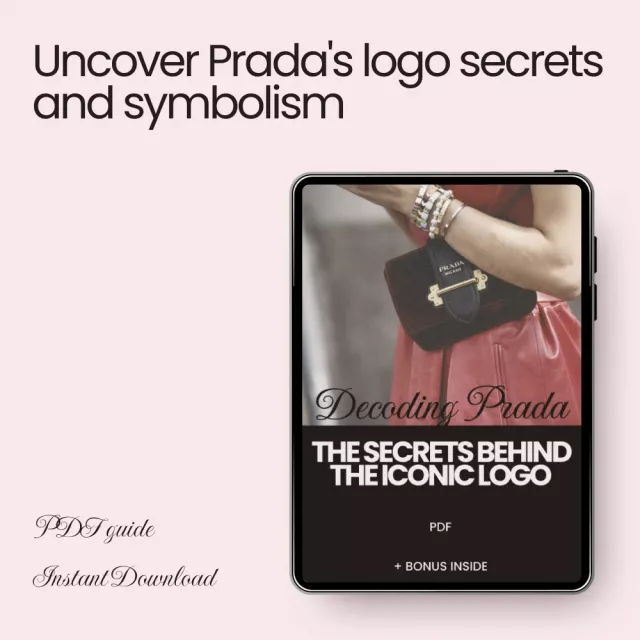
Unlock the Mysteries Behind Prada’s Iconic Logo
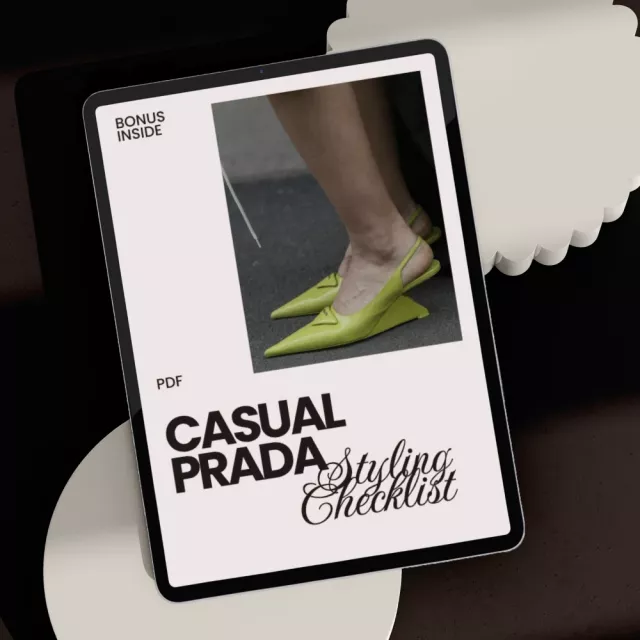
Step into the world of luxury fashion with our comprehensive guide, Decoding Prada: The Secrets Behind the Iconic Logo. Have you ever wondered what the Prada logos symbolize? This in-depth digital download takes you on a journey through the history, design, and meaning behind one of the most recognizable logos in the fashion industry. Whether you’re a fashion enthusiast, a branding expert, or simply curious about the stories behind iconic symbols, this guide is your ultimate resource.
This guide delves into the essence of Prada’s logo, providing insights that not only cover its origins but also explore its influence on modern branding. From triangular iconography to the elegant fonts, discover how this brand has woven a legacy into its visual identity. The Prada logo is more than just a design—it’s a symbol of strength, prestige, and innovation.
What’s Inside the Guide?
- Chapter 1: The Origins of the Prada Logo – Explore the rich history of Prada’s early days, the evolution from triangles to typography, and the hidden symbolism in its design.
- Chapter 2: What the Logo Really Represents – Learn about the triangular iconography that stands for strength, prestige, and innovation, as well as the importance of font choices and color/material variations.
- Chapter 3: Prada Logo in Modern Branding – A case study of how Prada’s logo influences consumer perception and tips on avoiding common branding mistakes.
- Chapter 4: Exploring the Logo Through AI – Discover how to use AI for logo analysis, get inspiration for fashion projects, and learn how to merge tradition with technology in branding.
Why This Guide is Different
Unlike other fashion branding guides, Decoding Prada: The Secrets Behind the Iconic Logo goes beyond basic logo design. This guide is packed with detailed chapters that provide practical insights into how luxury brands like Prada use their logo to create a lasting impression. Whether you are a designer, marketer, or simply a lover of fashion, this guide will deepen your understanding of logo symbolism and its impact on brand identity.
Who Is This Guide For?
This guide is perfect for anyone interested in luxury fashion, branding, and design. Whether you’re a fashion student, a designer, or a marketing professional, you’ll find valuable insights on the true meaning behind the Prada logo. If you’re passionate about understanding how iconic logos shape consumer perceptions, this guide is for you.
Practical Benefits You’ll Gain
- Understand what the Prada logos symbolize and how it enhances the brand’s prestige.
- Get an insider’s look into the history and evolution of Prada’s visual identity.
- Learn to avoid common branding mistakes and elevate your own design strategies.
- Discover how AI can enhance your understanding of logo design and help you innovate.
Download Today!
Don’t miss out on the chance to unlock the secrets behind one of the world’s most iconic logos. Download Decoding Prada: The Secrets Behind the Iconic Logo now and start exploring how this legendary brand uses its logo to define luxury, innovation, and elegance in the fashion world. Whether you’re a brand strategist or a fashion lover, this guide offers unparalleled insights into the art of logo design.
SHIPPING
We are proud to offer international shipping services that currently operate in over 200 countries and islands world wide. Nothing means more to us than bringing our customers great value and service. We will continue to grow to meet the needs of all our customers, delivering a service beyond all expectation anywhere in the world.
Do you ship worldwide?
Yes. We provide free shipping to over 200 countries around the world. However, there are some locations we are unable to ship to. If you happen to be located in one of those countries we will contact you.
What about customs?
We are not responsible for any custom fees once the items have been shipped. By purchasing our products, you consent that one or more packages may be shipped to you and may get custom fees when they arrive to your country.
How long does shipping take?
Shipping time varies by location. These are our estimates:| Location | *Estimated Shipping Time |
|---|---|
| United States | 5-20 Business days |
| Canada, Europe | 5-20 Business days |
| Australia, New Zealand | 5-20 Business days |
| Central & South America | 5-25 Business days |
| Asia | 5-20 Business days |
| Africa | 5-25 Business days |
Do you provide tracking information?
Yes, you will receive an email once your order ships that contains your tracking information. If you haven’t received tracking info within 5 days, please contact us.
My tracking says “no information available at the moment”.
For some shipping companies, it takes 2-5 business days for the tracking information to update on the system. If your order was placed more than 5 business days ago and there is still no information on your tracking number, please contact us.
Will my items be sent in one package?
For logistical reasons, items in the same purchase will sometimes be sent in separate packages, even if you've specified combined shipping.
If you have any other questions, please contact us and we will do our best to help you out.
RETURNS
Order cancellation
All orders can be cancelled until they are shipped. If your order has been paid and you need to make a change or cancel an order, you must contact us within 12 hours. Once the packaging and shipping process has started, it can no longer be cancelled.
Refunds
Your satisfaction is our #1 priority. Therefore, you can request a refund or reshipment for ordered products if:
- If you did not receive the product within the guaranteed time (45 days not including 1-3 day processing) you can request a refund or a reshipment.
- If you received the wrong item you can request a refund or a reshipment.
- If you do not want the product you’ve received you may request a refund but you must return the item at your expense and the item must be unused.
We do not issue the refund if:
- Your order did not arrive due to factors within your control (i.e. providing the wrong shipping address)
- Your order did not arrive due to exceptional circumstances outside the control of cyclonica.com (i.e. not cleared by customs, delayed by a natural disaster).
- Other exceptional circumstances outside the control of cyclonica.com.
*You can submit refund requests within 15 days after the guaranteed period for delivery (45 days) has expired. You can do it by sending a message on Contact Us page
If you are approved for a refund, then your refund will be processed, and a credit will automatically be applied to your credit card or original method of payment, within 14 days.
Exchanges
If for any reason you would like to exchange your product, perhaps for a different size in clothing, you must contact us first and we will guide you through the steps.
Please do not send your purchase back to us unless we authorise you to do so.
Order cancellation
All orders can be cancelled until they are shipped. If your order has been paid and you need to make a change or cancel an order, you must contact us within 12 hours. Once the packaging and shipping process has started, it can no longer be cancelled.
Refunds
Your satisfaction is our #1 priority. Therefore, you can request a refund or reshipment for ordered products if:
- If you did not receive the product within the guaranteed time( 45 days not including 2-5 day processing) you can request a refund or a reshipment.
- If you received the wrong item you can request a refund or a reshipment.
- If you do not want the product you’ve received you may request a refund but you must return the item at your expense and the item must be unused.
We do not issue the refund if:
- Your order did not arrive due to factors within your control (i.e. providing the wrong shipping address)
- Your order did not arrive due to exceptional circumstances outside the control of cyclonica.com (i.e. not cleared by customs, delayed by a natural disaster).
- Other exceptional circumstances outside the control of
*You can submit refund requests within 15 days after the guaranteed period for delivery (45 days) has expired. You can do it by sending a message on Contact Us page
If you are approved for a refund, then your refund will be processed, and a credit will automatically be applied to your credit card or original method of payment, within 14 days.
Exchanges
If for any reason you would like to exchange your product, perhaps for a different size in clothing. You must contact us first and we will guide you through the steps.
Please do not send your purchase back to us unless we authorise you to do so.
Customer Reviews
Write a Review
We Think You’ll Love
Top picks just for you













The inverted triangle pointing downward meaning stability—never looked at Prada the same way again.
I've owned Prada pieces for years but never understood the intention behind the logo until now. The breakdown of how the serif typeface balances luxury with readability makes the design feel even more considered. A genuinely illuminating read.
🔥✨💛
Gold accents representing timelessness—obvious in retrospect, completely new to me.
I work in visual merchandising and have spent years placing Prada products in store displays without ever digging into the design logic behind the logo itself. Reading about how even small shifts in logo placement affect perceived value stopped me cold—I'd been making those decisions intuitively without a framework. The symbolism section on the inverted triangle as a marker of stability and balance gave me language I now use when briefing my team on display concepts. Understanding that the serif typeface was chosen for its balance of luxury and readability helped me see why certain placements read as prestigious and others don't. The branding mistakes section was equally valuable: I've seen inconsistent logo color usage in seasonal campaigns that genuinely seemed to flatten the product's perceived value, and now I understand why. This is the kind of context I wish I'd had five years ago.
The distinction between metallics for luxury, matte for modern minimalism, and contrasting colors for bold statements is something I've felt in Prada campaigns but never seen articulated this clearly. Now I notice the emotional shift every time the color changes across collections. The color and material section alone made this worth reading.
Strong on symbolism, lighter than expected on logo evolution history.
Explaining how customers can recognize the triangular logo as quality and status even without seeing the full brand name puts into words something I'd experienced without realizing it. The consumer perception section makes you see branding differently across every luxury category, not just Prada.
The serif typeface balancing luxury with readability is the clearest explanation of font choice in luxury branding I've ever read 🔺
My background is in graphic design and I've been asked to produce Prada-inspired mood boards for clients on multiple occasions. Before reading this, my understanding of the logo was purely visual—I knew it was clean and strong, but I couldn't explain why it worked beyond aesthetic preference. The breakdown of triangular iconography as a signal of direction, innovation, and resilience gave me the theoretical anchor I was missing. The AI-powered logo analysis section was particularly useful—the idea of using image generation to test logo variations in unconventional materials before production is something I've since brought into my own workflow. I now approach luxury logo briefs with a completely different vocabulary than I did before.
A 1913 leather goods shop growing into a globally recognized symbol of prestige—understanding that arc makes the restraint of the logo feel intentional rather than minimal for its own sake. The heritage section contextualizes every design choice that follows.
Thorough on the design symbolism side. The digital adaptation section touches on real issues but moves past them quickly—logos losing clarity on social media and mobile is a significant ongoing challenge that deserved more depth than a single bullet point.
Subtle changes over decades, core values never shifting. That's the whole lesson.
The breakdown of how logo placement consistency matters as much as the logo itself reframed how I think about product photography. A slightly misaligned triangle in a digital ad can erode the sense of luxury before anyone reads a word of copy. Clear, precise insight.
Mario Prada's 1913 leather shop in Milan built the foundation for one of the most studied logos in fashion.
The content here is genuinely interesting and the symbolism section is well-explained. It stays fairly surface-level though—the logo's evolution over decades is treated briefly when it could anchor a much richer historical analysis. Good starting point, not the deep dive I was hoping for.
Logos that work on leather but lose clarity on mobile—that warning is more relevant than ever.
I've been collecting Prada accessories for about six years and genuinely thought I understood the brand's visual identity just from exposure. The inverted triangle's historical association with stability and balance was something I'd never consciously considered, even though I'd been wearing it for years. What shifted for me was the insight about gold accents communicating timelessness and high status—I'd always chosen gold-hardware versions of bags over silver ones and had never articulated why, beyond personal preference. Reading that the choice is designed to reinforce specific emotional messages made my own taste feel less arbitrary. I've since started paying attention to which logo material variations appear in seasonal versus core collections and can now see the pattern the guide describes.
Typography that communicates clarity and tradition without any ornamentation—that's harder to achieve than it looks.
Good overview, though the AI tools sections feel speculative rather than grounded in specific tools.
What this guide does well is show how precisely values like understated luxury and refinement are encoded into the triangle's direction, the font's weight, and the logo's placement on the product 🔍 Every decision turns out to be deliberate, and once you see it you can't stop noticing.
Overcomplicating a minimalist logo is exactly how luxury brands erode their own identity. Clear warning.
I run a small luxury consignment business and authentication is a constant challenge. Before reading this, I was inspecting hardware and stitching but not specifically scrutinizing logo placement and font precision as authenticity indicators. The section on how even minor misalignments in the triangle or incorrect color usage weaken brand recognition gave me new checkpoints for evaluating pieces. A counterfeit item that passes the hardware test often fails at the logo level if you know what precision looks like. I've since added logo inspection—triangle symmetry, font thickness, gold treatment—to my standard evaluation process. The guide also helped me understand why certain seasonal variations in logo color are legitimate, which had previously caused me to flag authentic pieces incorrectly.
Heritage and authority encoded in a single triangle. No brand does restraint better.
⭐✨🔱
The practical insight about AI image generation allowing designers to test logo variations in unconventional materials before production is the kind of forward-looking thinking that separates this from a purely historical overview. Merging tradition with technology without erasing either is the challenge every luxury brand faces, and this addresses it directly.
Positioning and consistency mattering even for small shifts in placement—that's brand management in one sentence.
I teach a branding course at a design college and have been looking for a concise resource that bridges luxury brand history, visual design theory, and modern AI applications. This guide covers all three, and while each chapter could be expanded into its own course module, the synthesis is genuinely useful for students who need to understand how heritage brands maintain identity across physical and digital contexts. The symbolism section on the inverted triangle is particularly teachable—the historical association of downward-pointing triangles with stability and balance is something students can immediately apply when analyzing other luxury logos. What I found most valuable was the branding mistakes section, which functions as a practical counterpoint to the philosophical discussion of what makes the logo strong. My students tend to think brand consistency means repetition; this guide shows them it means precision. I've since used the prompt examples for AI-based design workshops, asking students to generate logo variations and then evaluate whether each maintains Prada's core values or drifts from them. The framework of heritage plus innovation, tested before launch and documented as a library of experiments, maps cleanly onto professional design practice. The one area I'd have expanded is the color and material variations section—the emotional distinctions between metallics, matte, and contrasting colors are described correctly but briefly, and students working on seasonal branding projects need more granular guidance. Still one of the cleaner frameworks I've found for teaching luxury brand identity.
Interesting foundation, but the AI sections read more like suggestions than actual guidance.
The observation that Prada's logo communicates heritage and authority rather than just functioning decoratively is the core insight that makes everything else here make sense. Once you understand that the logo is a statement of values, every design choice—the triangle's direction, the font's weight, the hardware's material—becomes legible.
Matte for modern minimalism, metallics for luxury—now I see it in every seasonal Prada campaign.
I'd been drawn to Prada's visual identity for years as a jewelry designer trying to understand what luxury minimalism actually looks like in practice. What I found here was a vocabulary for something I'd been attempting to replicate instinctively. The idea that the triangle symbolizes direction, innovation, and resilience—while simultaneously signaling stability through its downward orientation—is exactly the kind of productive tension I try to achieve in my own work: pieces that feel grounded and bold at once. The discussion of how color variations shift emotional messaging helped me see why my own use of gold versus matte finishes had been inconsistent and how to make more deliberate choices. I've also started applying the principle of testing hypothetical variations digitally before committing to production, which I'd been doing informally but can now structure more intentionally.
A genuinely useful overview of why the Prada logo works so precisely. I'd have liked more on the logo's actual historical iterations—the guide mentions subtle changes over decades but doesn't show what those looked like or what drove each shift. The symbolism analysis is strong, the historical documentation is thin.
The difference between a logo that decorates and one that communicates is exactly what makes Prada's triangle so studied.
Building a library of AI-tested design experiments for future collections is a framework that applies well beyond Prada. The principle of documenting what you've tested rather than starting fresh each season is genuinely useful advice for any brand working at the intersection of heritage and innovation.
Clarity, tradition, high-end quality—all three in a typeface with no ornamentation 💡
I spent three years as a brand strategist before pivoting to luxury fashion buying, and the gap between those two roles always felt like it should produce more useful analysis than it did. This guide is the kind of resource I was looking for during that transition—something that treats the Prada logo not as a given but as a system of deliberate decisions. The consumer perception findings—that customers associate the triangular logo with quality and status even without seeing the brand name—is exactly the kind of research that would have sharpened my positioning work significantly. I'd been relying on anecdotal observations about brand recognition; seeing it framed as studied consumer behavior changes the weight you assign to placement consistency in campaigns. The branding mistakes section also articulated something I'd observed frequently: brands that overcomplicate a clean logo in an attempt to signal evolution often end up signaling instability instead. The restraint required to keep a minimalist logo minimal across decades is a genuine strategic discipline, and this guide treats it that way.
Covers the right topics but the chapters feel short relative to how interesting each one is.
The insight that detecting unauthorized logo use online is something AI can now handle changes how you think about brand integrity at scale. A luxury logo reproduced incorrectly in user-generated content at volume can erode perception in ways that are hard to reverse.
Understanding that every logo color choice shifts the emotional message made me pay attention to which Prada versions I'd always instinctively reached for.
Short enough to revisit, specific enough to actually change how you look at luxury branding.
My work in fashion tech brought me to this guide specifically for the AI applications section. The framework here—using AI to track logo appearances in user-generated content, detect unauthorized use, and analyze engagement by logo color or position—maps closely to projects I've been involved in professionally. What I found less developed was the specificity of the tool recommendations. The guide correctly identifies what AI can do for luxury brand management but doesn't get into which tools are best suited for which tasks, or how to structure prompts for the most useful outputs beyond the three examples provided. The heritage and symbolism sections are strong and gave me useful context for client conversations where I need to explain why visual consistency matters beyond aesthetic preference.
The logo as a symbol of prestige from 1913 through to today—that continuity is the whole story.
Knowing that Prada's logo is recognizable as quality and status even without the brand name visible gives you a completely different perspective on how the triangle is used across campaigns 🔺 It's not decoration—it's the message. The consumer perception section makes that argument convincingly.
Direction, innovation, resilience in one shape. The triangle earns its place.
After studying art history with a focus on semiotics and spending several years in luxury brand communications, I came to this guide expecting a version of the Prada logo story I already knew. I left with several angles I hadn't considered. The framing of the inverted triangle as communicating stability and balance—rather than simply direction—is a more nuanced reading than I'd encountered in most brand literature, which tends to treat the downward-pointing shape as purely dynamic. The guide's integration of that stability reading with Prada's actual brand positioning as a grounded innovator rather than a disruptor is something I'll use directly in client briefs. What surprised me most was the color and material variations section. I'd analyzed Prada campaigns extensively but hadn't explicitly mapped the metallic-luxury, matte-minimalism, contrasting-bold schema onto what I was seeing. Once I had that framework, I went back through three years of seasonal campaign imagery and the pattern was immediately clear and consistent. The AI section opens interesting territory. The idea of using image generation to test logo variations in unconventional materials before production is something my team has discussed but not implemented systematically, and the prompt examples gave us a concrete starting point. The section on documenting AI-tested experiments as a library for future collections is also something we'd been doing informally—having it articulated as a formal practice is useful for building internal workflows. Where I'd push the guide further is on the question of what happens when a heritage brand intentionally departs from its visual identity for a campaign, and whether AI tools can help predict the perception risks of that kind of calculated disruption. That's the frontier question for luxury brand strategy, and this guide gets close to it without fully arriving.
🔱⭐✨
The guide handles the tension between Prada's historical identity and its evolving presence in digital spaces better than most brand analyses manage. The recognition that a logo designed for leather behaves differently on a mobile screen—and that this isn't a minor detail but a brand integrity question—is the kind of practical concern that gets overlooked in discussions that stay purely theoretical.
The logo not just decorating but communicating heritage and authority—that framing changes everything.
Testing design changes digitally before production should be standard practice. This guide makes that case convincingly.
The content on symbolism and consumer perception is strong. The structure jumps between historical analysis, branding theory, and AI applications in a way that occasionally feels unfocused—the connections between those domains could be made more explicitly for readers who aren't already comfortable moving between them.
I've been writing a newsletter about luxury brand identity for two years and have covered Prada's visual language several times from a fashion angle. This guide gave me a design theory framework I hadn't previously had. The argument that Prada's restraint across logo iterations is strategic rather than conservative is something I'd intuited but couldn't articulate precisely. The discussion of how the serif typeface achieves instant global recognition by balancing luxury with readability is the kind of close reading that most fashion content doesn't attempt. I've since written a piece drawing on the triangular iconography section, specifically the tension between the downward-pointing shape's historical association with stability and the triangle's general design associations with direction and innovation. My readers found that framing genuinely surprising, which tells me it's not common knowledge despite being legible in every Prada campaign.
Merging tradition and technology without losing either is the central challenge of luxury branding, and this frames it well.
Font weight and spacing as precision indicators in the Prada logo—and their use as authentication checkpoints—is something I now apply when evaluating secondhand pieces. It moved the inspection from a vague impressionistic check to something more systematic and reliable.
Well-structured overview, but the AI applications stay conceptual when specific tools would help.
Even without the full brand name visible, the triangle alone signals quality. That's the product of a century of consistent brand discipline.
The three-part framework for avoiding branding mistakes—don't overcomplicate, don't be inconsistent, don't ignore digital adaptation—is practical guidance that applies to any luxury or premium brand, not just Prada ✨ The conciseness with which those principles are stated makes them genuinely memorable.
Gold for wealth and timelessness, not just because it looks expensive. Intent versus instinct.
Four years of studying luxury brand strategy independently brought me to this guide, specifically because Prada's brand consistency came up repeatedly in my research on how luxury brands maintain pricing power across economic cycles. I went in expecting mostly history and came out with a design analysis that reframed how I think about what brand consistency actually requires at the execution level. The consumer perception section was the most valuable part. The finding that customers associate the triangular logo with quality and status even without seeing the brand name explains something I'd observed empirically in resale market data—Prada pieces with the triangle hardware visible command consistently higher prices than pieces where the logo is absent or obscured, even controlling for condition and model. I'd attributed this to recognition alone, but the guide makes clear it's more specific than that: it's an emotional association with stability, prestige, and innovation built over more than a century of consistent execution. The discussion of what overcomplicating the logo would do to that association also answered a question I'd had about why Prada has been more conservative with logo modifications than some competitors who've experimented with radical rebrandings. The AI applications section introduced me to uses of image recognition in brand monitoring I hadn't considered—specifically, tracking how often the logo appears in user-generated content as a real-time measure of brand visibility. I've since incorporated that into a framework for evaluating luxury brand health metrics beyond traditional financial indicators. The only gap I noticed was on the question of how brand identity holds across sub-brands or diffuse product lines, which becomes relevant when analyzing a house with Prada's breadth, but that's a larger question than the guide is attempting to answer.
Covers more design theory than brand history, which shifts the balance from what I expected.
The principle that AI can modernize campaigns without erasing historical significance is the key to understanding why luxury brands don't have to choose between tradition and innovation. The guide makes that argument implicitly through every section—you see how the logo evolved, why it stayed consistent in its core values, and how new tools can extend rather than disrupt that continuity.
Stability, balance, direction, innovation—all from one inverted triangle.
A useful read for anyone interested in how a single design element encodes a brand's complete value system. The symbolism and consumer perception sections are the strongest. The guide would benefit from more visual examples—discussing logo variations across materials and colors without showing them relies heavily on the reader's existing familiarity with Prada's visual history.