





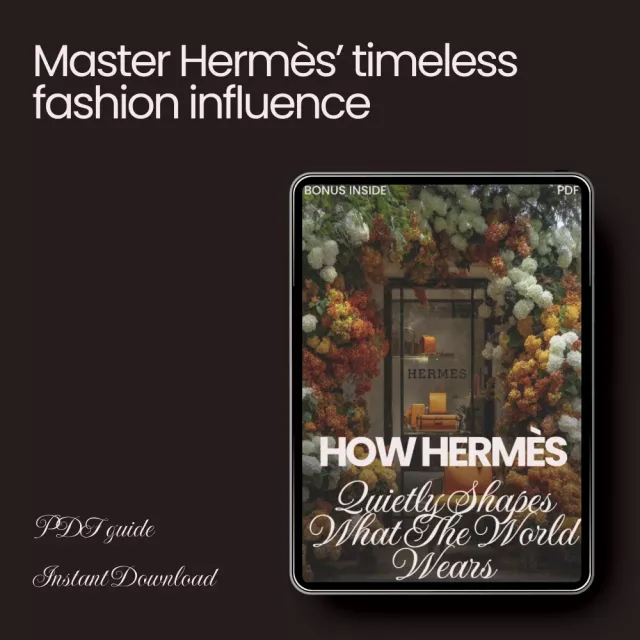
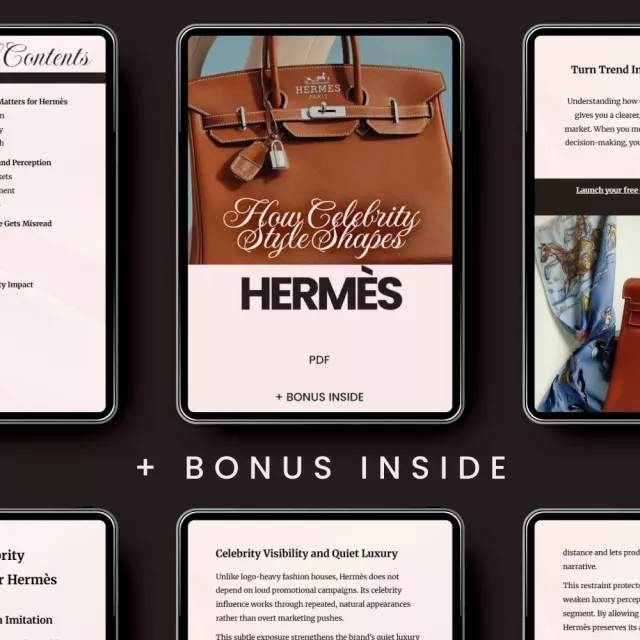
Unlock the Secrets of Quiet Luxury: How Hermès Shapes Fashion Choices
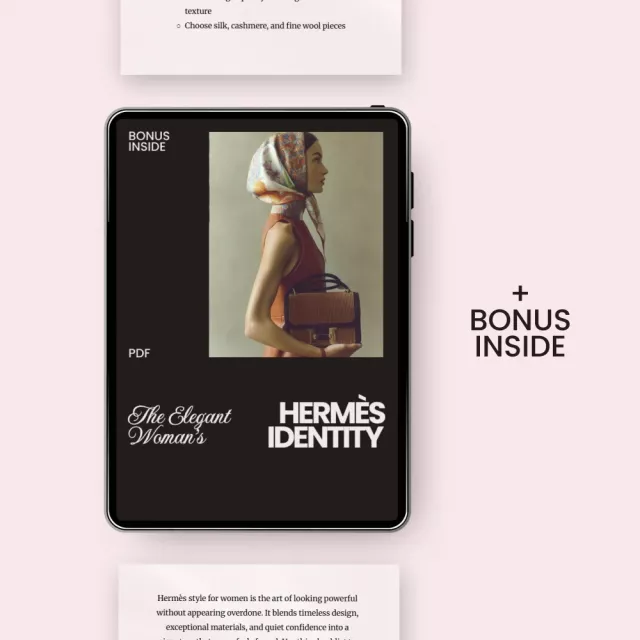
Discover the powerful influence of Hermès, the luxury brand that has subtly shaped global fashion trends for decades. In this exclusive eBook, “How Hermès Quietly Shapes What the World Wears,” you’ll uncover the brand’s secret sauce—its minimalist designs, cultural impact, and how it quietly defines what the world wears. Whether you’re a fashion enthusiast or looking to master the art of understated luxury, this guide will equip you with the insights you need to elevate your personal style. Dive deep into the psychology, principles, and practical advice on how to incorporate the Hermès effect into your everyday wardrobe.
Key Features of This eBook
- Chapter 1: The Hermès Effect Explained—Discover what sets Hermès apart from other luxury brands and how its minimalist approach has won over fashion lovers worldwide.
- Chapter 2: Signature Pieces That Influence Global Style—Explore the iconic Birkin and Kelly bags, and learn how Hermès accessories set lasting trends in fashion.
- Chapter 3: The Psychology Behind Hermès Appeal—Uncover the power of quiet luxury and why consumers trust Hermès as a status symbol without flashy displays.
- Chapter 4: How Hermès Shapes Everyday Fashion Choices—Learn how to apply Hermès’ runway-to-real-life style and build a wardrobe inspired by its timeless elegance.
- Chapter 5: Common Mistakes When Trying to Emulate Hermès Style—Avoid overbranding and mixing conflicting aesthetics, and understand the key to maintaining simplicity and quality.
- Chapter 6: Using AI to Decode and Apply Hermès Influence—Learn how to harness AI tools for style analysis and build a quiet luxury wardrobe that echoes Hermès’ aesthetic.
- Chapter 7: Your Next Steps to Master the Hermès-Inspired Aesthetic—Practical strategies for upgrading your wardrobe and making smart, long-term style investments.
Who is This Guide For?
This guide is perfect for anyone wanting to understand how Hermès shapes fashion choices and how to incorporate its timeless aesthetic into their own style. Whether you’re looking to embrace the principles of quiet luxury or simply want to learn about one of the world’s most influential luxury brands, this eBook is tailored for fashion-conscious individuals who appreciate minimalism, sophistication, and high-quality craftsmanship.
Why Choose This Guide?
Unlike other fashion resources, this eBook offers a unique blend of cultural insight, practical styling advice, and cutting-edge AI tools that help decode the Hermès effect. Not only does it break down the psychology behind Hermès’ appeal, but it also offers real-world examples, case studies, and a roadmap to help you curate a wardrobe inspired by the brand’s iconic pieces.
Benefits You’ll Gain
- Learn how to embrace the minimalist designs that define Hermès’ aesthetic.
- Gain insights into how Hermès’ accessories and bags have shaped global style.
- Discover how to craft a wardrobe that exudes quiet luxury without overbranding.
- Access AI-driven tips for creating Hermès-inspired looks that suit your personal style.
Take the Next Step Toward Mastering the Hermès-Inspired Aesthetic
Ready to learn how Hermès shapes fashion choices? Download “How Hermès Quietly Shapes What the World Wears” today and unlock the power of quiet luxury. Elevate your wardrobe, make smart investments, and embrace timeless style with ease. Don’t wait—your fashion transformation starts now!
SHIPPING
We are proud to offer international shipping services that currently operate in over 200 countries and islands world wide. Nothing means more to us than bringing our customers great value and service. We will continue to grow to meet the needs of all our customers, delivering a service beyond all expectation anywhere in the world.
Do you ship worldwide?
Yes. We provide free shipping to over 200 countries around the world. However, there are some locations we are unable to ship to. If you happen to be located in one of those countries we will contact you.
What about customs?
We are not responsible for any custom fees once the items have been shipped. By purchasing our products, you consent that one or more packages may be shipped to you and may get custom fees when they arrive to your country.
How long does shipping take?
Shipping time varies by location. These are our estimates:| Location | *Estimated Shipping Time |
|---|---|
| United States | 5-20 Business days |
| Canada, Europe | 5-20 Business days |
| Australia, New Zealand | 5-20 Business days |
| Central & South America | 5-25 Business days |
| Asia | 5-20 Business days |
| Africa | 5-25 Business days |
Do you provide tracking information?
Yes, you will receive an email once your order ships that contains your tracking information. If you haven’t received tracking info within 5 days, please contact us.
My tracking says “no information available at the moment”.
For some shipping companies, it takes 2-5 business days for the tracking information to update on the system. If your order was placed more than 5 business days ago and there is still no information on your tracking number, please contact us.
Will my items be sent in one package?
For logistical reasons, items in the same purchase will sometimes be sent in separate packages, even if you've specified combined shipping.
If you have any other questions, please contact us and we will do our best to help you out.
RETURNS
Order cancellation
All orders can be cancelled until they are shipped. If your order has been paid and you need to make a change or cancel an order, you must contact us within 12 hours. Once the packaging and shipping process has started, it can no longer be cancelled.
Refunds
Your satisfaction is our #1 priority. Therefore, you can request a refund or reshipment for ordered products if:
- If you did not receive the product within the guaranteed time (45 days not including 1-3 day processing) you can request a refund or a reshipment.
- If you received the wrong item you can request a refund or a reshipment.
- If you do not want the product you’ve received you may request a refund but you must return the item at your expense and the item must be unused.
We do not issue the refund if:
- Your order did not arrive due to factors within your control (i.e. providing the wrong shipping address)
- Your order did not arrive due to exceptional circumstances outside the control of cyclonica.com (i.e. not cleared by customs, delayed by a natural disaster).
- Other exceptional circumstances outside the control of cyclonica.com.
*You can submit refund requests within 15 days after the guaranteed period for delivery (45 days) has expired. You can do it by sending a message on Contact Us page
If you are approved for a refund, then your refund will be processed, and a credit will automatically be applied to your credit card or original method of payment, within 14 days.
Exchanges
If for any reason you would like to exchange your product, perhaps for a different size in clothing, you must contact us first and we will guide you through the steps.
Please do not send your purchase back to us unless we authorise you to do so.
Order cancellation
All orders can be cancelled until they are shipped. If your order has been paid and you need to make a change or cancel an order, you must contact us within 12 hours. Once the packaging and shipping process has started, it can no longer be cancelled.
Refunds
Your satisfaction is our #1 priority. Therefore, you can request a refund or reshipment for ordered products if:
- If you did not receive the product within the guaranteed time( 45 days not including 2-5 day processing) you can request a refund or a reshipment.
- If you received the wrong item you can request a refund or a reshipment.
- If you do not want the product you’ve received you may request a refund but you must return the item at your expense and the item must be unused.
We do not issue the refund if:
- Your order did not arrive due to factors within your control (i.e. providing the wrong shipping address)
- Your order did not arrive due to exceptional circumstances outside the control of cyclonica.com (i.e. not cleared by customs, delayed by a natural disaster).
- Other exceptional circumstances outside the control of
*You can submit refund requests within 15 days after the guaranteed period for delivery (45 days) has expired. You can do it by sending a message on Contact Us page
If you are approved for a refund, then your refund will be processed, and a credit will automatically be applied to your credit card or original method of payment, within 14 days.
Exchanges
If for any reason you would like to exchange your product, perhaps for a different size in clothing. You must contact us first and we will guide you through the steps.
Please do not send your purchase back to us unless we authorise you to do so.
Customer Reviews
Write a Review
We Think You’ll Love
Top picks just for you











The scarcity and patience breakdown reframed how I think about every purchase.
The psychology section on status signaling without flash put words to a shift I'd already been feeling. I've been moving away from logo-heavy pieces for years without understanding exactly why. This explained the mechanism and gave me a framework to be more intentional about it.
The anchor piece case study described my exact experience 🔥
I've read a lot about quiet luxury but this is the first guide that traced the trend back to its source and showed how the influence actually moves through the market. The section on how scarcity paired with quality creates lasting brand authority rather than hype was the strongest insight. I studied marketing in college and this analysis holds up. The mistakes section about overbranding versus understatement caught me mid-wardrobe — I had three logo-heavy jackets that were fighting the aesthetic I was trying to build. Donated them and replaced with two structured neutrals. The color palette advice to build around warm neutrals and grounded tones made the transition seamless. Even the AI prompts at the end were surprisingly practical.
The styling principles section — prioritize structure over decoration, choose materials that look refined up close — is the most concise style advice I've encountered. Already sharing it with friends 👌
Minimalism increasing styling versatility finally clicked for me here.
Well-written and insightful but the AI tools section felt underdeveloped compared to the rest. The psychology and cultural analysis are the real strengths.
The investment pieces criteria — maintains shape, integrates with your palette, feels refined up close — is now my three-point test before any purchase.
The case study about how one structured bag triggers a cascade of wardrobe changes — improved coordination, shifted buying habits, natural decluttering — described exactly what happened when I upgraded my everyday bag last year. I never connected the dots until reading this. The concept of the outfit raising its visual standard around an elevated anchor piece is so clearly explained. Even the mistakes section about mixing conflicting aesthetics helped me understand why pairing that bag with my old graphic tees always felt wrong.
⭐🧥🤎👔🔥
Thorough and well-researched but the last two sections feel rushed compared to the depth of the first five. The cultural analysis and psychology are excellent; the AI and next-steps portions read more like an appendix.
Restraint over display — three words that rebuilt my shopping instinct.
The section on how scarf styling has filtered into mainstream fashion through neck scarves, bag twillies, and hair scarves connected so many trends I'd been noticing without understanding their origin. The influence chain from brand to consumer is mapped clearly.
The quiet luxury rise section traces a decades-long shift that most content treats as a recent TikTok trend. This is the long view and it's much more useful. Understanding that the brand rarely chases seasonal hype, maintains strict standards, and presents luxury as personal rather than performative explained why the aesthetic has staying power. The three-criteria investment test in the final section gave me a practical filter to apply immediately.
The color palette section is where it all clicked for me — camel, cream, black, chocolate brown, and soft gold 🤎
The cultural analysis is strong but the guide covers ground that's well-trodden if you follow luxury commentary closely. The psychology section adds some depth, though the styling advice and mistakes sections retread familiar territory without enough new perspective.
Wardrobe as a long-term portfolio — that reframe changed everything for me.
The overbranding mistake section is the reality check most style guides won't give you. Logos fighting for attention are the opposite of what this aesthetic requires and the guide explains exactly why.
The section on how even fast-fashion brands reinterpret structured silhouettes and muted palettes showed me the ripple effect is real. You can see the influence at every price tier once you know what to look for. The mistakes section about ignoring quality and craft reinforced why cheap copies never quite land — the aesthetic depends on how items age and hold shape over time.
Fewer items that work harder — finally a guide that says it and means it.
Good content overall but the sections on AI styling tools and prompts felt like they were written for a different audience than the rest of the guide. The fashion analysis is sophisticated; the tech section is surface-level.
Thinking in terms of wardrobe harmony where pieces share a similar level of polish solved the visual tension I kept creating 🔥
The consumer trust section explained something I've felt but never articulated — the brand becomes a benchmark for what quality should look like. That psychology applies way beyond fashion.
I work in fashion PR and thought I understood the brand's influence already. The scarcity section taught me something new — how controlled availability reframes luxury as earned rather than purchased, which then shifts consumers toward long-term wardrobe thinking instead of trend cycling. The investment-bag culture analysis was sharp. The case study about one bag triggering an entire wardrobe edit mirrored conversations I've had with dozens of clients. What surprised me most was the mistakes section. I've seen the overbranding trap firsthand with clients who mix logo-heavy pieces with heritage accessories and can't figure out why the look falls flat. This guide connects the dots between psychology, market behavior, and personal styling in a way that's rare outside academic papers. The long-term strategy advice about treating your wardrobe as a portfolio was the cleanest articulation of what I've been telling clients for years.
🧣✨⭐👌🤎🔥
Insightful on the cultural side but the practical styling advice toward the end could be stronger. The psychology and brand analysis are clearly where the author's expertise lies — the actionable wardrobe steps feel like an afterthought by comparison.
The dual-layer recognition concept — quality-aware people read the signal while everyone else just sees elegance — was the sharpest insight in the whole guide.
The section on how accessories act as entry points into the aesthetic was a perspective shift. Scarves and belts introducing color stories that later appear industry-wide — I'd never traced that path before.
I was a trend chaser for years. The scarcity and patience section finally explained why my wardrobe felt disposable — I was buying for the moment, not for longevity. The shift from trend cycles to investment pieces has already saved me money. The three-criteria test for investment pieces stopped three impulse purchases in the first month. The mistakes section about mixing conflicting aesthetics also hit close to home.
Reading this felt like finally understanding the architecture behind an aesthetic I'd been admiring from the outside.
Good read but some sections overlap with what the other guides in this bundle cover.
The influence chain from brand design to fast-fashion shelves is mapped better here than in anything else I've read on quiet luxury. Practical and well-structured.
One structured bag changes a wardrobe — that case study is the entire guide in miniature 👜
The mistakes section on ignoring quality and craft made me rethink two recent purchases. I'd focused on silhouette and color but completely overlooked fabric density and stitching. The guide's point about poor materials quickly losing polish applies to three items in my closet right now. The quality-first mindset is the lesson that sticks.
Clean lines, neutral tones, impeccable materials — those three pillars now guide every decision.
The section on how the brand avoids extreme seasonal swings and why that makes the aesthetic easy to adopt in real life was a subtle but important point. Wearable over theatrical — that distinction separates this from most luxury analysis.
Solid on principles but the AI section could go deeper on specific tools.
The psychology of trust through consistent product experience — heritage, hand craftsmanship, controlled production — was the strongest analytical section. It explains why the brand functions as a quality benchmark in ways that marketing alone never could.
I run a small resale business and this guide sharpened my eye for what actually sells consistently. The pieces that hold their value match every principle described here — structured silhouettes, neutral palettes, minimal branding, premium materials. The market psychology analysis about scarcity paired with quality creating lasting authority over short-term hype explained pricing patterns I see daily on my platform. Even the buyer behavior section about consumers becoming more selective after exposure to the aesthetic mirrors my customer base exactly.
👔🤎⭐✨👌
Consistency not speed — that closing line sums up the entire philosophy perfectly.
The borrowable styling principles section made the aesthetic feel achievable without a luxury budget. Structure over decoration, refined materials up close, subtle branding, visual balance. Applied all four to my existing wardrobe and the difference was visible within a week.
Choose one thoughtful upgrade this month — that's the advice that finally got me to start.
The section on how the quiet luxury movement has been building for decades rather than appearing overnight gave me a much longer timeline to think about. This isn't a trend — it's a sustained shift in how people relate to quality. The guide backs that up with clear analysis of brand behavior, consumer psychology, and market influence. The investment piece criteria and wardrobe-as-portfolio framing tied everything together at the end.
The warm neutral palette advice produced results faster than anything else I've tried 💯
Visual balance over trend saturation — that phrase alone reorganized my closet priorities. The whole guide reads like a masterclass in understanding why certain wardrobes feel elevated and others don't.
Treating each wardrobe addition as strengthening the composition rather than adding variety stopped my random shopping completely.
Every section connects — scarcity builds desire, minimalism builds versatility, psychology builds trust, and the whole system shapes how the world actually dresses.
The most complete guide in this bundle — cultural depth, practical advice, and a clear framework for applying the aesthetic at any price point. The psychology section elevates it well beyond a typical style guide. I've reread the investment pieces criteria three times and it keeps sharpening my decision-making. The case study about one bag reshaping an entire wardrobe direction captured a phenomenon I'd experienced personally but never seen analyzed this clearly. Even the mistakes section about conflicting aesthetics helped me understand why certain outfits in my closet never quite landed. The long-term strategy framing — consistency over reinvention — is the throughline that ties all seven sections together and makes the guide feel cohesive rather than scattered.