





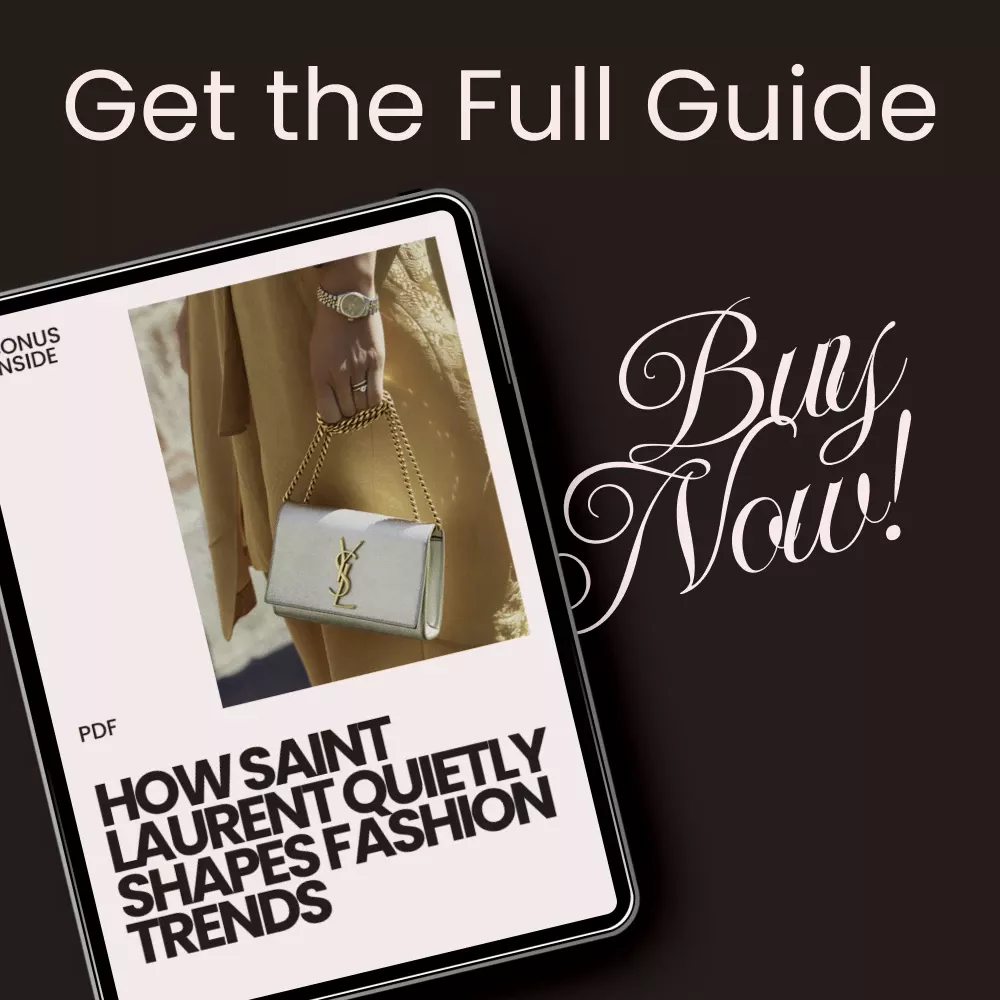
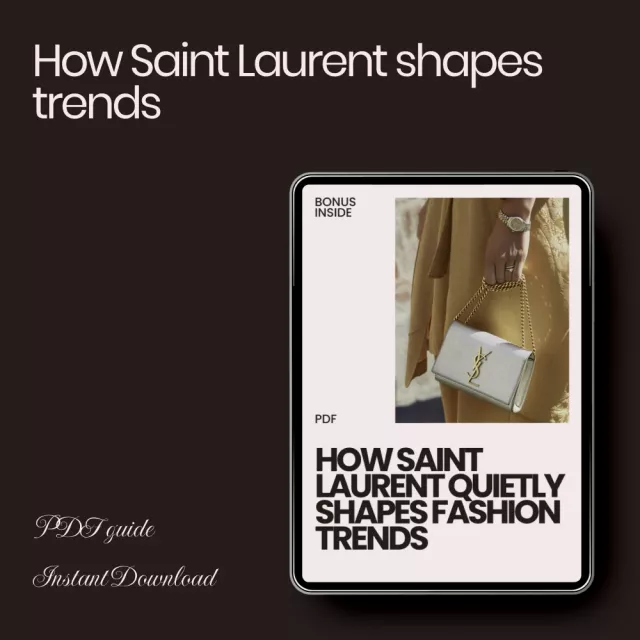
Discover the Silent Power Behind Modern Fashion Movements
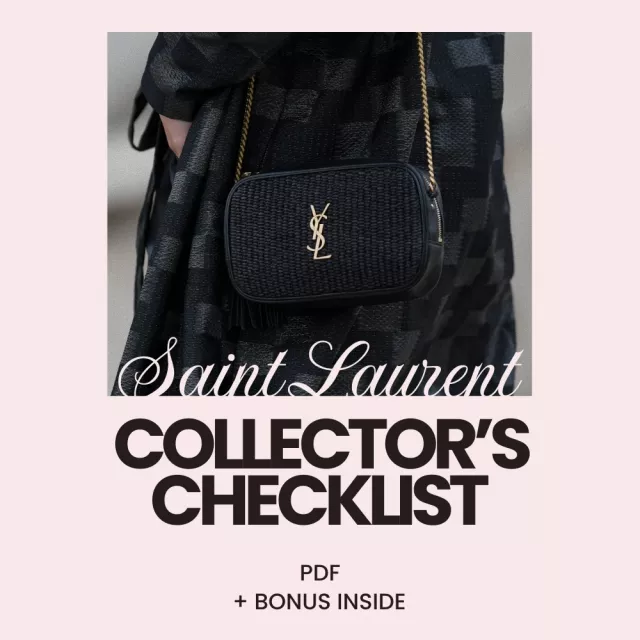
Some brands follow trends. Others create them. How Saint Laurent Quietly Shapes Fashion Trends is a deep, strategic guide that reveals how one of the world’s most influential fashion houses continuously defines what the industry adopts next. If you’ve ever wondered why certain silhouettes, color palettes, or attitudes suddenly dominate runways and retail, this guide uncovers the mechanics behind saint laurent influence on trends — and how you can learn to recognize and apply those signals yourself.
This is not just fashion commentary. It’s a practical breakdown of brand power, cultural positioning, and modern trend forecasting — designed for creatives, entrepreneurs, and fashion observers who want insight beyond surface-level style analysis.
What’s Inside the Guide
- Chapter 1: The Power Behind Saint Laurent Trend Influence Why the brand sets rather than follows trends Signature codes the industry repeats The role of cultural positioning
- Chapter 2: Key Trends Saint Laurent Popularized The rise of sleek minimal luxury Rock inspired tailoring in mainstream fashion A detailed runway-to-retail case study
- Chapter 3: Common Mistakes When Trying to Copy the Look Confusing minimal with basic Ignoring brand context Overstyling the aesthetic
- Chapter 4: Using AI to Track and Apply Trend Signals AI tools for trend monitoring Prompt examples for style forecasting Smart next steps for trend aware buyers
Why This Guide Is Different
Many fashion resources simply show you what’s trending. This guide explains why it trends and how saint laurent influence on trends operates at a structural level. You’ll learn how cultural timing, brand restraint, and consistent design codes quietly ripple across the global fashion market.
Unlike generic trend reports, this digital download bridges luxury analysis with practical application. You’ll not only understand the aesthetic — you’ll understand the strategy behind it.
Who This Is For
- Fashion designers and brand builders
- Stylists and image consultants
- Fashion marketing professionals
- Trend forecasters and content creators
- Style-conscious buyers who want insider awareness
Practical Benefits You’ll Gain
- Develop a sharper eye for emerging luxury signals
- Avoid common mistakes when interpreting minimal fashion
- Understand how runway cues translate into mainstream retail
- Use AI strategically to monitor and forecast trends
- Strengthen your creative or buying decisions with informed insight
Instant Digital Download
This is a professionally written digital guide delivered instantly after purchase. No waiting. No fluff. Just strategic fashion insight you can apply immediately.
If you want to understand the real mechanics behind saint laurent influence on trends — and start recognizing trend power before it becomes obvious — this guide is your next smart investment.
Download your copy today and start seeing fashion trends before the rest of the market does.
SHIPPING
We are proud to offer international shipping services that currently operate in over 200 countries and islands world wide. Nothing means more to us than bringing our customers great value and service. We will continue to grow to meet the needs of all our customers, delivering a service beyond all expectation anywhere in the world.
Do you ship worldwide?
Yes. We provide free shipping to over 200 countries around the world. However, there are some locations we are unable to ship to. If you happen to be located in one of those countries we will contact you.
What about customs?
We are not responsible for any custom fees once the items have been shipped. By purchasing our products, you consent that one or more packages may be shipped to you and may get custom fees when they arrive to your country.
How long does shipping take?
Shipping time varies by location. These are our estimates:| Location | *Estimated Shipping Time |
|---|---|
| United States | 5-20 Business days |
| Canada, Europe | 5-20 Business days |
| Australia, New Zealand | 5-20 Business days |
| Central & South America | 5-25 Business days |
| Asia | 5-20 Business days |
| Africa | 5-25 Business days |
Do you provide tracking information?
Yes, you will receive an email once your order ships that contains your tracking information. If you haven’t received tracking info within 5 days, please contact us.
My tracking says “no information available at the moment”.
For some shipping companies, it takes 2-5 business days for the tracking information to update on the system. If your order was placed more than 5 business days ago and there is still no information on your tracking number, please contact us.
Will my items be sent in one package?
For logistical reasons, items in the same purchase will sometimes be sent in separate packages, even if you've specified combined shipping.
If you have any other questions, please contact us and we will do our best to help you out.
RETURNS
Order cancellation
All orders can be cancelled until they are shipped. If your order has been paid and you need to make a change or cancel an order, you must contact us within 12 hours. Once the packaging and shipping process has started, it can no longer be cancelled.
Refunds
Your satisfaction is our #1 priority. Therefore, you can request a refund or reshipment for ordered products if:
- If you did not receive the product within the guaranteed time (45 days not including 1-3 day processing) you can request a refund or a reshipment.
- If you received the wrong item you can request a refund or a reshipment.
- If you do not want the product you’ve received you may request a refund but you must return the item at your expense and the item must be unused.
We do not issue the refund if:
- Your order did not arrive due to factors within your control (i.e. providing the wrong shipping address)
- Your order did not arrive due to exceptional circumstances outside the control of cyclonica.com (i.e. not cleared by customs, delayed by a natural disaster).
- Other exceptional circumstances outside the control of cyclonica.com.
*You can submit refund requests within 15 days after the guaranteed period for delivery (45 days) has expired. You can do it by sending a message on Contact Us page
If you are approved for a refund, then your refund will be processed, and a credit will automatically be applied to your credit card or original method of payment, within 14 days.
Exchanges
If for any reason you would like to exchange your product, perhaps for a different size in clothing, you must contact us first and we will guide you through the steps.
Please do not send your purchase back to us unless we authorise you to do so.
Order cancellation
All orders can be cancelled until they are shipped. If your order has been paid and you need to make a change or cancel an order, you must contact us within 12 hours. Once the packaging and shipping process has started, it can no longer be cancelled.
Refunds
Your satisfaction is our #1 priority. Therefore, you can request a refund or reshipment for ordered products if:
- If you did not receive the product within the guaranteed time( 45 days not including 2-5 day processing) you can request a refund or a reshipment.
- If you received the wrong item you can request a refund or a reshipment.
- If you do not want the product you’ve received you may request a refund but you must return the item at your expense and the item must be unused.
We do not issue the refund if:
- Your order did not arrive due to factors within your control (i.e. providing the wrong shipping address)
- Your order did not arrive due to exceptional circumstances outside the control of cyclonica.com (i.e. not cleared by customs, delayed by a natural disaster).
- Other exceptional circumstances outside the control of
*You can submit refund requests within 15 days after the guaranteed period for delivery (45 days) has expired. You can do it by sending a message on Contact Us page
If you are approved for a refund, then your refund will be processed, and a credit will automatically be applied to your credit card or original method of payment, within 14 days.
Exchanges
If for any reason you would like to exchange your product, perhaps for a different size in clothing. You must contact us first and we will guide you through the steps.
Please do not send your purchase back to us unless we authorise you to do so.
Customer Reviews
Write a Review
We Think You’ll Love
Top picks just for you












The section on signature codes the industry repeats finally put words to something I've noticed for years but couldn't articulate.
Chapter 2 on rock-inspired tailoring going mainstream was my favorite part. I've been dressing that way for a decade without realizing I was pulling from Saint Laurent's playbook. The bit about slim black suits paired with sleek boots spreading from the runway to street style to fast fashion — that's exactly the trajectory I watched happen in real time. Now I understand the mechanics behind it.
The difference between minimal and basic hit hard — wearing all black is not the same as looking sharp.
Read it in one sitting and immediately texted three friends about the overstyling section in Chapter 3.
The case study on ultra-slim tailoring in the mid-2010s is the clearest example I've seen of how a luxury house quietly reshapes an entire market. Saint Laurent didn't invent skinny suits, but the guide explains how they refined the idea until every price point copied it. That distinction between inventing and sharpening is the real insight here. I work in fashion buying and I've already started applying this lens to how I evaluate upcoming collections.
Short, focused, and smarter than most trend reports I've paid actual money for.
The cultural positioning chapter connected dots I hadn't considered — music, nightlife, and film as trend accelerators for the brand.
🖤🔥✨👏
Chapter 1 explains why YSL sets trends instead of chasing them. That consistency and clarity framework applies way beyond fashion.
Good foundation but the AI tools section stays pretty general — would have liked specific platform recommendations alongside the prompts.
The prompt examples for style forecasting are surprisingly practical. Already tested two of them.
I'm a stylist and the section on ignoring brand context is something I see clients do constantly. They buy a Saint Laurent blazer and pair it with athleisure and then wonder why it doesn't look right. The guide nails the explanation — the whole mood has to be consistent. Confidence, Parisian edge, restraint. You can't just drop one piece into a completely different aesthetic and expect the effect to hold. I'm sending this to every client who asks me why their outfits feel off.
The idea that Saint Laurent doesn't need dramatic reinvention because its core language already shapes the market — that's the whole thesis and it's airtight.
Clean writing, no fluff, every chapter earns its space.
Loved the point about how even people who don't follow runway fashion respond to YSL's visual codes 🤍
The overstyling advice is gold — remove one element before leaving the house. So simple but it actually works.
This reframed how I think about trend cycles entirely. I used to chase what was new. Now I look for what's being refined. The guide's point about Saint Laurent sharpening existing ideas until they become irresistible is the most useful mental model I've picked up in years. Applied it to my last shopping trip and made much better choices — focused on structured shoulders and dark palettes instead of the loud prints I would have grabbed before.
Chapter 3 should be mandatory reading for anyone building a capsule wardrobe.
That line about the brand rarely chasing short-term hype is why their changes feel intentional. Perfectly stated.
The sleek minimal luxury section in Chapter 2 puts the whole quiet luxury movement in historical context. Saint Laurent was doing this long before TikTok named it.
Finished it during my morning coffee. Dense with insight but never drags.
I run a small fashion brand and this PDF changed how I study the market. Before reading it, I was trying to predict trends by watching social media. Now I track a small set of signature elements — sharp tailoring, dark palettes, minimal hardware — and monitor how they move from runway to retail to street style. The AI prompt examples in Chapter 4 gave me a concrete workflow I use weekly. My team's last two collections were better aligned with where the market was heading, not where it had been.
The cultural positioning section explains why YSL always feels current without trying too hard.
❤️👌⭐🔥
Solid trend analysis — I just wish Chapter 4 went deeper on specific AI platforms rather than just prompt templates.
The point about how Saint Laurent's design codes are highly adaptable across price points is exactly why Zara racks look the way they do.
I was the person confusing minimal with basic. This guide called me out and I'm grateful. The distinction about precision and structure versus just stripping things down changed how I put outfits together. I went back through my closet and realized half my wardrobe was basic, not minimal. The fabrics were flat, the silhouettes were shapeless, there was no intention. Started reinvesting in pieces with real structure — tailored blazers, sharp-shouldered tops — and the difference is visible immediately.
Every fashion student should read Chapter 1 on why some brands set trends and others just react.
The way it explains trend ripple — runway to contemporary to fast fashion — is clearer than any textbook I've read.
Took the AI prompts from Chapter 4 and ran them immediately. The one comparing slim versus oversized tailoring engagement actually returned usable data 🔍
The rock-polished aesthetic section gave me a whole new vocabulary for what I've been wearing instinctively.
Quick, sharp, and practical. No filler whatsoever.
This guide made me realize I've been overstyling every outfit. The advice about one strong focal point supported by clean basics is so simple but I never followed it. Last week I wore a sharp black blazer with plain black trousers and minimal accessories — nothing else competing. Got more compliments on that outfit than anything I've worn in months. The Saint Laurent approach to restraint is real and this guide explains exactly why it works.
The idea that repeated exposure has trained consumers to associate these codes with modern luxury — brilliant observation.
Sent the Chapter 3 section on brand context to my boyfriend. He keeps pairing his YSL jacket with gym shorts.
This bridges the gap between fashion appreciation and fashion strategy. I'm a buyer for a mid-range retailer and I've always known we reference luxury houses, but this guide made the mechanism explicit. The section on signature codes explains exactly why certain elements translate down-market so easily — they're adaptable without losing their mood. I've restructured how I source next season around this framework. Instead of chasing novelty I'm watching which refined elements have staying power.
The mid-2010s tailoring case study makes the whole influence pattern tangible.
Smart and concise — doesn't waste a single page.
Chapter 2 on sleek minimal luxury existing long before the quiet luxury trend went viral on social media was my favorite part. Context matters.
The section about how influential figures wearing the brand accelerates mainstream adoption — that's exactly how trends move through culture now.
Genuinely changed how I shop. Less reacting, more observing.
The point about AI helping filter noise from sustained growth patterns is underrated. I used to jump on every micro-trend. Now I wait to see if it has real momentum.
I came into this expecting a surface-level brand appreciation piece and was surprised by how analytical it actually is. The framework for understanding how a house like Saint Laurent shapes an entire market without dramatic reinvention is something I haven't found articulated this well anywhere else. The three common mistakes in Chapter 3 are especially grounding — confusing minimal with basic is the one that hit hardest for me personally. I've been making that exact error for years.
Clean tailoring, quality materials, balanced proportions — that's the whole formula and this guide breaks it down perfectly.
The wearability angle in the rock-inspired tailoring section is what made that trend actually stick. Edgy but refined enough for daily life.
Worth reading twice — different things click the second time through.
The prompt asking AI to identify emerging brands adopting Saint Laurent style codes is genius for anyone scouting new labels.
Chapter 1 alone justifies the download. The rest is a bonus.
That framework — track signature elements, monitor how they spread, separate signal from noise — is something I can actually use every week. Not just theory.
🖤✨👠💯🔥