





Product Description
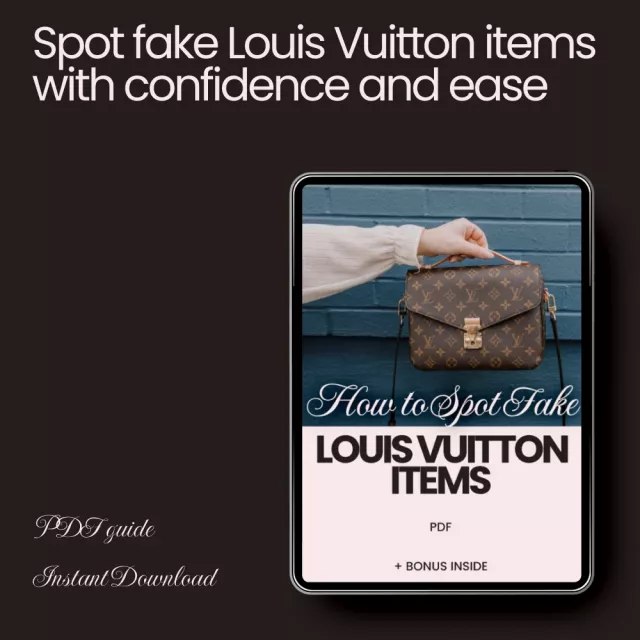
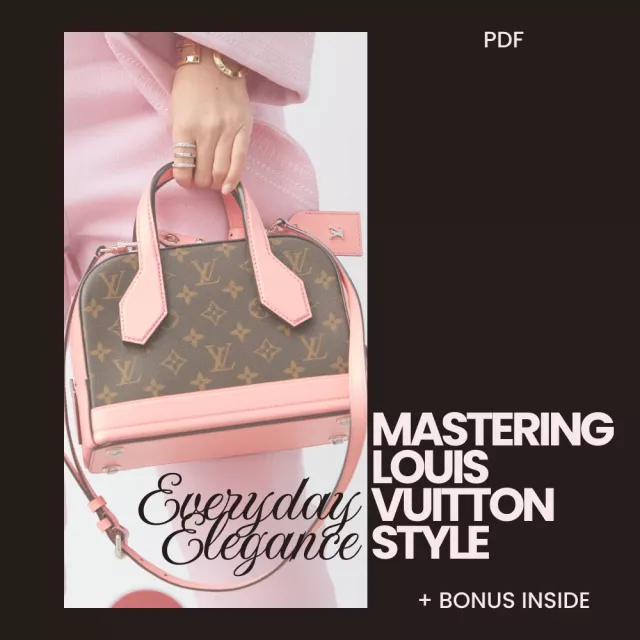
Are you tired of worrying whether that Louis Vuitton piece you’re eyeing is authentic? Whether you’re a first-time buyer or a seasoned collector, spotting fake Louis Vuitton items can be tricky. Our How to Spot Fake Louis Vuitton Items guide is here to empower you with the knowledge you need to avoid counterfeit purchases and ensure you’re getting what you’ve paid for. This comprehensive digital resource dives into the world of Louis Vuitton craftsmanship and teaches you how to identify a fake with confidence.
This guide offers clear, easy-to-follow advice on how to avoid fake Louis Vuitton items, making it an essential tool for anyone looking to build or expand their luxury collection. With step-by-step instructions and practical tips, you’ll learn how to spot counterfeit handbags, shoes, and accessories, along with expert advice on navigating online marketplaces where fakes are rampant.
Key Features of the Guide
- Chapter 1: Understanding Louis Vuitton’s Signature – Learn about the history, craftsmanship, and iconic features of Louis Vuitton pieces.
- Chapter 2: Common Red Flags in Fake Louis Vuitton Items – Recognize signs of counterfeit products such as price points, logos, stitching, and hardware mistakes.
- Chapter 3: Tools and Techniques to Verify Authenticity – Discover technologies and practical case studies to help you verify authenticity with ease.
- Chapter 4: Smart Buying and Next Steps – Build your confidence as a buyer, leverage AI tools, and use our final checklist to make sure you’re making the right purchase.
Benefits of This Guide
- Gain the skills to confidently identify authentic Louis Vuitton pieces and avoid counterfeits.
- Learn practical techniques and tools to verify the authenticity of any Louis Vuitton item before purchasing.
- Get insider knowledge on common red flags to watch for when shopping online or in-person.
- Access a final checklist to help ensure your next Louis Vuitton purchase is 100% authentic.
This guide is perfect for anyone passionate about luxury fashion, from beginners to experts. It’s a must-have resource for savvy buyers who want to ensure that they’re investing in authentic Louis Vuitton pieces and not falling victim to counterfeits. Whether you’re purchasing for yourself or buying as a gift, our guide equips you with everything you need to spot fake Louis Vuitton items.
Download Now
Don’t risk purchasing a counterfeit Louis Vuitton item! Download the How to Spot Fake Louis Vuitton Items guide now and start shopping with confidence. Equip yourself with the tools to make smarter purchases and protect your investment in luxury fashion.
SHIPPING
We are proud to offer international shipping services that currently operate in over 200 countries and islands world wide. Nothing means more to us than bringing our customers great value and service. We will continue to grow to meet the needs of all our customers, delivering a service beyond all expectation anywhere in the world.
Do you ship worldwide?
Yes. We provide free shipping to over 200 countries around the world. However, there are some locations we are unable to ship to. If you happen to be located in one of those countries we will contact you.
What about customs?
We are not responsible for any custom fees once the items have been shipped. By purchasing our products, you consent that one or more packages may be shipped to you and may get custom fees when they arrive to your country.
How long does shipping take?
Shipping time varies by location. These are our estimates:| Location | *Estimated Shipping Time |
|---|---|
| United States | 5-20 Business days |
| Canada, Europe | 5-20 Business days |
| Australia, New Zealand | 5-20 Business days |
| Central & South America | 5-25 Business days |
| Asia | 5-20 Business days |
| Africa | 5-25 Business days |
Do you provide tracking information?
Yes, you will receive an email once your order ships that contains your tracking information. If you haven’t received tracking info within 5 days, please contact us.
My tracking says “no information available at the moment”.
For some shipping companies, it takes 2-5 business days for the tracking information to update on the system. If your order was placed more than 5 business days ago and there is still no information on your tracking number, please contact us.
Will my items be sent in one package?
For logistical reasons, items in the same purchase will sometimes be sent in separate packages, even if you've specified combined shipping.
If you have any other questions, please contact us and we will do our best to help you out.
RETURNS
Order cancellation
All orders can be cancelled until they are shipped. If your order has been paid and you need to make a change or cancel an order, you must contact us within 12 hours. Once the packaging and shipping process has started, it can no longer be cancelled.
Refunds
Your satisfaction is our #1 priority. Therefore, you can request a refund or reshipment for ordered products if:
- If you did not receive the product within the guaranteed time (45 days not including 1-3 day processing) you can request a refund or a reshipment.
- If you received the wrong item you can request a refund or a reshipment.
- If you do not want the product you’ve received you may request a refund but you must return the item at your expense and the item must be unused.
We do not issue the refund if:
- Your order did not arrive due to factors within your control (i.e. providing the wrong shipping address)
- Your order did not arrive due to exceptional circumstances outside the control of cyclonica.com (i.e. not cleared by customs, delayed by a natural disaster).
- Other exceptional circumstances outside the control of cyclonica.com.
*You can submit refund requests within 15 days after the guaranteed period for delivery (45 days) has expired. You can do it by sending a message on Contact Us page
If you are approved for a refund, then your refund will be processed, and a credit will automatically be applied to your credit card or original method of payment, within 14 days.
Exchanges
If for any reason you would like to exchange your product, perhaps for a different size in clothing, you must contact us first and we will guide you through the steps.
Please do not send your purchase back to us unless we authorise you to do so.
Order cancellation
All orders can be cancelled until they are shipped. If your order has been paid and you need to make a change or cancel an order, you must contact us within 12 hours. Once the packaging and shipping process has started, it can no longer be cancelled.
Refunds
Your satisfaction is our #1 priority. Therefore, you can request a refund or reshipment for ordered products if:
- If you did not receive the product within the guaranteed time( 45 days not including 2-5 day processing) you can request a refund or a reshipment.
- If you received the wrong item you can request a refund or a reshipment.
- If you do not want the product you’ve received you may request a refund but you must return the item at your expense and the item must be unused.
We do not issue the refund if:
- Your order did not arrive due to factors within your control (i.e. providing the wrong shipping address)
- Your order did not arrive due to exceptional circumstances outside the control of cyclonica.com (i.e. not cleared by customs, delayed by a natural disaster).
- Other exceptional circumstances outside the control of
*You can submit refund requests within 15 days after the guaranteed period for delivery (45 days) has expired. You can do it by sending a message on Contact Us page
If you are approved for a refund, then your refund will be processed, and a credit will automatically be applied to your credit card or original method of payment, within 14 days.
Exchanges
If for any reason you would like to exchange your product, perhaps for a different size in clothing. You must contact us first and we will guide you through the steps.
Please do not send your purchase back to us unless we authorise you to do so.
Customer Reviews
Write a Review
We Think You’ll Love
Top picks just for you













The step-by-step verification process in Chapter 3 is the kind of structured approach I've been looking for — materials first, then stitching, then logos, then date codes. No guesswork.
The case study about the fake Neverfull with the misaligned monogram at the side seam was incredibly specific and useful.
I almost bought a counterfeit Speedy last year from a marketplace listing that looked perfect in photos. After reading this guide, I went back and checked my current bag against every detail in Chapter 1 — stitching count per inch, hardware engraving depth, pattern alignment across seams. Everything checked out, which was a relief. But the real value came when a friend showed me a bag she was considering online. I walked her through the red flags from Chapter 2 — the price was 40% below retail and the seller had no history. She passed on it and later found out the seller's account was flagged. This guide genuinely protected both of us from expensive mistakes.
The section on date codes and serial numbers filled a gap I didn't know I had.
Chapter 2's breakdown of inaccurate logos and fonts is something I now check instinctively. Letter spacing and font curves — once you see the differences, you can't unsee them.
Thorough, well-organized, and immediately applicable 🔥
The online marketplace pitfalls section should be required reading for anyone shopping resale. Vague descriptions, stock photos, and sellers dodging close-up requests — all red flags I used to ignore.
Short and dense in the best way. Every chapter earns its place.
I've been collecting LV for three years and thought I had a decent eye. Then I read the section on hardware and engraving details in Chapter 1 and realized I'd been overlooking zipper pull weight and engraving depth entirely. I went through my collection that evening and inspected every clasp and rivet with a magnifying glass — all authentic, thankfully. But the case study in Chapter 3 about the buyer who caught a fake through a shallow engraving on a zipper pull made me realize how close I could have come to missing something. The final checklist in Chapter 4 is now my pre-purchase ritual. I literally screenshot it on my phone.
The stitching section alone — even, precise, no loose threads — gave me a quick physical test I can do in seconds.
❤️👜🔍✨
The materials section in Chapter 1 taught me the difference between authentic canvas texture and the plasticky feel of fakes. I tested it the next day at a consignment shop and immediately spotted a knockoff Damier Ebene.
The buyer confidence section in Chapter 4 reframed how I approach every purchase — slow down, cross-check, don't let urgency drive the decision.
Clear, practical, and no fluff across all four chapters.
The pattern alignment tip — monograms should never split awkwardly at seams — is the single fastest way to spot a fake in photos.
My mom gave me her vintage Neverfull and I had no way to verify it was real. This guide walked me through the entire process. I started with Chapter 1, checking the monogram alignment and leather feel — both passed. Then I inspected the hardware using the criteria from Chapter 2 — polished brass, deep LV engraving, no tarnishing. The date code matched the format for the production year she told me about. By the time I finished Chapter 3's step-by-step verification, I was confident the bag was authentic. It went from a nice gift to a confirmed family heirloom. I actually teared up a little.
The cheap hardware red flag — flimsy zippers that tarnish quickly — is something I'll never overlook again.
Sent this to my entire group chat after one friend almost dropped $800 on a fake 👀
The seven-point final checklist before buying in Chapter 4 is the most practical takeaway. I run through it every time now — price, materials, stitching, logos, date codes, seller reliability, and AI verification. It takes five minutes and eliminates doubt. Last week I used it on a pre-owned Alma I found online. The price was reasonable, the photos looked good, but when I asked for close-ups of the hardware, the engraving was noticeably shallow compared to reference images. I passed on it and found a verified listing two days later that checked every box. That checklist has already paid for itself.
The history section isn't filler — understanding that LV started with trunks in 1854 and never compromised on symmetry or leather quality makes the authentication details feel intuitive instead of memorized.
The section on recognizable materials and patterns trained my fingers as much as my eyes — authentic canvas has a specific weight and suppleness that fakes miss.
⭐🔥👌💯🔍
I bought a pre-owned bag last month and used the verification process from Chapter 3 before committing. Checked materials, inspected every stitch, compared the logo font against reference photos, and confirmed the date code format. Everything lined up. Without this guide I would have either passed out of fear or bought blindly out of impulse. Instead I made an informed decision and I'm carrying that bag with total confidence. The seller even complimented me for asking such specific questions — said most buyers never ask about stitch count or engraving depth.
The material inconsistencies red flag — leather that feels synthetic — is the fastest physical check in the guide.
Chapter 2 on common red flags should be the first thing anyone reads before shopping resale LV online.
The font and spacing breakdown for counterfeit logos was surprisingly detailed — letters too close, wrong curves, subtle deviations. Once you know what to look for, fakes stand out immediately.
Practical and empowering. This guide made luxury resale shopping feel safe instead of scary.
The tip about sellers unwilling to provide detailed photos being a red flag has already saved me twice since reading this.
I was skeptical about how much a PDF could teach me about spotting fakes, but the Damier pattern alignment detail alone proved me wrong — I checked a bag at a vintage shop the next day and the checkerboard squares didn't line up at the seam. Walked away without a second thought.
The resale and collecting section in Chapter 4 was an unexpected bonus — turning authentication skills into a side business angle was a smart way to close the guide.
Every chapter builds on the last. By the time you hit the final checklist, verification feels second nature.
The case study where the buyer caught the fake through a shallow zipper engraving was eye-opening — such a small detail with such huge implications 🔍
The section on building confidence as a buyer resonated with her especially — she used to second-guess every pre-owned purchase. Now she has a system. She ran the full seven-point checklist on a Damier Azur she'd been eyeing for months, verified every detail from stitching to date code format, researched the seller's history, and finally pulled the trigger. The bag arrived and it's flawless. She said this guide gave her permission to trust her own judgment instead of relying entirely on third-party authentication services.
Concise enough to finish in one sitting, detailed enough to reference repeatedly.
The Epi leather texture description — substantial yet supple, not plasticky or stiff — is now my go-to physical test at consignment shops.
The price awareness section was blunt in the best way — if it seems too good to be true, it is.
I especially appreciated the note that date codes aren't standalone proof of authenticity. That nuance shows the guide respects your intelligence.
The stitch count per inch detail from Chapter 1 is the most specific and actionable tip in the entire guide — I literally counted stitches on my Speedy that same afternoon.
🔥👜✅⭐👏
The guide's structure — understand, spot red flags, verify, then buy smart — makes the whole process feel manageable instead of overwhelming.
I've been burned by a fake before and didn't know what to look for at the time. The uneven stitching and flimsy hardware red flags from Chapter 2 describe exactly what I missed on that purchase — the zipper tarnished within a month and the leather felt off from day one. After reading this guide I went back and compared the fake to my authentic piece side by side. The differences in pattern alignment and engraving depth were obvious once I knew where to look. Now I use the step-by-step verification from Chapter 3 on every listing before I even contact a seller. The confidence section in Chapter 4 also helped me stop second-guessing myself. Wish I'd had this two years ago, but at least I'm protected going forward.
The trust-your-instincts step at the end of the verification process was a needed reminder — counterfeiters rely on impulse.
Smart, structured, and respects your time. Four chapters that actually deliver.
The seller reliability research tip from Chapter 4 — checking reviews, ratings, and previous listings — added a layer of protection I hadn't considered before. It's not just about the bag, it's about who's selling it.