





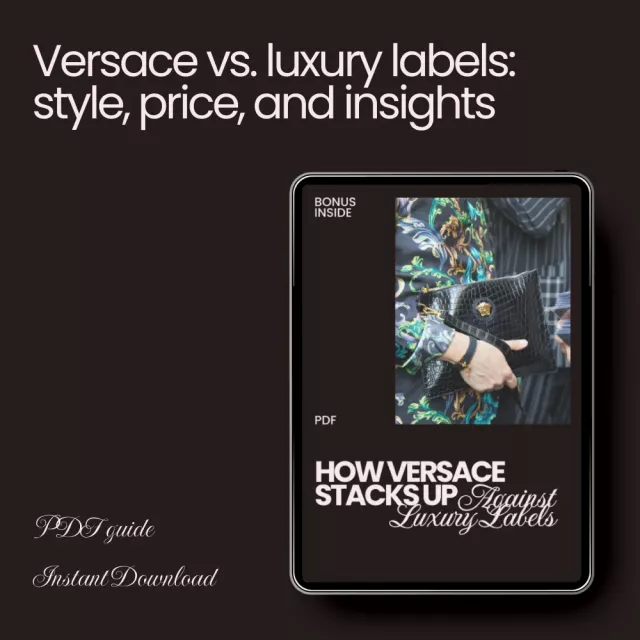
Discover the Power of Versace and Compare It to Other Luxury Labels
Are you a fashion enthusiast fascinated by luxury brands and their influence on the world of style? The “How Versace Stacks Up Against Luxury Labels” guide is here to give you an in-depth look at Versace, comparing it to some of the most iconic luxury fashion brands. This guide is designed to help you better understand what makes Versace stand out and how it measures up against its competitors in the world of high-end fashion.
Whether you’re a seasoned luxury fashion lover or just starting to build your luxury wardrobe, this guide provides valuable insights into Versace’s design philosophy, marketing strategies, and its role in the broader fashion ecosystem. You’ll also find practical advice for navigating the often-overwhelming luxury market, so you can make informed decisions when purchasing pieces from high-end designers.
Key Features & Contents of the Guide:
- Versace Unwrapped: Learn about the origins and legacy of the brand.
- Signature Style and Iconic Pieces: Explore the designs that define Versace.
- Brand Identity: Who Wears Versace: Understand the cultural significance and celebrity influence of the brand.
- Luxury Face-Off: A detailed comparison of Versace with other luxury labels.
- Comparing Design Philosophy: Understand Versace’s approach to design and craftsmanship.
- Price and Positioning: Learn about Versace’s pricing strategies and market positioning.
- Marketing and Celebrity Influence: Discover how Versace uses marketing and celebrity endorsements to maintain its status.
- Practical Insights: Common mistakes when choosing luxury pieces and how to avoid them.
- Case Study: Versace vs. Gucci Evening Wear: A side-by-side comparison of Versace and Gucci’s evening wear collections.
- Next Steps for Building a Luxury Wardrobe: A guide on how to expand your collection thoughtfully.
- AI in the Luxury World: How AI is changing the way we shop for luxury goods.
- Using AI to Explore Trends and Styles: How to use artificial intelligence to discover fashion trends.
- Prompt Examples for Midjourney and ChatGPT: Tools and tips for using AI to visualize your luxury ideas.
- Free Tools to Visualize Your Luxury Ideas: A collection of helpful tools to bring your luxury wardrobe vision to life.
Who is This Guide For?
This guide is perfect for anyone passionate about luxury fashion, especially those interested in Versace. Whether you are new to luxury fashion or an experienced shopper, this guide will provide you with the knowledge you need to make smart, informed choices. It’s ideal for fashion enthusiasts, collectors, and anyone looking to build or refine their luxury wardrobe.
Why Choose This Guide?
Unlike other resources, “How Versace Stacks Up Against Luxury Labels” goes beyond basic comparisons, offering detailed insights into Versace’s design philosophy, celebrity influence, and practical tips for navigating the luxury market. This guide also explores the intersection of AI and luxury fashion, giving you modern tools to stay ahead of trends. It’s more than just a comparison—it’s an essential resource for anyone looking to truly understand the luxury fashion landscape.
Ready to take your fashion game to the next level? Download “How Versace Stacks Up Against Luxury Labels” today and start building your perfect luxury wardrobe with confidence!
SHIPPING
We are proud to offer international shipping services that currently operate in over 200 countries and islands world wide. Nothing means more to us than bringing our customers great value and service. We will continue to grow to meet the needs of all our customers, delivering a service beyond all expectation anywhere in the world.
Do you ship worldwide?
Yes. We provide free shipping to over 200 countries around the world. However, there are some locations we are unable to ship to. If you happen to be located in one of those countries we will contact you.
What about customs?
We are not responsible for any custom fees once the items have been shipped. By purchasing our products, you consent that one or more packages may be shipped to you and may get custom fees when they arrive to your country.
How long does shipping take?
Shipping time varies by location. These are our estimates:| Location | *Estimated Shipping Time |
|---|---|
| United States | 5-20 Business days |
| Canada, Europe | 5-20 Business days |
| Australia, New Zealand | 5-20 Business days |
| Central & South America | 5-25 Business days |
| Asia | 5-20 Business days |
| Africa | 5-25 Business days |
Do you provide tracking information?
Yes, you will receive an email once your order ships that contains your tracking information. If you haven’t received tracking info within 5 days, please contact us.
My tracking says “no information available at the moment”.
For some shipping companies, it takes 2-5 business days for the tracking information to update on the system. If your order was placed more than 5 business days ago and there is still no information on your tracking number, please contact us.
Will my items be sent in one package?
For logistical reasons, items in the same purchase will sometimes be sent in separate packages, even if you've specified combined shipping.
If you have any other questions, please contact us and we will do our best to help you out.
RETURNS
Order cancellation
All orders can be cancelled until they are shipped. If your order has been paid and you need to make a change or cancel an order, you must contact us within 12 hours. Once the packaging and shipping process has started, it can no longer be cancelled.
Refunds
Your satisfaction is our #1 priority. Therefore, you can request a refund or reshipment for ordered products if:
- If you did not receive the product within the guaranteed time (45 days not including 1-3 day processing) you can request a refund or a reshipment.
- If you received the wrong item you can request a refund or a reshipment.
- If you do not want the product you’ve received you may request a refund but you must return the item at your expense and the item must be unused.
We do not issue the refund if:
- Your order did not arrive due to factors within your control (i.e. providing the wrong shipping address)
- Your order did not arrive due to exceptional circumstances outside the control of cyclonica.com (i.e. not cleared by customs, delayed by a natural disaster).
- Other exceptional circumstances outside the control of cyclonica.com.
*You can submit refund requests within 15 days after the guaranteed period for delivery (45 days) has expired. You can do it by sending a message on Contact Us page
If you are approved for a refund, then your refund will be processed, and a credit will automatically be applied to your credit card or original method of payment, within 14 days.
Exchanges
If for any reason you would like to exchange your product, perhaps for a different size in clothing, you must contact us first and we will guide you through the steps.
Please do not send your purchase back to us unless we authorise you to do so.
Order cancellation
All orders can be cancelled until they are shipped. If your order has been paid and you need to make a change or cancel an order, you must contact us within 12 hours. Once the packaging and shipping process has started, it can no longer be cancelled.
Refunds
Your satisfaction is our #1 priority. Therefore, you can request a refund or reshipment for ordered products if:
- If you did not receive the product within the guaranteed time( 45 days not including 2-5 day processing) you can request a refund or a reshipment.
- If you received the wrong item you can request a refund or a reshipment.
- If you do not want the product you’ve received you may request a refund but you must return the item at your expense and the item must be unused.
We do not issue the refund if:
- Your order did not arrive due to factors within your control (i.e. providing the wrong shipping address)
- Your order did not arrive due to exceptional circumstances outside the control of cyclonica.com (i.e. not cleared by customs, delayed by a natural disaster).
- Other exceptional circumstances outside the control of
*You can submit refund requests within 15 days after the guaranteed period for delivery (45 days) has expired. You can do it by sending a message on Contact Us page
If you are approved for a refund, then your refund will be processed, and a credit will automatically be applied to your credit card or original method of payment, within 14 days.
Exchanges
If for any reason you would like to exchange your product, perhaps for a different size in clothing. You must contact us first and we will guide you through the steps.
Please do not send your purchase back to us unless we authorise you to do so.
Customer Reviews
Write a Review
We Think You’ll Love
Top picks just for you










The Medusa versus Camellia breakdown finally names what I'd always felt.
Safety-pin dresses to Hellenic gowns — Versace's red carpet history covered cleanly.
I've been collecting luxury pieces since my first bonus check at 24 and spent two years buying Versace impulsively — drawn in by the electric pink colorways and Baroque prints — without understanding how they fit into a larger wardrobe strategy. My closet became a collection of statement pieces with no neutral footing; every time I reached for a Versace blazer I couldn't pair it with anything else because every other item competed equally for attention. A friend recommended this guide after watching me struggle to dress for a gala, and I finished it in one sitting on the train. The breakdown comparing Versace's statement-making approach against Prada's intellectual minimalism, Chanel's timeless elegance, and Gucci's playful eccentricity gave me a comparative vocabulary I hadn't had before. The common mistake I'd been making — overmixing brand aesthetics until sophistication collapses — is listed here explicitly, and seeing it described that plainly was both embarrassing and a relief. I rebuilt my wardrobe around one key Versace piece per occasion, supported by neutral basics, which is exactly the framework the wardrobe section recommends. The AI visualization section also led me to use Midjourney to render a Versace-inspired piece against quieter base garments before committing to a purchase — a habit I've kept ever since. Eight months in, my collection finally has coherence, and I no longer show up to events dressed like everything is fighting for first place.
💫👑🖤
The side-by-side of Versace, Gucci, Chanel, and Prada across aesthetic, signature, and approach is the clearest single-document breakdown of those four brands I've encountered. The price and positioning context — knowing Versace sits slightly below Chanel in exclusivity while above most contemporary luxury houses — is the kind of anchor that calibrates purchase decisions. The AI tools section felt thinner than the rest; more specificity on structuring Midjourney prompts would've rounded it out.
Baroque patterns and metallic finishes broken down with actual context, not just vibes 🎯
The warning about neglecting occasion — that ultra-bold Versace at a conservative event can backfire — is the most practical sentence in the whole guide. Luxury buyers almost never see context discussed, only aesthetics. Pairing that with the Versace-for-impact, Gucci-for-eccentricity framework gives you a decision tool that actually functions.
Coming in with a fashion background, I was skeptical that a guide covering four major luxury houses in a short document could add much to what I already knew. The Versace versus Gucci evening wear case study changed that. The framing of Gucci as vintage-inspired embroidery for artistic settings versus Versace's metallic, dramatically cut pieces for red carpet events captures something that years of runway coverage had left fuzzy. The common mistakes section is sharper than most wardrobe writing — specifically the point that overmixing brand logos and aesthetics dilutes sophistication rather than compounding it. The Midjourney prompt example, generating a Versace-inspired gown with Medusa motifs, metallic gold accents, and dramatic draping, is exactly the kind of specific starting point AI users need rather than a vague description.
Great breakdown of the four houses — the celebrity section needed more depth.
The observation that Versace balances mass recognition with luxury appeal — threading glamour and exclusivity simultaneously — is what separates this read from how most people describe the brand. They usually pick one or the other. The brand identity section's delineation between celebrities, fashion-forward urban professionals, and statement collectors is concise and accurate: those are genuinely distinct audiences the brand reaches through different channels.
Medusa to Hellenic gown — Versace's origin context told without the usual filler.
Versace's theatrical runway DNA explained in terms a newcomer can actually use.
The design philosophy comparison across Versace, Gucci, Chanel, and Prada is genuinely useful and organized clearly enough to double as a reference. The evening wear case study — bold metallic cuts for red carpet, vintage embroidery for artistic settings — is the kind of practical differentiation that's hard to find in writing about luxury. I also appreciated the reminder that buying for trend alone is a mistake when Versace's most powerful pieces are specifically the ones that resist trends. My concern is that the guide positions Versace almost entirely as occasion and red carpet wear without exploring how its structured tailoring and outerwear translate into everyday professional styling. The metallic finishes and electric colorways do appear in more wearable contexts than the guide suggests, and newer buyers might walk away thinking Versace is only for high-drama events.
The ChatGPT prompt example — comparing Versace and Gucci runway collections to identify which looks suit high-profile evening events — is immediately usable, not vague 👌 The broader point about using AI to experiment with daring pieces before committing to investment-level purchases is the right mindset shift. That alone makes the AI section worth the read.
Fit and comfort as a luxury priority — stating it plainly matters.
The ready-to-wear price range of $1,500 to $7,000 with handbags and shoes climbing beyond $3,000 is the kind of concrete anchor most luxury guides avoid publishing. Seeing Versace's positioning clearly — upper-luxury tier, slightly below Chanel in exclusivity but above many contemporary houses — helps calibrate whether you're shopping for status, craft, or aesthetic identity. The guide makes it clear those are different decisions.
Strong on visual identity — the wardrobe building section felt a little general.
I've been styling clients for eight years and the Versace versus Gucci read on evening wear is one of the more honest comparisons in any free guide I've found. Most coverage treats both as interchangeable luxury flashpoints; this one correctly identifies that Versace's dramatic cuts and metallic fabrics belong in a completely different context than Gucci's playful embroidered silhouettes. The lifestyle framing of Versace — spanning clothing, home, and fragrance — is important context for collectors building around a brand universe rather than individual garments. I also appreciated the point about researching brand heritage and iconic pieces before purchasing, specifically to identify acquisitions that hold value over time. The Baroque Medusa items are covered accurately: they're statements, not wardrobe workhorses, and knowing that before you buy saves money and regret.
The Versace-for-impact, Gucci-for-eccentricity distinction is the clearest I've read.
Electric pinks, deep blues, and metallic finishes named as a signature language without the hedging most fashion writing defaults to. The structure-plus-drama framing for the tailoring is accurate — suits and outerwear that do double duty as statement pieces while maintaining wearable cut. That's a harder product truth to communicate than the Medusa icon, and this guide handles it.
Solid overview with good price context — light on resale value comparisons.
The warning against combining too many logos from different houses isn't new advice, but framing it as diluting sophistication rather than just looking busy gets at why it actually matters ✨ The guide understands that luxury dressing is a language, not just a shopping list — and that competing aesthetics produce noise. Concise and direct throughout.
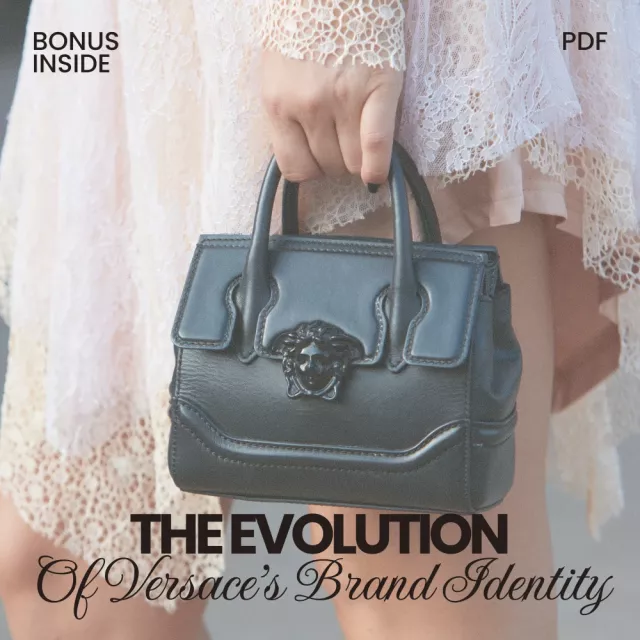
The Gianni Versace founding story is brief but contextualizes why the brand's relationship between clothing and art is structural rather than incidental — it was baked in from 1978. The lifestyle scope, home collections and fragrances alongside garments, positions Versace as an environment rather than just a label, which changes how you think about adding pieces. I work in interior design and recommend high-fashion guides to clients building brand-coherent living environments, and this one handles the lifestyle dimension better than most. The comparison table — bold and dramatic Versace against eclectic Gucci, timeless Chanel, and intellectual Prada — is a shareable reference I'll keep for client conversations. The Canva and Figma recommendation for fabric and accessory mood boards also maps directly onto workflows I already use.
Using Pinterest for runway-to-street-style trend tracking is underrated advice buried in the AI section.
The comparison philosophy table is genuinely well-constructed and the evening wear case study is sharp. The practical wardrobe advice — balance bold with neutrals, mix high and mid-luxury, research pieces that hold value — is sound. My issue is with the celebrity section, which reads as a list rather than analysis: Jennifer Lopez and Lady Gaga are mentioned as collaborators but the deeper story of how those partnerships shaped public perception of Versace's upper tier versus its pop accessibility is left unexplored.
🔱🏆👠❤️
Cinematic ad campaigns as a brand strategy point — actually explains Versace's cultural stickiness.
I found this guide while trying to explain to a younger colleague why a trending Versace Baroque-print jacket was likely a mistake for her wardrobe. I'd been attempting to articulate it for twenty minutes when I pulled this up — it said what I was trying to say in one sentence: buying for trend alone means pieces that look outdated quickly, and Versace's power is in its timeless statement items, not its seasonal noise. She read the whole thing on her phone while we finished lunch. The comparison table was the entry point that got her attention — she'd been conflating Versace's boldness with Gucci's eccentricity and treating them as interchangeable flashy options, which explained why a previous Gucci purchase had disappointed her at a high-impact event. The distinction that Versace is for attention-grabbing impact and Gucci for subtle eccentricity is the single most useful line for anyone navigating a first luxury purchase. She ended up using the Midjourney prompt — a Versace-inspired gown with Medusa motifs, metallic gold accents, and dramatic draping — to visualize options before committing, which I'd never have thought to suggest. The structured Versace outerwear piece she eventually chose was from an older season rather than the trending one, and it works with everything she already owns. The mix of high and mid-luxury strategy also gave her permission to invest in one quality Versace piece rather than feeling pressure to buy into the full range — that recalibration alone was worth the read.
Good foundation on Versace's origin and Baroque signatures — brand identity needed more depth.
The framing of Versace as a lifestyle brand — home collections and fragrances extending the opulence beyond garments — is handled with enough specificity to matter. The brand doesn't just sell clothes, it sells an environment, and the guide communicates that without overloading on descriptive language. For anyone building a coherent luxury vision rather than a random wardrobe, that distinction is load-bearing.
Knowing Versace sits below Chanel in exclusivity but above most contemporaries clarifies the decision.
The Medusa head logo items, safety-pin dresses, and Hellenic-inspired gowns as iconic anchors are the right starting point for understanding where Versace's signature strength actually lives. It's not in logo repetition but in those specific silhouettes that keep reappearing on major red carpets. The guide gets that distinction right.
Accurate overview of Versace's celebrity strategy — the AI tools listing felt tacked on.
The practical decision framework here — choose Versace for attention-grabbing impact, choose Gucci for subtle eccentricity — cuts through years of fashion commentary that treats both brands as variations on the same theme 🔥 Working in event styling, I've watched clients make exactly the overmixing mistake described here: layering Versace Baroque prints over Gucci GG accessories and wondering why the look reads as chaotic instead of curated. The vocabulary this guide gives you for why competing aesthetics dilute rather than amplify each other is genuinely useful in client consultations. The common mistakes section — all four points, especially overmixing brands and neglecting occasion — maps directly onto errors I correct most often.
Versace's history of theatrical runway shows blurring clothing and art wasn't something I expected to find summarized this cleanly in a short guide. That context matters because it explains why Versace pieces often read as artistic objects rather than just clothing — the design intention was always to blur that line. Knowing that changes how you evaluate individual pieces.
Fashion-forward urban professionals as a distinct Versace audience is a more accurate read.
The Versace versus Gucci case study and the four-brand table are both strong — specific enough to be useful for actual purchase decisions. The advice about mixing high and mid-luxury items is also practically useful for people who don't have unlimited budgets. What I kept waiting for was more on Versace's resale market: the price section covers retail but doesn't address how Versace holds value compared to Chanel or whether certain iconic pieces appreciate, which significantly changes the investment calculus.
The overlap between high drama and genuine craftsmanship is where this guide earns its read.
Versace since 1978 — the origin context makes the Medusa symbolism feel intentional, not just decorative.
The Versace versus Gucci evening wear case study is a compact model for how luxury brand comparison writing should work: specific criteria, distinct conclusions, actionable takeaways. Most comparisons hedge at the end with something like 'it depends on personal style,' which is useless. This one actually says Versace belongs in red carpet and nightlife settings while Gucci fits artistic and semi-formal contexts, and then explains why that distinction holds. The mistake about neglecting occasion — flagging ultra-bold Versace at a conservative event specifically — is the applied knowledge that follows naturally from that comparison. The wardrobe building section is the practical close the guide needs: identify key pieces, balance with neutral basics, research heritage before purchasing, mix price tiers thoughtfully.
Smart on brand positioning — more on how Versace's design evolved post-Gianni would help.
The point about social media engagement emphasizing lifestyle over individual products is a key insight into how Versace maintains aspirational positioning without becoming overexposed. It's the same principle as the theatrical runway approach — selling an aura, not an object. The guide reads these marketing patterns accurately and connects them to brand identity in a way that's useful for anyone studying luxury strategy.
Structured tailoring merging with drama — that's Versace's formal wear described in exactly the right terms.
The AI visualization section — specifically using Canva and Figma for mood boards with fabrics, patterns, and accessories — bridges the gap between trend research and actual styling decisions. It's practical enough to use immediately, which is rarer than it sounds in luxury content. The Pinterest recommendation for runway-to-street-style tracking is similarly direct.
The brand comparison table helps, but the guide barely covers Versace's more divisive pieces.
Building a luxury wardrobe around a few key pieces that reflect your style — a statement dress, a tailored blazer, a signature bag — is advice most guides complicate unnecessarily. The specificity here is what makes it land: not just 'invest in classics' but choose Versace when you need attention-grabbing impact and know your occasion. The mistake about ignoring fit and comfort hits differently when framed as a luxury failure — a $3,000 bag or $5,000 dress that doesn't work for your body isn't luxury, it's an expensive compromise. The comparison of Versace's upper-luxury positioning against Chanel's higher exclusivity is more candid than most brand ranking conversations, which usually flatten everything or refuse to rank at all.
The Versace lifestyle framing — home collections and fragrances extending the same opulence as the garments — makes it clear the brand is building a world, not just a wardrobe 🌟 That context is why the Medusa motif appears on everything from clutches to home pieces without feeling diluted: it's a coherent symbol across a coherent universe. Understanding that changes how you approach a first purchase.
Price anchors for RTW and handbags give this real-world utility most brand overview pieces skip.
The Versace versus Chanel design philosophy distinction — bold, dramatic, statement-making versus elegant and timeless — is explained with real clarity, and the four-brand table is a reference I'll keep. The practical mistakes section is also useful. My concern is with the AI tools: recommending Polyvore clones and Looklet alongside Canva and Figma is fine, but some of those platforms have changed significantly or reduced functionality, and more current recommendations would've made that section more durable.
🔥✨
Garments, home, fragrance — the Versace lifestyle frame changes how you approach a first purchase.
I've worked in luxury retail for six years and the framing around Versace's cultural positioning — high-fashion design fused with pop culture through celebrity partnerships — is a more accurate description of how the brand actually operates than most trade publications manage. The Jennifer Lopez and Lady Gaga collaborations represent Versace choosing to sit at the intersection of fashion and entertainment visibility in a way that Chanel or Prada explicitly does not. The design table capturing that difference — Versace as statement-making, Gucci as playful and ironic, Chanel as classic luxury, Prada as modern sophistication — gives people a framework for understanding why each brand's customer base is genuinely distinct even when price points overlap. The section on building a luxury wardrobe also directly addresses what I hear from clients daily: permission to mix high and mid-luxury tiers without feeling like it compromises overall sophistication. That framing reduces buyer paralysis better than most advice I've encountered.
The four-brand comparison table is the strongest element here — mapping aesthetic, signature, and approach for Versace, Gucci, Chanel, and Prada in one view is genuinely reference-grade. The practical mistakes section is also sharp. What I'd wanted alongside the price range information was guidance on which Versace categories — ready-to-wear, accessories, footwear — tend to offer the strongest cost-per-wear over time, rather than just a retail price anchor.
Knowing which house serves each occasion — that's the luxury skill this guide builds ⭐
Versace's Baroque and Hellenic history reframed as strategic context, not just brand lore.
The common mistake about buying for trend alone — that fast-changing fads make pieces look outdated quickly and that timeless statement pieces are the real investment — applies to Versace more specifically than to most other houses in this comparison. Versace's strongest pieces are specifically the ones that predate trend cycles: the safety-pin constructions, the Medusa motifs, the Hellenic draping. The guide makes that implicit through its whole structure.
There's a lot here that works well, starting with the 1978 Milan founding story and building into the theatrical, art-adjacent design vision that's been central to Versace from the beginning. The breakdown of Baroque patterns, Medusa motifs, and Hellenic gowns as signature elements is accurate and useful framing for people discovering the brand. The practical wardrobe advice balancing bold pieces against neutral basics is sound and would've worked as the anchor for the entire guide. My concern is structural: the guide occasionally frames Versace as a category unto itself while the comparison table suggests it should be understood relationally — against Gucci's ironic playfulness, Chanel's heritage authority, Prada's intellectual minimalism. Those two frames don't always sync. The section on who wears Versace lists celebrities, urban professionals, and collectors without exploring how the brand speaks differently to each group through design, price tier, or product category. Someone buying a Medusa clutch at $3,000 is in a different relationship with the brand than someone wearing a Hellenic gown on a red carpet, and that difference matters for how you approach a first purchase. The AI section is the weakest part — the Midjourney and ChatGPT prompts are reasonable starting points, but framing AI as helping you experiment safely before committing to investment purchases undersells what these tools can actually do for comparative research across brand archives.
Versace's commitment to visible theatrical opulence explained with enough history to feel grounded.
Four luxury houses, one table, genuine differentiation — that's the work done right.
The note that Versace's marketing emphasizes lifestyle over products — cinematic ad campaigns, social media atmosphere over item showcases — explains why the brand commands attention without constant product promotion. It's the same mechanism as the theatrical runway approach: the brand sells a state of being, and individual pieces follow from that desire. Good context for understanding why celebrity partnerships feel integral rather than merely promotional.
I bought my first significant Versace piece — a structured blazer in deep navy with gold Baroque embroidery — doing exactly what this guide warns against: buying for trend, without researching the brand's fit conventions or thinking carefully about occasion. I wore it once to an event where it read as too theatrical for the room, and it's been in my closet since. I found this guide three months later while deciding whether to resell the blazer or find the right occasion for it. The overview of Versace's signature design language — structure with drama, metallic finishes, tailoring with edge — helped me understand that the blazer was right for its category, just wrong for the event I'd chosen. The mistake about neglecting occasion is described directly here, and reading it felt like a specific intervention I should've had before the purchase. The four-brand comparison table is the clearest framework I've seen for understanding where Versace sits relative to Gucci, Chanel, and Prada — not just in price but in philosophy and appropriate context. What I wish the guide had done is spend more time on how to integrate bold Versace pieces into a working wardrobe for someone who doesn't regularly attend red carpet events or nightlife settings. The advice to balance bold items with neutral basics is given in one bullet, but the practical mechanics — which neutral foundations absorb Baroque prints, how structured tailoring translates a dramatic Versace piece into a professional setting — deserved considerably more space. I've since found the right occasion for my blazer, but it required more research than a guide this detailed should have left to the reader.