





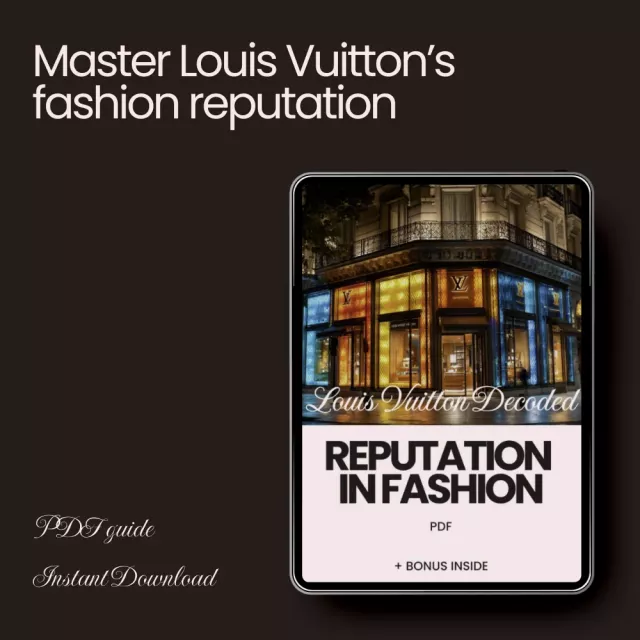
Discover the Power Behind Louis Vuitton’s Legendary Fashion Reputation
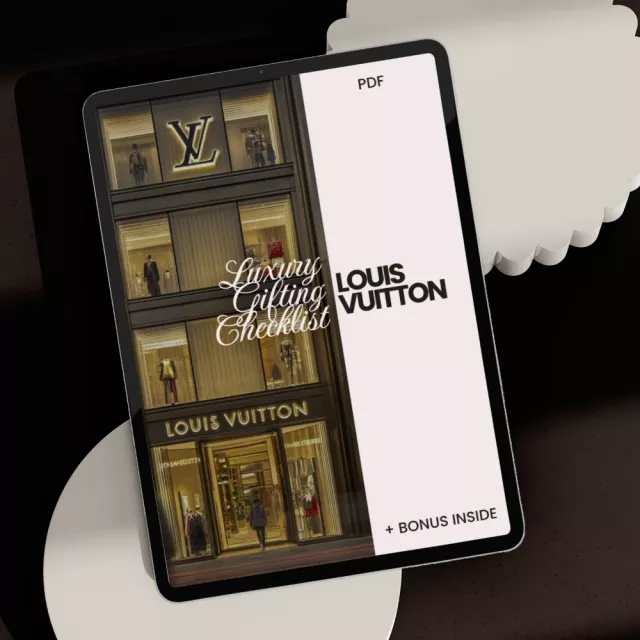
Step into the world of one of fashion’s most iconic names with our exclusive digital guide, Louis Vuitton Decoded: Reputation in Fashion. This eBook takes you on a deep dive into the history, influence, and reputation of Louis Vuitton—an unmatched name in luxury. From its early beginnings to its status as a global fashion phenomenon, this guide is your go-to resource for understanding how Louis Vuitton continues to shape the fashion industry and maintain its powerful brand reputation.
In this comprehensive guide, you’ll explore every facet of Louis Vuitton’s influence on fashion. Whether you’re a budding fashion enthusiast, a professional in the industry, or someone who simply appreciates the prestige of luxury brands, this digital download provides invaluable insights that you can’t afford to miss.
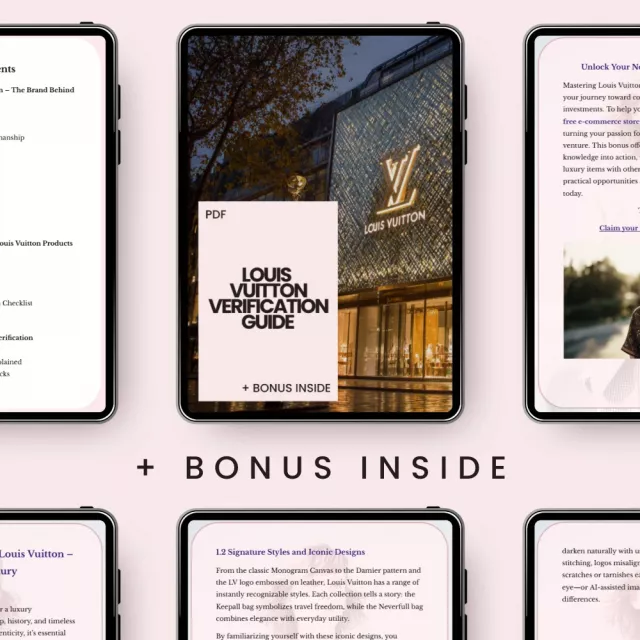
- Chapter 1: The Legacy of Louis Vuitton – Learn about the origins and craftsmanship that built a luxury empire.
- Chapter 2: Louis Vuitton’s Reputation in Fashion – Dive into the brand’s prestige, media influence, and celebrity endorsements.
- Chapter 3: Case Studies of Reputation in Action – Explore how limited editions, artist collaborations, and crisis management shape the brand’s perception.
- Chapter 4: Common Mistakes and Missteps – Understand the risks, including counterfeit issues and overexposure.
- Chapter 5: Leveraging AI in Fashion Branding – Discover how AI enhances brand reputation and helps stay ahead of trends.
- Chapter 6: Prompt Examples for AI-Assisted Brand Insights – Generate ideas and analyze consumer sentiment with AI.
- Chapter 7: Next Steps for Fashion Enthusiasts and Professionals – Apply Louis Vuitton’s strategies to your work and personal brand.
- Chapter 8: Tables and Visual Insights – Visual tools like timelines, tables, and infographics to enhance understanding.
Why Choose This Guide?
This eBook isn’t just another resource on Louis Vuitton—it’s a detailed exploration of how reputation is built, managed, and enhanced in the world of high fashion. Unlike other guides, this one delves deeply into the intricacies of Louis Vuitton’s brand power, offering case studies and visual tools to help you understand the brand’s impact on fashion, culture, and media. Plus, you’ll gain practical insights into leveraging AI for fashion branding, something few other resources touch on.
Key Benefits of This Guide:
- Comprehensive Learning – From the history of Louis Vuitton to current strategies in fashion branding.
- Actionable Insights – Real-world examples, case studies, and AI tools to improve your understanding and applications in fashion.
- Perfect for Fashion Professionals and Enthusiasts – Whether you’re just starting or already a part of the industry, this guide is tailored to you.
- Easy-to-Understand Format – Packed with visual aids, tables, and easy-to-follow chapters.
Get Your Copy Now!
Ready to decode Louis Vuitton’s success and use its strategies in your own career or personal brand? Download Louis Vuitton Decoded: Reputation in Fashion now and unlock the secrets behind one of fashion’s most iconic names. This guide is the perfect blend of history, strategy, and innovation in the luxury fashion industry.
Don’t miss out! Download your copy today and start exploring Louis Vuitton’s legacy and reputation in fashion!
SHIPPING
We are proud to offer international shipping services that currently operate in over 200 countries and islands world wide. Nothing means more to us than bringing our customers great value and service. We will continue to grow to meet the needs of all our customers, delivering a service beyond all expectation anywhere in the world.
Do you ship worldwide?
Yes. We provide free shipping to over 200 countries around the world. However, there are some locations we are unable to ship to. If you happen to be located in one of those countries we will contact you.
What about customs?
We are not responsible for any custom fees once the items have been shipped. By purchasing our products, you consent that one or more packages may be shipped to you and may get custom fees when they arrive to your country.
How long does shipping take?
Shipping time varies by location. These are our estimates:| Location | *Estimated Shipping Time |
|---|---|
| United States | 5-20 Business days |
| Canada, Europe | 5-20 Business days |
| Australia, New Zealand | 5-20 Business days |
| Central & South America | 5-25 Business days |
| Asia | 5-20 Business days |
| Africa | 5-25 Business days |
Do you provide tracking information?
Yes, you will receive an email once your order ships that contains your tracking information. If you haven’t received tracking info within 5 days, please contact us.
My tracking says “no information available at the moment”.
For some shipping companies, it takes 2-5 business days for the tracking information to update on the system. If your order was placed more than 5 business days ago and there is still no information on your tracking number, please contact us.
Will my items be sent in one package?
For logistical reasons, items in the same purchase will sometimes be sent in separate packages, even if you've specified combined shipping.
If you have any other questions, please contact us and we will do our best to help you out.
RETURNS
Order cancellation
All orders can be cancelled until they are shipped. If your order has been paid and you need to make a change or cancel an order, you must contact us within 12 hours. Once the packaging and shipping process has started, it can no longer be cancelled.
Refunds
Your satisfaction is our #1 priority. Therefore, you can request a refund or reshipment for ordered products if:
- If you did not receive the product within the guaranteed time (45 days not including 1-3 day processing) you can request a refund or a reshipment.
- If you received the wrong item you can request a refund or a reshipment.
- If you do not want the product you’ve received you may request a refund but you must return the item at your expense and the item must be unused.
We do not issue the refund if:
- Your order did not arrive due to factors within your control (i.e. providing the wrong shipping address)
- Your order did not arrive due to exceptional circumstances outside the control of cyclonica.com (i.e. not cleared by customs, delayed by a natural disaster).
- Other exceptional circumstances outside the control of cyclonica.com.
*You can submit refund requests within 15 days after the guaranteed period for delivery (45 days) has expired. You can do it by sending a message on Contact Us page
If you are approved for a refund, then your refund will be processed, and a credit will automatically be applied to your credit card or original method of payment, within 14 days.
Exchanges
If for any reason you would like to exchange your product, perhaps for a different size in clothing, you must contact us first and we will guide you through the steps.
Please do not send your purchase back to us unless we authorise you to do so.
Order cancellation
All orders can be cancelled until they are shipped. If your order has been paid and you need to make a change or cancel an order, you must contact us within 12 hours. Once the packaging and shipping process has started, it can no longer be cancelled.
Refunds
Your satisfaction is our #1 priority. Therefore, you can request a refund or reshipment for ordered products if:
- If you did not receive the product within the guaranteed time( 45 days not including 2-5 day processing) you can request a refund or a reshipment.
- If you received the wrong item you can request a refund or a reshipment.
- If you do not want the product you’ve received you may request a refund but you must return the item at your expense and the item must be unused.
We do not issue the refund if:
- Your order did not arrive due to factors within your control (i.e. providing the wrong shipping address)
- Your order did not arrive due to exceptional circumstances outside the control of cyclonica.com (i.e. not cleared by customs, delayed by a natural disaster).
- Other exceptional circumstances outside the control of
*You can submit refund requests within 15 days after the guaranteed period for delivery (45 days) has expired. You can do it by sending a message on Contact Us page
If you are approved for a refund, then your refund will be processed, and a credit will automatically be applied to your credit card or original method of payment, within 14 days.
Exchanges
If for any reason you would like to exchange your product, perhaps for a different size in clothing. You must contact us first and we will guide you through the steps.
Please do not send your purchase back to us unless we authorise you to do so.
Customer Reviews
Write a Review
We Think You’ll Love
Top picks just for you













The flat-topped trunk origin story reframed how I think about innovation in branding.
I run a small accessories brand and have been struggling to articulate why my products matter beyond the materials. The heritage-exclusivity-storytelling framework gave me a clear lens. I rewrote my entire About page around my origin story after reading the section on applying LV's strategies to your own work. Within two weeks my email signups doubled because the narrative finally connected with people. The overexposure warning also made me rethink a wholesale deal I was about to sign—controlled desirability over ubiquity is now my north star. Even the comparison table between LV, Gucci, Chanel, Hermès, and Prada helped me position my brand against competitors I'd never bothered to study.
The Murakami collaboration case study is the best example of expanding audience without losing prestige.
Controlled desirability over ubiquity—that one line reshaped my marketing strategy 🔥
Strong analysis of how counterfeiting threatens luxury trust. The RFID and QR code countermeasures were new to me and gave me practical ideas for protecting my own product line.
Thorough and well-organized. The crisis management section is especially strong—most fashion guides skip that entirely. My one gripe is the AI chapters feel padded compared to the brand strategy content, which is where the real depth lives.
The milestone timeline from 1854 to present is a masterclass in deliberate growth.
Read this for a brand management course and it outperformed the assigned textbook. The case studies on the Capucines bag and artist collaborations tied theory to real outcomes in a way academic writing rarely does. The misaligned partnerships section also gave me a cautionary framework I applied to a group project on co-branding risks. My professor asked where I sourced it.
Solid brand strategy content but roughly a third of the guide is dedicated to AI applications and prompt examples that feel bolted on. The core reputation analysis is sharp—the tech filler dilutes it.
The overexposure risk section is something every emerging brand should read twice.
👜⭐🔥❤️
The comparison table across LV, Gucci, Chanel, Hermès, and Prada is worth the read alone. Seeing the reputation drivers side by side clarified why each house occupies a different mental space for consumers.
Great strategic lens but I wanted more depth on the actual controversies mentioned in the crisis management section. It references cultural sensitivity debates without exploring specifics, which makes the analysis feel incomplete in that area.
The personal branding section surprised me—didn't expect practical career advice in a luxury fashion guide.
I've been in fashion PR for eight years and this is the clearest breakdown of how exclusivity drives perceived value that I've encountered outside of internal brand decks. The Capucines case study perfectly illustrates how scarcity plus storytelling plus celebrity placement creates demand that feeds on itself. I shared the reputation pitfalls table with my team and we've started using it as a checklist before signing new collaborations. The section on misaligned partnerships hit close to home—we nearly greenlit a deal last quarter that would have clashed with our brand identity. This guide articulated the red flags I'd only sensed intuitively.
Virgil Abloh bridging streetwear and luxury is explained perfectly here.
The heritage section on flat-topped trunks being lighter and stackable shows that LV's reputation started with solving a real problem, not just marketing. That framing stuck with me.
Informative but the AI chapters feel like a different book stapled onto a strong brand analysis. The prompt examples and chatbot sections don't add much to the core argument about reputation. Would be tighter without them.
👌✨👜⭐
Finished it in one sitting and immediately applied the storytelling framework to my portfolio 💡
Well-researched with strong tables and frameworks. The social media engagement metrics table is useful for anyone managing luxury brand accounts. Could use more specific data points rather than general descriptions though—actual engagement numbers would strengthen the argument.
The Marc Jacobs to Virgil Abloh evolution captures exactly how tradition and innovation coexist.
As someone launching a handbag brand, I came in expecting a fan piece and got an actual strategic playbook. The section on how limited editions drive buzz through urgency and social proof gave me a concrete framework for my first collection launch. I created three limited colorways instead of eight standard ones, and presold all of them within a week. The counterfeit impact section also pushed me to invest in authenticity features early rather than retroactively. The personal branding tips at the end felt like a bonus I didn't know I needed—I revamped my LinkedIn presence using the consistency and curation advice.
Reputation being about perceived value, not just popularity—that distinction is everything.
Good overall structure with useful case studies and comparison tables. The crisis management and overexposure sections are the strongest. Loses momentum in the later chapters where AI applications dominate—the prompt examples feel generic compared to the nuanced brand analysis earlier.
Sent the reputation pitfalls table to my entire marketing team.