





Unlock the Secrets of Louis Vuitton and Other Luxury Brands
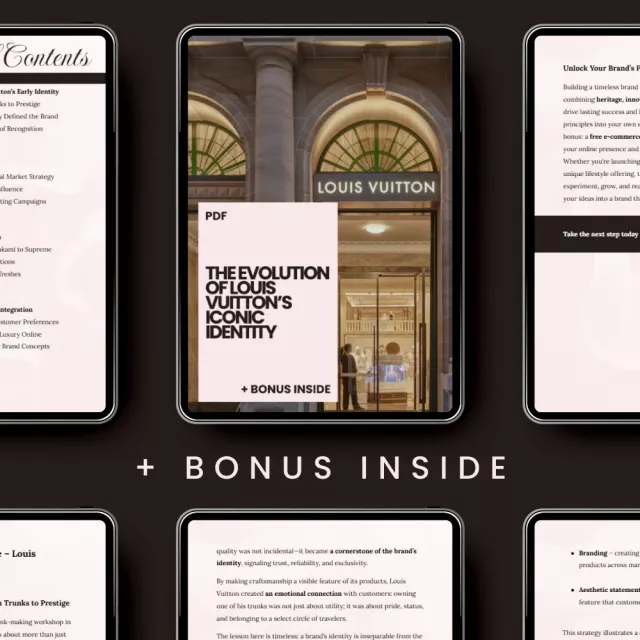
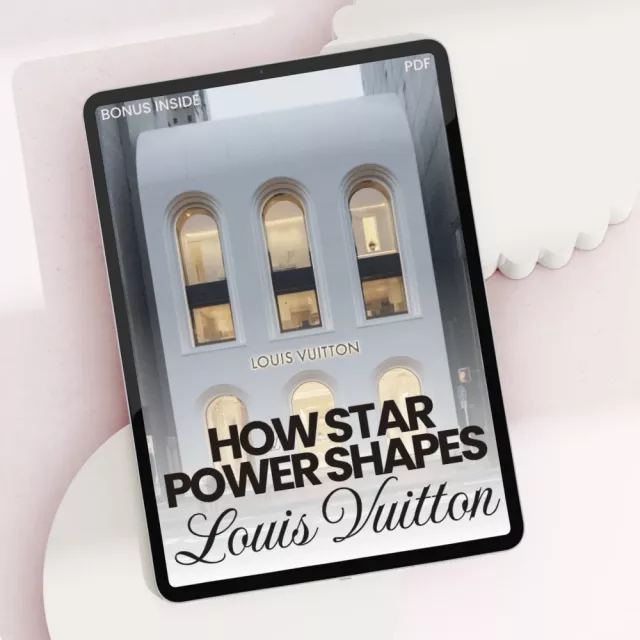
Welcome to the ultimate guide for luxury fashion lovers and enthusiasts! Our Luxury Comparison Guide: Louis Vuitton Edition offers an in-depth look at one of the most iconic fashion brands in the world, Louis Vuitton, and compares it to other luxury giants like Chanel, Gucci, and Hermès. Whether you’re a seasoned collector or a newcomer to the world of luxury fashion, this guide will empower you with expert knowledge to make informed decisions when it comes to purchasing high-end fashion. Dive into a detailed, AI-powered comparison of Louis Vuitton and its competitors, and elevate your shopping game.
- Comprehensive Overview – Understand the world of luxury fashion, including the legacy factor and how the digital era has impacted luxury brands.
- Deep Dive into Louis Vuitton – Explore Louis Vuitton’s origins, signature styles, iconic collections, and its innovative business model.
- Brand Comparison – Compare Louis Vuitton with other major luxury players like Chanel, Gucci, and Hermès, focusing on their philosophies, pricing, and value perceptions.
- Case Studies & Insights – Examine real-life case studies like the Speedy vs. the Birkin, and gain AI-powered insights for smarter brand comparisons.
- Practical Buying Tips – Learn about common mistakes buyers make and discover AI-powered tools to guide you through the luxury shopping experience.
- Exclusive Tools – Utilize practical ChatGPT prompts for further exploration and to enhance your luxury fashion journey.
Who Should Get This Guide?
This guide is designed for anyone with a passion for luxury fashion, from novice buyers looking to make their first purchase to seasoned collectors wanting to refine their knowledge. If you’re interested in making smarter luxury fashion choices and learning how Louis Vuitton compares with other top-tier luxury brands, this guide is tailored just for you. It’s a must-have resource for fashion enthusiasts and those who want to delve deeper into the world of luxury fashion.
Why Choose Our Luxury Comparison Guide?
What sets our Luxury Comparison Guide: Louis Vuitton Edition apart from other resources? Unlike generic luxury fashion guides, this product offers a unique, AI-powered approach to comparing Louis Vuitton with other luxury brands. You’ll get exclusive insights into the pricing, value perception, and branding strategies of the biggest names in the industry. Plus, with practical buying tips and actionable steps, you’ll be equipped to make confident, informed decisions every time you shop.
Get Your Copy Today!
Don’t miss out on this essential guide that will transform your luxury shopping experience. Download the Luxury Comparison Guide: Louis Vuitton Edition now and take your understanding of Louis Vuitton and other luxury brands to the next level!
SHIPPING
We are proud to offer international shipping services that currently operate in over 200 countries and islands world wide. Nothing means more to us than bringing our customers great value and service. We will continue to grow to meet the needs of all our customers, delivering a service beyond all expectation anywhere in the world.
Do you ship worldwide?
Yes. We provide free shipping to over 200 countries around the world. However, there are some locations we are unable to ship to. If you happen to be located in one of those countries we will contact you.
What about customs?
We are not responsible for any custom fees once the items have been shipped. By purchasing our products, you consent that one or more packages may be shipped to you and may get custom fees when they arrive to your country.
How long does shipping take?
Shipping time varies by location. These are our estimates:| Location | *Estimated Shipping Time |
|---|---|
| United States | 5-20 Business days |
| Canada, Europe | 5-20 Business days |
| Australia, New Zealand | 5-20 Business days |
| Central & South America | 5-25 Business days |
| Asia | 5-20 Business days |
| Africa | 5-25 Business days |
Do you provide tracking information?
Yes, you will receive an email once your order ships that contains your tracking information. If you haven’t received tracking info within 5 days, please contact us.
My tracking says “no information available at the moment”.
For some shipping companies, it takes 2-5 business days for the tracking information to update on the system. If your order was placed more than 5 business days ago and there is still no information on your tracking number, please contact us.
Will my items be sent in one package?
For logistical reasons, items in the same purchase will sometimes be sent in separate packages, even if you've specified combined shipping.
If you have any other questions, please contact us and we will do our best to help you out.
RETURNS
Order cancellation
All orders can be cancelled until they are shipped. If your order has been paid and you need to make a change or cancel an order, you must contact us within 12 hours. Once the packaging and shipping process has started, it can no longer be cancelled.
Refunds
Your satisfaction is our #1 priority. Therefore, you can request a refund or reshipment for ordered products if:
- If you did not receive the product within the guaranteed time (45 days not including 1-3 day processing) you can request a refund or a reshipment.
- If you received the wrong item you can request a refund or a reshipment.
- If you do not want the product you’ve received you may request a refund but you must return the item at your expense and the item must be unused.
We do not issue the refund if:
- Your order did not arrive due to factors within your control (i.e. providing the wrong shipping address)
- Your order did not arrive due to exceptional circumstances outside the control of cyclonica.com (i.e. not cleared by customs, delayed by a natural disaster).
- Other exceptional circumstances outside the control of cyclonica.com.
*You can submit refund requests within 15 days after the guaranteed period for delivery (45 days) has expired. You can do it by sending a message on Contact Us page
If you are approved for a refund, then your refund will be processed, and a credit will automatically be applied to your credit card or original method of payment, within 14 days.
Exchanges
If for any reason you would like to exchange your product, perhaps for a different size in clothing, you must contact us first and we will guide you through the steps.
Please do not send your purchase back to us unless we authorise you to do so.
Order cancellation
All orders can be cancelled until they are shipped. If your order has been paid and you need to make a change or cancel an order, you must contact us within 12 hours. Once the packaging and shipping process has started, it can no longer be cancelled.
Refunds
Your satisfaction is our #1 priority. Therefore, you can request a refund or reshipment for ordered products if:
- If you did not receive the product within the guaranteed time( 45 days not including 2-5 day processing) you can request a refund or a reshipment.
- If you received the wrong item you can request a refund or a reshipment.
- If you do not want the product you’ve received you may request a refund but you must return the item at your expense and the item must be unused.
We do not issue the refund if:
- Your order did not arrive due to factors within your control (i.e. providing the wrong shipping address)
- Your order did not arrive due to exceptional circumstances outside the control of cyclonica.com (i.e. not cleared by customs, delayed by a natural disaster).
- Other exceptional circumstances outside the control of
*You can submit refund requests within 15 days after the guaranteed period for delivery (45 days) has expired. You can do it by sending a message on Contact Us page
If you are approved for a refund, then your refund will be processed, and a credit will automatically be applied to your credit card or original method of payment, within 14 days.
Exchanges
If for any reason you would like to exchange your product, perhaps for a different size in clothing. You must contact us first and we will guide you through the steps.
Please do not send your purchase back to us unless we authorise you to do so.
Customer Reviews
Write a Review
We Think You’ll Love
Top picks just for you











The Speedy vs. Birkin case study finally gave me a framework for thinking about luxury purchases instead of just going by vibes.
Solid breakdown of how LV sits between Hermès and Gucci in terms of accessibility and resale.
Read it cover to cover in one sitting — the brand philosophy comparisons are sharp.
I've been torn between a Chanel Classic Flap and an LV Neverfull for months. This guide didn't tell me which to buy, but it laid out the differences in resale trajectory, design philosophy, and perceived value so clearly that the decision practically made itself. The section on how Chanel signals status through texture and quilting versus LV's bold monogram approach was the clarity I needed. Went with the Neverfull for daily versatility and I'm thrilled.
The LVMH business model section was unexpectedly fascinating.
Finally a guide that treats luxury buying like the investment decision it actually is.
The common mistakes chapter called me out — I've definitely overpaid chasing logos without understanding the design philosophy behind them. The point about Gucci pieces depreciating faster than classic LV or Chanel items hit hard because I've watched it happen in my own closet. Two Gucci bags I bought in 2023 are worth half what I paid, while my LV Speedy held steady. This guide would have saved me over a thousand dollars.
Smart, concise, and not condescending.
Wished the Gucci section went a bit deeper into their recent creative direction shifts, but everything else is excellent.
The pricing and value perception section reframed how I think about every luxury purchase.
Clean writing, no fluff, actual substance.
I came in as a total beginner — never owned anything luxury, just curious about what makes these brands worth the price. Chapter 1 on understanding luxury as a mix of craftsmanship, heritage, and perception clicked immediately. By Chapter 3 I understood why a Birkin costs ten times more than a Speedy even though both are leather bags. The guide respects your intelligence without assuming prior knowledge, which is rare. I now feel confident walking into a consignment store and knowing what questions to ask.
The AI prompt suggestions in Chapter 4 are surprisingly useful for quick research.
Best luxury primer I've read online.
The distinction between LV's attainable luxury positioning and Hermès' deliberate scarcity model was eye-opening.
Love that it covers resale potential — not just how to buy but what holds value and why.
Learned more about LV's distribution strategy in two pages than in years of following fashion accounts.
Some of the AI tool claims feel a step ahead of what's actually available today, but the core brand analysis is rock solid.
The legacy factor section is beautifully written.
✨👜⭐❤️🔥
My husband and I collect luxury bags together and we've been doing it wrong for years — buying on impulse, chasing limited drops, ignoring resale trends entirely. This guide restructured our approach. The section on timing purchases around seasonal collections and artist collaborations gave us a strategy we've already used twice. We passed on a hyped Gucci release and instead picked up a pre-owned LV x Virgil Abloh piece that's already appreciated. We reference Chapter 3 before every major purchase now.
Quick read with lasting impact on how I evaluate brands.
The point about Chanel's subtle textures versus LV's bold monogram changed how I see both brands entirely.
Strong on comparisons, light on specifics about recent collections. Still very much worth the time.
Capsule collection prompt idea from Chapter 4 was immediately useful.
The Virgil Abloh and Jeff Koons collaboration context added depth I didn't expect from a comparison guide.
This is the guide I wish I had before my first luxury purchase three years ago. I bought a trendy Gucci piece because Instagram told me to, and it lost almost half its resale value within eighteen months. Meanwhile my friend bought a classic LV Speedy the same week and hers is worth more now than what she paid. After reading the value perception and common mistakes sections, I understand exactly why. The framework for evaluating purchases by purpose — personal enjoyment vs. status vs. investment — is something I now apply to every buying decision, luxury or not.
Practical without being preachy.
The comparison framework makes cross-brand shopping so much less overwhelming.
LV's no-discount distribution strategy explanation finally makes sense to me.
I study fashion business and this guide is more insightful than some textbook chapters I've read on luxury positioning. The way it maps LV as a bridge between Hermès' ultra-exclusivity and Gucci's trend-driven approach is a cleaner framework than most academic papers offer.
Short, smart, and actually changed my shopping behavior.
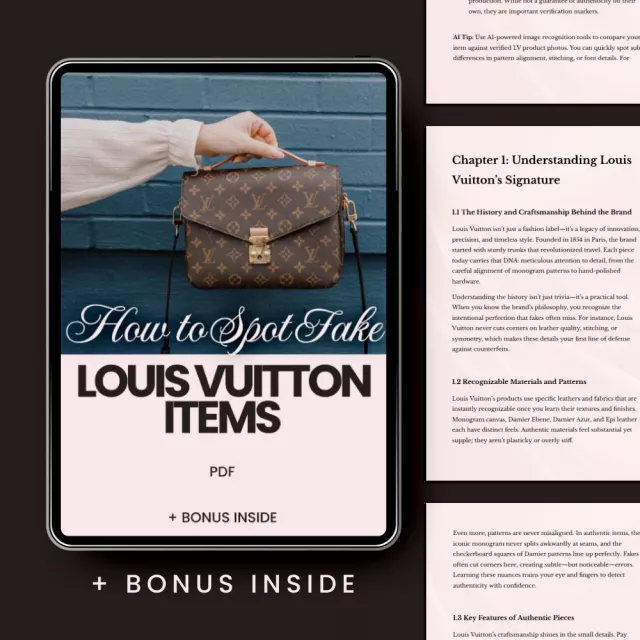
The authentication markers overview — stitching, leather quality, monogram alignment — gave me tangible things to check rather than vague advice.
Gifted this to my mom who's starting to explore luxury resale platforms. She texted me that the Speedy vs. Birkin case study was worth the whole read.
👏🏼✨👜💯
The section on how LV uses AI for trend forecasting and personalized marketing was genuinely surprising.
Covers both the emotional and financial sides of luxury — most guides pick one and ignore the other.
I'm a reseller and the pricing/value perception chapter articulated exactly what I try to explain to clients about why certain brands hold value. The breakdown of Hermès pieces outperforming traditional investments versus Gucci's trend sensitivity is data I reference in conversations weekly now. Only wish it included specific resale percentage benchmarks by model, but the conceptual framework alone is incredibly useful for someone in my line of work.
Never thought about luxury as a spectrum from attainable to ultra-exclusive before reading this.
Chapter 2 on LV's origins from trunk-maker to global icon is a great foundation for everything that follows.
The guide acknowledges real trade-offs without being negative about any brand. Balanced and fair.
Helpful content overall, though the closing promotional section felt disconnected from the rest of the guide.
Readable in under an hour, reference-worthy for months after.
The point about not chasing logos without understanding design philosophy was a wake-up call for me. I'd been buying purely for visibility and this guide made me realize I wasn't even enjoying what I owned — just performing. Shifted my entire approach to buying pieces that actually fit my style and hold long-term value. Already sold two impulse purchases and reinvested in a classic Neverfull I use daily.
The Chanel section nailed why their bags feel so different from LV in hand.
Clean structure, no wasted paragraphs.
Exactly the kind of context you need before spending $2K+ on a bag.
I appreciate that it doesn't just rank the brands but explains the philosophy behind each one's pricing and exclusivity model.
The collection planning prompts gave me a starting framework I've already customized for my own wishlist.
❤️🔥👌⭐✨👜
I was debating whether to start my collection with LV or save for Hermès. This guide mapped out the trade-offs so clearly — accessibility and daily wearability versus scarcity and investment ceiling — that I stopped going in circles. Started with a Speedy and I have zero regrets.
The business model section explains why you'll never see LV on sale — and why that's actually good for buyers.
This gave me vocabulary for conversations I was already having.
Resale potential framing was the most useful part for me — hadn't considered how trend sensitivity affects Gucci versus classic LV differently.
Been buying luxury for a decade and still found the brand comparison chapter insightful.
Read the whole thing on a flight. The section comparing how each brand tells its story — LV through monogram visibility, Chanel through design subtlety, Hermès through manufactured scarcity — reframed how I evaluate any luxury product. I used to think price alone determined quality, but now I understand it's about heritage, market positioning, and perceived exclusivity working together. This is the kind of education that makes you a smarter consumer across the board, not just in fashion.
Could use more visual comparison charts, but the written analysis is strong enough to stand on its own.
The quality verification checklist alone justified reading this.
Understanding LV's position within LVMH gave me a whole new lens on the brand.
Sent the Speedy vs. Birkin section to three friends mid-argument about which is the better investment 🔥
Approachable for beginners, still sharp for experienced collectors.
The emphasis on buying with purpose — personal enjoyment vs. status vs. investment — is a framework I keep coming back to.
Finally someone explains that Gucci's bold maximalism serves a different market than LV's classic aesthetic without saying one is better.
My first luxury purchase was a Gucci bag I thought would be timeless. Two years later it felt dated and I couldn't resell it for even half. My second was an LV Alma after reading this guide's section on which designs hold long-term value. Night and day experience — the Alma fits everything, works with any outfit, and I've already seen its resale price climb slightly since I bought it. The common mistakes section describing trend-driven depreciation described my exact first purchase.
Tight, focused, no padding.
This made me rethink my entire wishlist in the best way.