





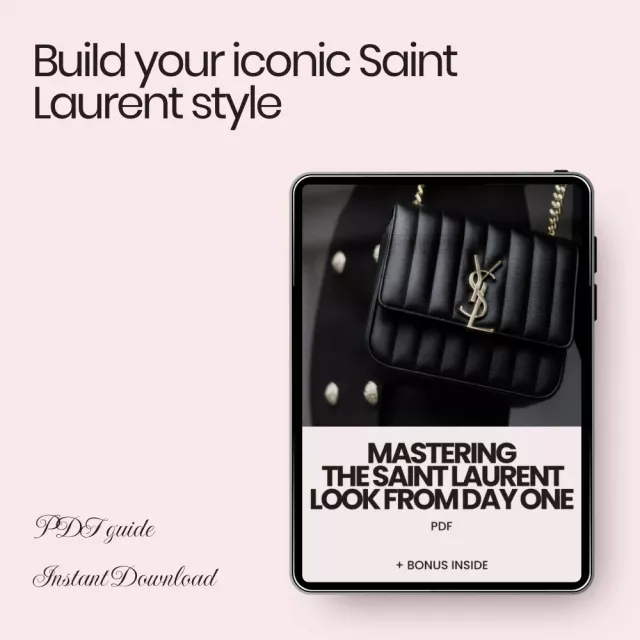
Step Into Effortless Edge and Timeless Cool
If you’ve ever admired that sharp, confident, effortlessly cool aesthetic and wondered how to actually pull it off, this eBook was made for you. Mastering the Saint Laurent Look From Day One is a practical, step-by-step saint laurent style guide for beginners designed to help you understand, build, and embody the look with clarity and confidence. No fashion degree required. No overwhelming theory. Just clear guidance that transforms inspiration into wearable reality.
Whether you’re starting from scratch or refining your wardrobe, this digital download walks you through the mindset, structure, and styling techniques behind one of fashion’s most iconic aesthetics.
What’s Inside This eBook
- Chapter 1: A deep dive into the Saint Laurent aesthetic, including core visual codes and why the look feels effortlessly cool.
- Chapter 2: A foundation wardrobe blueprint with essential pieces, color palette guidance, fit and silhouette rules, plus a beginner-friendly outfit case study.
- Chapter 3: Styling techniques that balance edge and elegance, layering strategies, day-to-night transitions, and common mistakes to avoid.
- Chapter 4: Accessories that define the identity—bags, boots, belts, jewelry, plus hair and makeup direction and AI prompt examples for outfit planning.
- Chapter 5: Smart shopping strategies, mixing high and low pieces, spotting authentic design details, and using AI to build a capsule wardrobe.
- Chapter 6: Adapting the look to your lifestyle, refining confidence and body language, and evolving your style seasonally.
Who This Is For
This saint laurent style guide for beginners is perfect for:
- Anyone new to the Saint Laurent aesthetic
- Fashion lovers who want a structured, wearable approach
- Minimalists building a sharp capsule wardrobe
- Style-conscious professionals upgrading their image
- Creatives who want to project quiet confidence and edge
Why This Guide Is Different
Unlike generic fashion eBooks, this guide doesn’t just show you pictures or tell you to “dress edgy.” It breaks down the why behind the look and gives you a repeatable framework. You’ll learn how to recognize the core DNA of the aesthetic, apply it to your body type, and make it work in real life—without overspending.
It also integrates modern tools, including practical AI strategies for outfit planning and capsule wardrobe building, making it both timeless and forward-thinking.
The Practical Benefits
- Build a cohesive wardrobe from day one
- Eliminate guesswork when shopping
- Create outfits that look intentional, not accidental
- Develop a signature style rooted in confidence
- Save money by investing in the right pieces
Download and Transform Your Style
Your wardrobe should communicate strength, elegance, and individuality. With Mastering the Saint Laurent Look From Day One, you’ll finally have a clear roadmap to achieving that iconic aesthetic.
Download your copy today and start building your signature look with clarity, confidence, and purpose.
SHIPPING
We are proud to offer international shipping services that currently operate in over 200 countries and islands world wide. Nothing means more to us than bringing our customers great value and service. We will continue to grow to meet the needs of all our customers, delivering a service beyond all expectation anywhere in the world.
Do you ship worldwide?
Yes. We provide free shipping to over 200 countries around the world. However, there are some locations we are unable to ship to. If you happen to be located in one of those countries we will contact you.
What about customs?
We are not responsible for any custom fees once the items have been shipped. By purchasing our products, you consent that one or more packages may be shipped to you and may get custom fees when they arrive to your country.
How long does shipping take?
Shipping time varies by location. These are our estimates:| Location | *Estimated Shipping Time |
|---|---|
| United States | 5-20 Business days |
| Canada, Europe | 5-20 Business days |
| Australia, New Zealand | 5-20 Business days |
| Central & South America | 5-25 Business days |
| Asia | 5-20 Business days |
| Africa | 5-25 Business days |
Do you provide tracking information?
Yes, you will receive an email once your order ships that contains your tracking information. If you haven’t received tracking info within 5 days, please contact us.
My tracking says “no information available at the moment”.
For some shipping companies, it takes 2-5 business days for the tracking information to update on the system. If your order was placed more than 5 business days ago and there is still no information on your tracking number, please contact us.
Will my items be sent in one package?
For logistical reasons, items in the same purchase will sometimes be sent in separate packages, even if you've specified combined shipping.
If you have any other questions, please contact us and we will do our best to help you out.
RETURNS
Order cancellation
All orders can be cancelled until they are shipped. If your order has been paid and you need to make a change or cancel an order, you must contact us within 12 hours. Once the packaging and shipping process has started, it can no longer be cancelled.
Refunds
Your satisfaction is our #1 priority. Therefore, you can request a refund or reshipment for ordered products if:
- If you did not receive the product within the guaranteed time (45 days not including 1-3 day processing) you can request a refund or a reshipment.
- If you received the wrong item you can request a refund or a reshipment.
- If you do not want the product you’ve received you may request a refund but you must return the item at your expense and the item must be unused.
We do not issue the refund if:
- Your order did not arrive due to factors within your control (i.e. providing the wrong shipping address)
- Your order did not arrive due to exceptional circumstances outside the control of cyclonica.com (i.e. not cleared by customs, delayed by a natural disaster).
- Other exceptional circumstances outside the control of cyclonica.com.
*You can submit refund requests within 15 days after the guaranteed period for delivery (45 days) has expired. You can do it by sending a message on Contact Us page
If you are approved for a refund, then your refund will be processed, and a credit will automatically be applied to your credit card or original method of payment, within 14 days.
Exchanges
If for any reason you would like to exchange your product, perhaps for a different size in clothing, you must contact us first and we will guide you through the steps.
Please do not send your purchase back to us unless we authorise you to do so.
Order cancellation
All orders can be cancelled until they are shipped. If your order has been paid and you need to make a change or cancel an order, you must contact us within 12 hours. Once the packaging and shipping process has started, it can no longer be cancelled.
Refunds
Your satisfaction is our #1 priority. Therefore, you can request a refund or reshipment for ordered products if:
- If you did not receive the product within the guaranteed time( 45 days not including 2-5 day processing) you can request a refund or a reshipment.
- If you received the wrong item you can request a refund or a reshipment.
- If you do not want the product you’ve received you may request a refund but you must return the item at your expense and the item must be unused.
We do not issue the refund if:
- Your order did not arrive due to factors within your control (i.e. providing the wrong shipping address)
- Your order did not arrive due to exceptional circumstances outside the control of cyclonica.com (i.e. not cleared by customs, delayed by a natural disaster).
- Other exceptional circumstances outside the control of
*You can submit refund requests within 15 days after the guaranteed period for delivery (45 days) has expired. You can do it by sending a message on Contact Us page
If you are approved for a refund, then your refund will be processed, and a credit will automatically be applied to your credit card or original method of payment, within 14 days.
Exchanges
If for any reason you would like to exchange your product, perhaps for a different size in clothing. You must contact us first and we will guide you through the steps.
Please do not send your purchase back to us unless we authorise you to do so.
Customer Reviews
Write a Review
We Think You’ll Love
Top picks just for you















The case study outfit formula — black blazer, silk shirt, slim jeans, pointed boots — became my go-to within a week of reading this.
I've been trying to nail the YSL aesthetic for over a year and kept failing. This guide finally explained why. I was buying logo-heavy pieces and ignoring silhouette entirely. Chapter 2 made me realize that a well-fitted blazer from a mid-range brand looks more Saint Laurent than an expensive logo tee that doesn't fit properly. I rebuilt my foundation wardrobe around the essentials list — blazer, slim dark denim, ankle boots, silk shirt — and the transformation was immediate. Three friends asked what changed about my style within the first week.
The controlled contrast principle in Chapter 3 unlocked everything for me — one element that sharpens, one that softens.
Six chapters, zero filler. Every section earns its place.
The color palette section is where I finally understood why my outfits never looked right. I was adding too many competing colors and breaking the illusion of effortlessness. Anchoring everything in black with charcoal, cream, and deep navy as support tones — exactly like the guide suggests — made my wardrobe feel instantly more cohesive. The tip about building outfits that look calm and intentional from a distance is something I now check in the mirror every morning before leaving.
The hair and makeup direction chapter was an unexpected bonus — polished but never overworked is exactly right.
Mixing high and low pieces gave me permission to stop overspending. The look is about cohesion, not labels.
The day-to-night transition advice — build outfits that need only one or two swaps — is so practical.
NICE 🔥
Chapter 5 on shopping smart saved me from impulse buying a trendy jacket that would have broken the aesthetic. The advice to study campaigns and street looks before purchasing trained my eye faster than I expected.
The fit section is where most guides fall short but this one nails it. Slim and elongated, following the natural shoulder line, creating a long clean vertical — those details are what separate the look from just wearing black clothes.
Tailoring tip alone was worth the read — hemming my trousers made more impact than any new purchase.
The beginner mistakes section called out everything I was doing wrong. Over-accessorizing, chasing logos, mixing too many competing styles. I stripped back my last three outfits to one focal point each and the difference was dramatic. My friend who's been into fashion for years said my style looked more expensive even though I was wearing less. That's the whole Saint Laurent principle working exactly as the guide describes — restraint and precision together.
The layering section is precise — start clean, add one structured layer, keep everything streamlined. Simple but nobody explains it this clearly.
Confidence as the invisible accessory — Chapter 6 gets it.
Comprehensive without being overwhelming. Read it in one evening and had a shopping list by morning.
The visual codes section in Chapter 1 shortened my learning curve dramatically. Now I can look at any piece and evaluate whether it fits the aesthetic — slim silhouettes, monochrome palette, matte fabrics, subtle rock influence. Before this guide I was guessing.
That point about fabrics looking rich and matte rather than shiny or overly embellished — instant filter for shopping.
I was the person buying flashy logo bags thinking that was the aesthetic. Chapter 2 set me straight — silhouette and fabric quality matter far more than visible branding. Completely rethought my approach and my last purchase was a structured black leather bag with minimal hardware. It goes with literally everything and looks ten times more aligned with the Saint Laurent mood than the logo piece I was carrying before.
The seasonal adjustments section is a detail most style guides skip entirely. Changing fabric weight instead of color palette — smart.
Good content across the board but the AI sections feel a bit surface-level compared to how detailed the styling chapters are.
Boots are the most defining accessory — that section validated exactly what I've been telling my friends for years.
The controlled nonchalance concept from Chapter 1 is the most useful styling term I've learned in ages 🤍
The idea that each item must earn its place in the outfit completely changed my getting-ready routine. I now remove at least one thing before walking out the door.
This is the most thorough beginner guide I've found. I came in knowing I liked the Saint Laurent vibe but having no idea how to actually build it from scratch. Started with Chapter 2's foundation list — blazer, dark denim, ankle boots, silk shirt — and bought each piece over two months. Then Chapter 3's styling techniques taught me how to balance them. The day-to-night transition advice alone saves me twenty minutes every evening because I don't need a full outfit change anymore. Just swap the flats for heeled boots and deepen the eye makeup. It works every time.
The section on spotting authentic design details — proportions, hardware, stitching — trained my eye for resale shopping.
Sent this to my roommate who keeps asking how to dress better. She texted me back two hours later with a shopping list.
❤️👌
The belt advice — thin leather, simple hardware, subtle and purposeful — is the kind of specific detail that separates this guide from generic style content.
Chapter 6 on adapting the look to your actual lifestyle is what makes this sustainable instead of aspirational.
That tip about comparing pieces side by side with official product imagery has saved me from three bad purchases already.
The jewelry section nailed it — quiet impact, not bold display. Slim chains and small hoops only.
The foundation wardrobe chapter convinced me that a tight edit of four or five pieces beats a closet full of random luxury items. I donated about a third of my wardrobe after reading it. What's left actually works together. I can get dressed in five minutes now because everything is cohesive — the blazer works with the denim, the boots ground the silk shirt, the palette stays controlled. It's less clothing but dramatically more impact.
The principle that the look is less about adding more and more about refining what's already there — that's the whole guide in one sentence.
Using AI to do a wardrobe gap analysis was surprisingly effective. Found three missing pieces that unlocked a dozen new outfits.
Chapter 3's balancing edge and elegance section is the most precise breakdown of YSL styling I've encountered anywhere.
Took the case study outfit, wore it to dinner, and got three compliments within an hour.
The section about longer outer layers enhancing the brand's signature vertical line solved my coat problem — I'd been buying cropped jackets that disrupted the entire silhouette.
Excellent styling content. Only thing I'd add is more specific product recommendations for different budgets.
The body language section in Chapter 6 is the secret chapter most people will skip but shouldn't. Calm, self-assured, slightly aloof — that's the energy that completes the outfit.
Read this on a Sunday, went shopping Monday, and everything I picked hit differently because I finally had a clear filter.
I've spent years trying to nail this aesthetic and the biggest revelation was how much I was overcomplicating it. The guide's case study is literally four pieces — blazer, shirt, jeans, boots — with minimal accessories. I'd been layering five or six competing elements and wondering why it looked messy. Stripped everything back to the formula, picked one strong focal point per outfit like Chapter 3 suggests, and the look immediately sharpened. My boyfriend said I looked like a completely different person. Same wardrobe, fewer pieces per outfit, infinitely better result.
The makeup advice about emphasizing one focal point — smoky eye or bold lip, never both — is simple but so effective.
That distinction between sharp but not overly structured silhouettes is where the magic lives.
👏
The capsule wardrobe AI prompts actually work — asked for a gap analysis and got a focused three-piece shopping list that filled real holes.
I'm a personal stylist and this is the guide I now send to every new client who mentions the Saint Laurent aesthetic. The foundation wardrobe chapter alone saves me an hour of explanation. What sets this apart from other style guides is how well it connects the theory — controlled nonchalance, visual codes, edge vs elegance balance — to specific actionable steps. My clients aren't fashion insiders. They need clear frameworks. This delivers exactly that. The mixing high and low section is especially useful for clients with moderate budgets who still want the look to read as intentional and polished.
The advice to study before purchasing — observe campaigns and street looks to train your eye — prevented at least two impulse buys this month.
Sharp sophistication meets subtle rebellion — that tension is what makes the look addictive to wear.
Chapter 5's point about cohesion over label stacking reframed how I think about getting dressed entirely.
The fit guidelines section should be mandatory for anyone spending money on tailored pieces. Slim, elongated, natural shoulder line — three words that fix ninety percent of styling problems.
Honestly the most practical style guide I've ever downloaded. No vague inspiration, just clear steps.
The layering chapter taught me to stop piling things on. Clean base, one structured outer layer, done.
The seasonal adjustments advice — change fabric weight and layering strategy, not the color palette — kept my wardrobe consistent all year.
I used to think I needed a bigger wardrobe. This guide taught me I needed a better one. Completely different approach and the results speak for themselves — fewer pieces, more compliments, less time getting ready. The section about how even simple looks feel elevated when the foundation is strong is the truest thing in the entire PDF. My black blazer, silk shirt, and ankle boots combination has become my personal uniform. I rotate small variations but the core formula stays the same, and it works every single time.
The AI capsule wardrobe prompts are a clever touch for people who think visually.
Every chapter teaches you something specific you can use that same day. That's rare for style content.
The point about removing one unnecessary element before leaving — I do this every morning now and the outfits always improve 👌
The accessories chapter is perfectly calibrated. Bags with minimal hardware, thin belts, delicate jewelry — every recommendation reinforces the same controlled mood.
Comprehensive guide but I wish it included more visual examples or photo references alongside the written advice.
That framework about how the true signature comes from silhouette, fabric, and attitude rather than obvious branding — that's the line that changed my shopping habits permanently.
Before this guide, I had a closet full of expensive black clothes that didn't work together. No cohesion, wrong silhouettes, competing textures. Chapter 2 taught me to evaluate everything through the visual codes lens — slim lines, matte fabrics, controlled palette. I pulled out every piece that didn't pass the test and was left with about a third of what I started with. Then I filled the gaps using the foundation list. The result is a smaller wardrobe that actually functions as a system. Every piece connects to every other piece. I get dressed faster and look better. Should have read this two years ago.
The section on how expensive pieces lose impact when poorly tailored hit home. Spent $30 hemming trousers and they look ten times better.
Style mastery through iteration, not perfection on the first try — that closing advice takes the pressure off completely.
The controlled contrast technique from Chapter 3 is my new daily rule. One sharp element, one soft element. Every outfit.
Chapter 1 explaining why the look is appealing but hard to replicate — restraint and precision working together — gave me the mental model I was missing.
The foundation wardrobe approach saves so much money. Four anchor pieces that generate dozens of outfits.
⭐⭐⭐⭐⭐
The lifestyle adaptation section in Chapter 6 is what separates this from guides that only work on a runway mood board. I work in a casual office. The advice to lean into refined denim, sleek knits, and minimal boots for everyday life made the aesthetic actually wearable for my reality instead of something I save for special occasions.
That hair direction — naturally styled with a slightly undone finish — was the final piece I was missing.
The investing strategy in Chapter 5 is perfectly practical — one or two anchor pieces with strong visual authority, surround with well-chosen mid-range basics.
My closet went from chaotic to cohesive in three weeks following this guide. Fewer pieces, cleaner lines, more confidence.
The section on how loud contrasts and bright combinations break the illusion of effortlessness was the wake-up call I needed. I was wearing bright red accessories with all-black outfits thinking it looked bold. After switching to deep tones and metallics used sparingly — exactly as the color palette chapter recommends — the entire wardrobe started to feel more expensive and intentional. Same black clothes, completely different energy. The difference between looking like someone trying to be edgy and actually nailing it comes down to color discipline.
Practical, specific, and actionable. No vague Pinterest inspiration — actual steps you can follow today.
The over-accessorizing warning in the common mistakes section — the brand's power comes from restraint — should be printed on every jewelry box.
That outfit formula from the case study has become my literal uniform. Black blazer, silk shirt, slim jeans, pointed boots. I wear variations of it four days a week and somehow it never gets boring because I rotate the layers and accessories. The guide was right — you don't need a large wardrobe to nail this. You need the right pieces working together with intention. That single line summarizes everything I've learned about dressing well in the past year.
Read it cover to cover on my lunch break. Started applying the visual codes filter to my shopping that same evening.
The guide's point about how even oversized pieces need to be balanced carefully within the outfit — that nuance is what keeps it from being just another wear-all-black tutorial.
This completely restructured my approach. The section on using AI to audit your existing wardrobe for pieces that already align with the aesthetic was genius — turns out I had more to work with than I thought. The gap analysis revealed I was missing structured outerwear and proper boots. Two purchases later and suddenly everything in my closet connected. I went from owning random nice things to having an actual wardrobe system. The difference in how I feel getting dressed every morning is night and day.
The most complete YSL style guide I've found — covers wardrobe, accessories, beauty, shopping strategy, and even body language.
What begins as inspiration gradually evolves into a personal signature — that closing line stuck with me.