





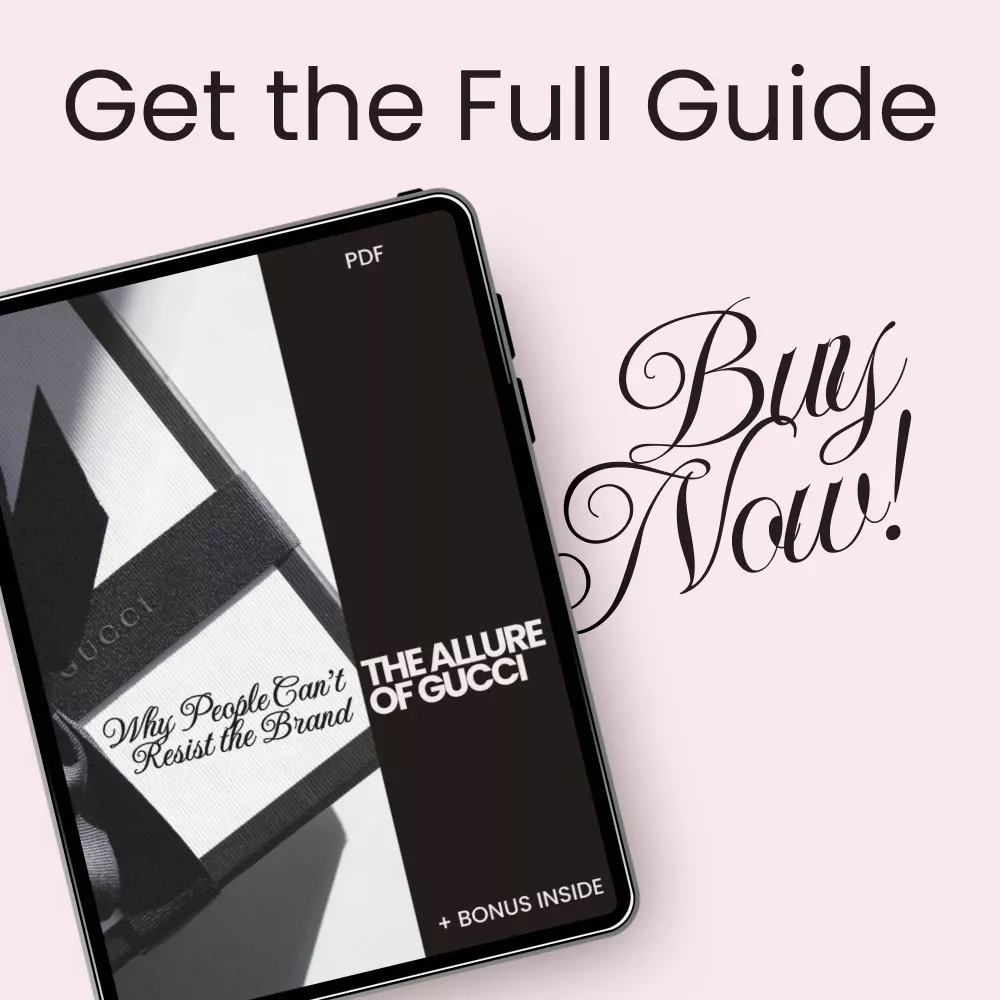
Discover What Truly Makes Gucci Irresistible
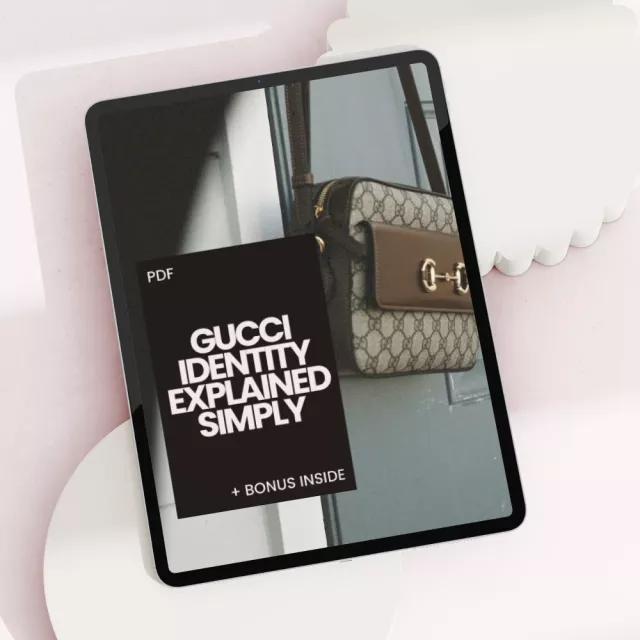
What is it about Gucci that makes hearts race and wallets open? The Allure of Gucci: Why People Can’t Resist the Brand is your insider guide to understanding the powerful mix of psychology, heritage, exclusivity, and innovation behind one of the world’s most desired luxury houses. If you’ve ever wondered why people buy gucci, this digital guide pulls back the curtain and reveals the emotional triggers, status signals, and strategic branding that fuel the obsession.
This professionally crafted digital download is designed for curious fashion lovers, aspiring luxury buyers, content creators, resellers, and anyone fascinated by high-end branding. Whether you’re considering your first purchase or simply want to understand the hype, this guide gives you clarity and confidence.
What’s Inside This Guide
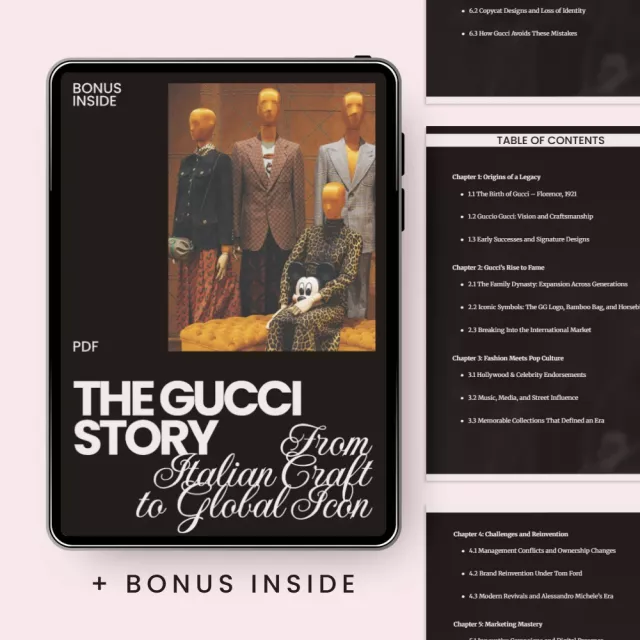
- Chapter 1: The Gucci Effect – More Than Just a Logo Explore the power of brand heritage, emotional connection, status symbolism, and the role of design and innovation.
- Chapter 2: The Psychology Behind Gucci Purchases Understand social proof, scarcity, exclusivity, limited editions, and a real case study showing how Gucci creates desire.
- Chapter 3: Navigating the Gucci Experience Learn common mistakes new buyers make, how to spot value beyond the price tag, and using AI to curate your Gucci style.
- Chapter 4: The Future of Gucci and Luxury Fashion Dive into digital fashion, virtual Gucci, AI in personal styling and shopping, and next steps for modern luxury lovers.
Why This Guide Is Different
Unlike surface-level fashion blogs, this guide goes deeper into why people buy gucci from a psychological and strategic perspective. It blends branding insight, consumer behavior, luxury market trends, and modern AI tools into one easy-to-read resource. You’ll not only understand the brand—you’ll understand your own buying motivations.
Practical Benefits You’ll Gain
- Make smarter luxury purchasing decisions
- Avoid costly beginner mistakes
- Recognize real value beyond the logo
- Understand how exclusivity drives demand
- Use AI tools to refine your personal luxury style
- Gain insight useful for fashion blogging, reselling, or content creation
Who Is This For?
This guide is perfect for luxury fashion enthusiasts, first-time designer buyers, students of branding or marketing, digital stylists, influencers, and anyone curious about the deeper reasons behind iconic fashion success.
Ready to See Gucci in a Whole New Way?
Download The Allure of Gucci: Why People Can’t Resist the Brand today and finally understand why people buy gucci—and how you can approach luxury with confidence, strategy, and style. Click “Add to Cart” now and start exploring the psychology behind one of fashion’s most powerful names.
SHIPPING
We are proud to offer international shipping services that currently operate in over 200 countries and islands world wide. Nothing means more to us than bringing our customers great value and service. We will continue to grow to meet the needs of all our customers, delivering a service beyond all expectation anywhere in the world.
Do you ship worldwide?
Yes. We provide free shipping to over 200 countries around the world. However, there are some locations we are unable to ship to. If you happen to be located in one of those countries we will contact you.
What about customs?
We are not responsible for any custom fees once the items have been shipped. By purchasing our products, you consent that one or more packages may be shipped to you and may get custom fees when they arrive to your country.
How long does shipping take?
Shipping time varies by location. These are our estimates:| Location | *Estimated Shipping Time |
|---|---|
| United States | 5-20 Business days |
| Canada, Europe | 5-20 Business days |
| Australia, New Zealand | 5-20 Business days |
| Central & South America | 5-25 Business days |
| Asia | 5-20 Business days |
| Africa | 5-25 Business days |
Do you provide tracking information?
Yes, you will receive an email once your order ships that contains your tracking information. If you haven’t received tracking info within 5 days, please contact us.
My tracking says “no information available at the moment”.
For some shipping companies, it takes 2-5 business days for the tracking information to update on the system. If your order was placed more than 5 business days ago and there is still no information on your tracking number, please contact us.
Will my items be sent in one package?
For logistical reasons, items in the same purchase will sometimes be sent in separate packages, even if you've specified combined shipping.
If you have any other questions, please contact us and we will do our best to help you out.
RETURNS
Order cancellation
All orders can be cancelled until they are shipped. If your order has been paid and you need to make a change or cancel an order, you must contact us within 12 hours. Once the packaging and shipping process has started, it can no longer be cancelled.
Refunds
Your satisfaction is our #1 priority. Therefore, you can request a refund or reshipment for ordered products if:
- If you did not receive the product within the guaranteed time (45 days not including 1-3 day processing) you can request a refund or a reshipment.
- If you received the wrong item you can request a refund or a reshipment.
- If you do not want the product you’ve received you may request a refund but you must return the item at your expense and the item must be unused.
We do not issue the refund if:
- Your order did not arrive due to factors within your control (i.e. providing the wrong shipping address)
- Your order did not arrive due to exceptional circumstances outside the control of cyclonica.com (i.e. not cleared by customs, delayed by a natural disaster).
- Other exceptional circumstances outside the control of cyclonica.com.
*You can submit refund requests within 15 days after the guaranteed period for delivery (45 days) has expired. You can do it by sending a message on Contact Us page
If you are approved for a refund, then your refund will be processed, and a credit will automatically be applied to your credit card or original method of payment, within 14 days.
Exchanges
If for any reason you would like to exchange your product, perhaps for a different size in clothing, you must contact us first and we will guide you through the steps.
Please do not send your purchase back to us unless we authorise you to do so.
Order cancellation
All orders can be cancelled until they are shipped. If your order has been paid and you need to make a change or cancel an order, you must contact us within 12 hours. Once the packaging and shipping process has started, it can no longer be cancelled.
Refunds
Your satisfaction is our #1 priority. Therefore, you can request a refund or reshipment for ordered products if:
- If you did not receive the product within the guaranteed time( 45 days not including 2-5 day processing) you can request a refund or a reshipment.
- If you received the wrong item you can request a refund or a reshipment.
- If you do not want the product you’ve received you may request a refund but you must return the item at your expense and the item must be unused.
We do not issue the refund if:
- Your order did not arrive due to factors within your control (i.e. providing the wrong shipping address)
- Your order did not arrive due to exceptional circumstances outside the control of cyclonica.com (i.e. not cleared by customs, delayed by a natural disaster).
- Other exceptional circumstances outside the control of
*You can submit refund requests within 15 days after the guaranteed period for delivery (45 days) has expired. You can do it by sending a message on Contact Us page
If you are approved for a refund, then your refund will be processed, and a credit will automatically be applied to your credit card or original method of payment, within 14 days.
Exchanges
If for any reason you would like to exchange your product, perhaps for a different size in clothing. You must contact us first and we will guide you through the steps.
Please do not send your purchase back to us unless we authorise you to do so.
Customer Reviews
Write a Review
We Think You’ll Love
Top picks just for you














The section on social proof and influence completely changed how I think about my own buying habits.
Loved the breakdown of FOMO and limited editions — finally someone explains why I panic-buy seasonal drops.
Chapter 2 on the psychology of Gucci purchases was eye-opening. I never realized how much scarcity marketing shaped my decisions until I read the bit about capsule collection rollouts. The Gucci x Disney case study was a perfect example of how storytelling and exclusivity work together. Now I pause before every luxury buy.
Short, sharp, and packed with real insight into brand heritage.
The emotional connection section nailed it — Gucci really is a confidence boost 🔥
I was skeptical about a guide on Gucci psychology, but the chapter on common buyer mistakes saved me real money. I almost overpaid for a supposedly rare piece on resale until I followed the advice about checking auction trends first. Turns out it wasn't as limited as the seller claimed. The value checklist exercise in Chapter 3 is something I now use for every purchase over $500.
The horsebit hardware and green-red-green stripe history was a detail I'd never considered.
👜🔥⭐✨💯
Read it in one sitting before my first Gucci purchase.
Really appreciated the section on spotting value beyond the price tag. The emphasis on craftsmanship — stitching, materials, hardware — gave me a framework I didn't have before. I used to just look at the logo and the price, and now I actually inspect what I'm buying.
Practical and honest about the psychology of luxury spending.
The digital fashion chapter about Gucci on Roblox and The Sandbox blew my mind. I had no idea virtual luxury was already this developed. It's fascinating that consumers can express status without physical items — that section alone made the read worthwhile.
Made me rethink every impulse buy I've ever made.
The case study on how the GG Marmont bag blew up through Instagram influencers was so well explained. I saw that exact pattern happen in real time with my own feed. The guide connects social proof theory to actual shopping behavior in a way that clicks.
That value checklist exercise? I printed it and taped it inside my closet door.
I've been collecting Gucci for six years and still learned things from this guide. The section about Alessandro Michele's role in balancing heritage with bold innovation put into words what I'd only felt intuitively. The FOMO breakdown was surprisingly personal — I recognized my own behavior in the limited edition urgency description. I also tried the AI wardrobe scanning idea from Chapter 3 and ended up pairing pieces I already owned in ways I hadn't thought of, which meant fewer new purchases and better outfits. This shifted my whole approach from accumulating to curating.
Finally understand why I'm drawn to the brand beyond the logo.
The authenticity verification tip using AI image recognition was new to me and incredibly useful 👌
Concise and well-structured throughout.
Chapter 1 on heritage made me appreciate the Florence origins and craftsmanship legacy far more than any store display ever did. It reframes Gucci as a story you're buying into, not just a product. The section on emotional connection and status symbols was refreshingly honest without being judgmental.
Solid guide overall with smart tips on resale research. The psychology chapter was the strongest part, but the AI styling section felt a bit general — I wanted specific app names or platforms rather than broad descriptions of what AI can do. Still walked away with useful buying habits.
Bought my Dionysus bag with way more confidence after reading the craftsmanship checklist.
The FOMO section hit different when you realize you've fallen for it dozens of times.
Clean writing, no fluff, real examples.
I handed this to my husband before his first luxury purchase and he went from overwhelmed to decisive. The three common mistakes section in Chapter 3 was exactly what a new buyer needs — especially the warning about overpaying on resale without doing homework. He ended up saving about $300 by checking auction trends first.
Never thought about Gucci's Roblox partnerships until this guide.
❤️👜✨🔥
The social proof chapter perfectly explains that pull you feel scrolling Instagram.
Wish I had this before my first three Gucci purchases — would've avoided two regrets.
Reading about how capsule collections use weeks of social media teasing before limited drops was a lightbulb moment. I always thought the urgency I felt was organic, not manufactured. The guide lays out the playbook without being cynical about it, which I respect.
The heritage section gives Gucci purchases so much more meaning.
Genuinely useful framework for evaluating any luxury buy, not just Gucci.
Good content on psychology and buyer mistakes. The virtual try-on and AR section in Chapter 4 felt more like a future promise than actionable advice for today, which was slightly disappointing. Everything else was grounded and practical.
The comparison between buying for a logo versus buying for craftsmanship stuck with me for weeks.
Short read, dense value.
I used to think spending on Gucci was purely emotional, but the section on resale potential as investment reframed my perspective completely. The Dionysus bag and Ace sneakers examples were specific enough to act on. I've already started tracking resale values before buying, and my last two purchases have held their value.
Chapter 3 alone is worth the download.
The way it connects cultural relevance to actual purchase psychology is sharp 📖
Straight to the point with zero filler.
The AI wardrobe scanning case example in Chapter 3 — where someone paired a Marmont bag with a belt and loafers — inspired me to try something similar. I realized I already had pieces that worked together and didn't need to buy anything new for months. That one anecdote probably saved me a thousand dollars. The guide has a calm, non-preachy tone that makes the advice easy to absorb.
Made luxury shopping feel strategic instead of impulsive.
The scarcity and exclusivity breakdown was the standout section for me. I finally see the mechanics behind why limited editions feel so urgent. Pairing that with the practical tip about tracking stock online was a smart touch.
My girlfriend and I both read it and now we shop completely differently.
I appreciated the honesty about common mistakes — especially the counterfeit warning.
The emotional connection chapter articulates something I've felt but couldn't explain. Gucci as a reward for personal achievements — that framing resonated. The guide treats luxury buyers as thoughtful people rather than status-obsessed spenders, and that respect comes through on every page.
Helpful, fast read with actual takeaways you can use immediately.
The trend forecasting section could use more depth — it touches on AI predicting coveted items but doesn't go deep enough into how a regular consumer would access those tools. The psychology chapters more than make up for it though, and the buyer mistake warnings are spot-on.
Completely reframed how I see the GG logo.
I went in expecting surface-level brand worship and got a thoughtful guide on consumer psychology, craftsmanship evaluation, and resale strategy instead. The section on how Gucci creates desire through storytelling plus exclusivity plus celebrity endorsement laid out the formula clearly. I've been sharing the value checklist with friends who are new to luxury.
The virtual fashion chapter opened my eyes to where luxury is heading.
Smart take on why scarcity works so well on even experienced buyers.
🔥👌⭐💎👜🖤
Before this guide I had three Gucci pieces I regretted and two I loved. After reading the craftsmanship and timelessness framework, I resold the regrets at a small loss and reinvested in a Dionysus bag that I wear constantly. The section comparing trendiness versus timelessness gave me a vocabulary for my own taste. The AI styling tip at the end — scanning your closet to find pairings — sounds simple but genuinely shifted how I get dressed each morning. I recommend sitting with Chapter 2 slowly because the psychology insights compound the more you reflect on your own habits. Six months later and I haven't made a single impulse buy.
Now I always check serial numbers and trusted retailers — the authenticity section was a wake-up call.
Quick and useful, especially on resale research tips.
The section on Gucci as a cultural moment — not just a product — really landed for me. It explains the lineup energy around capsule drops in a way that feels obvious once you read it but I'd never articulated before.
Turned me from a casual buyer into a strategic collector.
The personalized shopping alerts idea in the AI chapter is something I immediately set up. Already snagged a piece at the right resale price 🎯
The three buyer mistakes are things I wish someone told me years ago.
Readable, honest, and surprisingly deep for a short guide.
Good overview of Gucci's brand positioning and consumer psychology. The section on digital fashion and gaming partnerships felt slightly disconnected from the practical buying advice in earlier chapters. I think connecting virtual Gucci back to real-world purchasing decisions would strengthen the closing argument.
The heritage chapter alone made me appreciate my existing Gucci pieces more.
Finally someone explains the psychology without talking down to the buyer. The social proof section is brilliant — it names the exact mechanism that makes you feel like everyone around you owns a Marmont. And the practical exercise of building a value checklist before purchasing is the kind of concrete tool most fashion guides skip.
Read this on the train and finished before my stop.
The craftsmanship checklist changed my shopping entirely.
I love that it treats Gucci buying as both emotional and rational — no shame, just awareness. The FOMO section was the most relatable thing I've read about luxury shopping. Practical and warm throughout.
Exactly the right amount of depth for busy people.
My sister sent me this after I panic-bought a limited release I didn't even like that much. The section on recognizing manufactured urgency was a mirror I needed. I returned the piece within the window and used the value checklist to find something I actually wear every week now. The guide's tone never made me feel stupid for the mistake — just informed going forward.
Clear writing, no repetition, solid examples.
The status symbol framing in Chapter 1 resonated deeply with me.
Covers heritage, psychology, and tech all in one tight package — impressed.
I've gifted this to four friends already and each one thanked me.
The section explaining what you're actually paying for when you buy a Gucci sneaker — design, materials, exclusivity — was clarifying. Before reading it I just assumed the markup was purely brand tax. Now I evaluate each component separately, and some pieces are worth it while others clearly aren't.
Helped me stop overspending on hype and start investing in timelessness.
Chapter 4 on digital fashion needs more real-world examples to match the strength of earlier chapters. The Roblox and Sandbox mentions were interesting but brief. That said, Chapters 2 and 3 deliver real practical value and I've already changed my buying process because of them.
The capsule collection rollout breakdown was fascinating 👀
Every section earns its place — nothing felt padded or unnecessary.
I started reading to understand Gucci better and ended up understanding my own shopping psychology. The social proof chapter showed me how much my buying was influenced by what I saw on Instagram rather than what I actually wanted. The common mistakes list — especially about overpaying on resale — saved me from a bad purchase the very next week. The guide walks a fine line between appreciating luxury and being smart about it, and it does it well.
Made me pause before my next drop-day purchase. That alone was worth it.
The Gucci heritage story from Florence leather workshop to global icon was beautifully told.
The guide acknowledges the emotional pull of luxury without dismissing it, which I appreciated. Some content on the psychology side overlaps slightly between Chapters 1 and 2, but the practical tools in Chapter 3 more than compensate.
Timelessness over trendiness — that principle alone was worth the read.
The AI trend prediction section planted a seed — I now check resale data before every big purchase.
I work in marketing and the breakdown of how Gucci manufactures desire through storytelling, teased drops, and limited availability was as good as any case study I've read in a business context. Chapters 2 and 3 in particular lay out the exact playbook luxury brands use, and they do it accessibly. The fashion enthusiast case example — using AI to pair existing pieces — added a surprisingly personal touch that grounded all the theory.
Perfect length — says everything it needs to and stops.
This answered questions about Gucci I didn't know I had.
The value checklist exercise is now taped to my mirror.
The way it frames luxury buying as an intentional act rather than an indulgent one shifted my perspective. I went from feeling guilty about spending on Gucci to feeling informed and deliberate. Chapter 3's advice on checking receipts, serial numbers, and trusted retailers seems basic but I'd never actually done it systematically until now.
Clean, smart, and zero condescension toward the reader.
Finally a guide that respects both the emotion and the economics of luxury 💎
My approach to limited editions will never be the same after Chapter 2.
Shared it with my whole group chat and now we all use the value checklist.
The closing thought about Gucci being a lifestyle and digital experience, not just products, tied everything together perfectly. I also loved that the guide doesn't try to sell you on buying more — it actually encourages buying less and buying smarter.
I've read a lot about luxury brands and this is the most grounded take I've come across.
The social proof explanation alone makes this worth your time.
Great read for both new buyers and longtime Gucci collectors. The AI tools section in Chapter 4 could benefit from naming specific platforms — right now it stays conceptual. But the psychology and buyer-mistake chapters are excellent and immediately actionable.
Went from browsing Gucci mindlessly to shopping with intention.
The section where it explains that a Gucci product is a moment of cultural relevance, not just an accessory — that line rewired something in my brain. I now think about whether a piece connects to a broader story before I swipe my card. The whole guide reads like a conversation with a friend who knows fashion deeply but doesn't gatekeep. Chapter 2's FOMO analysis was the peak for me, and the authenticity tips in Chapter 3 have already prevented one sketchy resale purchase. I keep coming back to the value checklist framework whenever something catches my eye online. This is the kind of guide that pays for itself within one purchase.