





Product Description
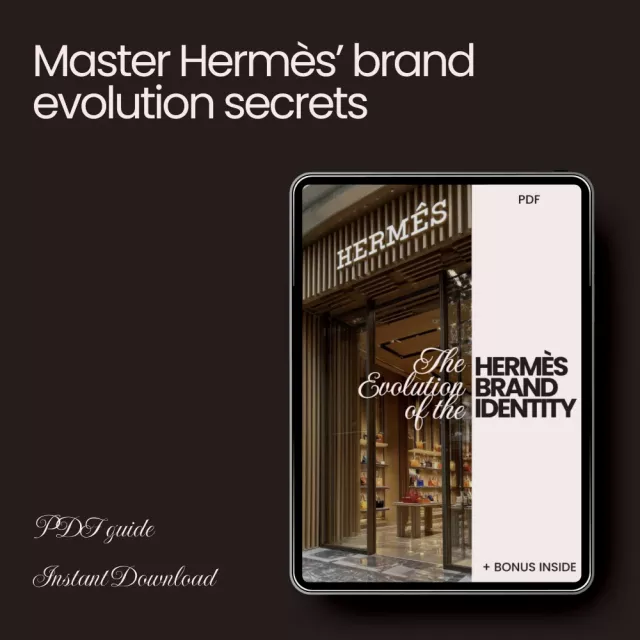
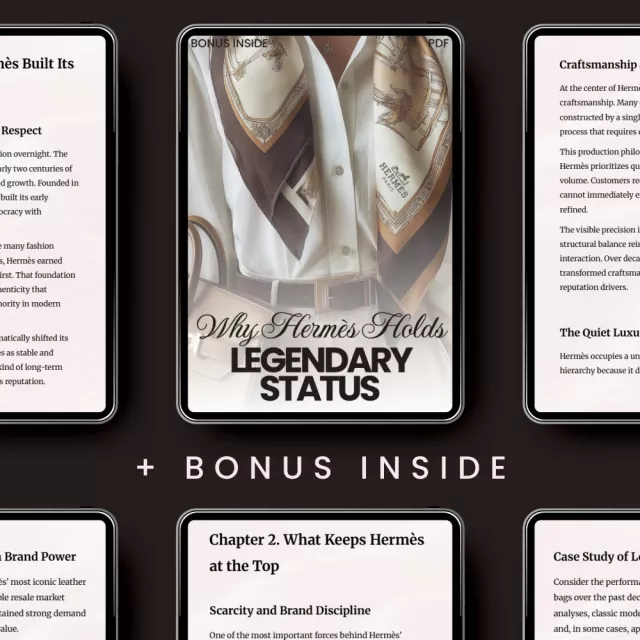
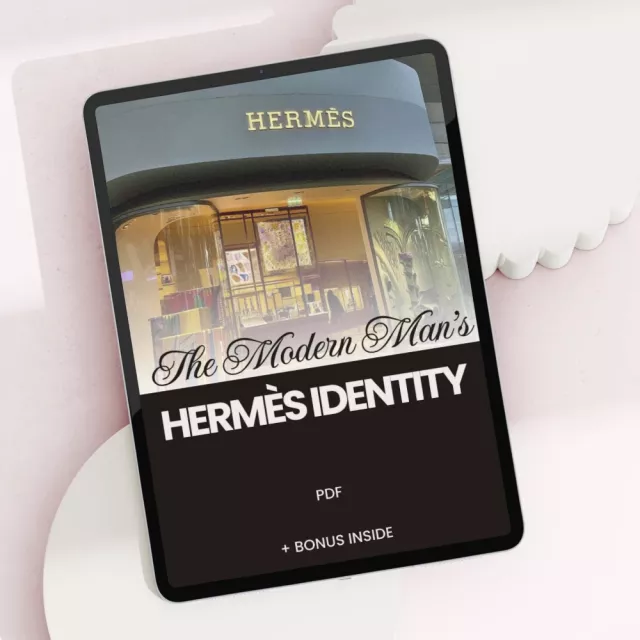
Discover the fascinating story behind one of the world’s most iconic luxury brands with “The Evolution of the Hermès Brand Identity.” This expertly crafted eBook delves deep into the history, development, and lasting impact of Hermès’ brand identity. From its equestrian roots to its modern-day status as a symbol of quiet luxury, this guide provides an in-depth look at how Hermès has maintained its exclusivity and prestige. Perfect for business owners, marketers, and anyone interested in luxury branding, this eBook reveals timeless strategies that can be applied to build lasting brand value.
Key Features of This eBook:
- Comprehensive Insights into the evolution of Hermès, from its equestrian beginnings to modern-day luxury icon.
- Case Studies, such as the rise of the iconic orange box, offering real-world examples of successful brand strategies.
- Practical Business Lessons that teach how to apply Hermès’ principles to your own brand for long-term success.
- In-depth Analysis of Hermès’ visual and cultural language, product strategies, and communication style in the digital age.
- Actionable Strategies to help elevate your own brand identity, drawn directly from Hermès’ journey.
Practical Benefits
- Learn how Hermès built its luxury status and how you can adopt similar techniques for your own business.
- Understand the importance of maintaining exclusivity while expanding your product offering.
- Discover how Hermès balances innovation with heritage, ensuring its brand remains relevant while protecting its prestige.
- Get actionable steps to upgrade your brand identity with a clear, structured plan based on Hermès’ approach to luxury branding.
Who Is This For?
This eBook is ideal for entrepreneurs, marketers, brand managers, and anyone interested in learning how luxury brands like Hermès maintain their allure. If you’re looking to build a brand that stands the test of time, or simply want to understand the principles behind one of the most successful luxury brands in the world, this guide is for you.
What Makes This eBook Different?
Unlike other branding resources, “The Evolution of the Hermès Brand Identity” offers exclusive insights into the luxury market and branding strategies that have helped Hermès retain its coveted status. By examining Hermès’ approach to brand positioning, visual language, product strategy, and communication, this eBook gives you a clear roadmap for developing a brand that resonates deeply with your audience, and stands out from the competition.
Start Building Your Luxury Brand Today
Don’t miss the opportunity to learn from one of the most respected names in the luxury industry. Download “The Evolution of the Hermès Brand Identity” now and start applying these time-tested principles to your own brand. Whether you’re just starting out or looking to refine your existing brand, this guide is the perfect resource to help you create a brand identity that will last for years to come.
SHIPPING
We are proud to offer international shipping services that currently operate in over 200 countries and islands world wide. Nothing means more to us than bringing our customers great value and service. We will continue to grow to meet the needs of all our customers, delivering a service beyond all expectation anywhere in the world.
Do you ship worldwide?
Yes. We provide free shipping to over 200 countries around the world. However, there are some locations we are unable to ship to. If you happen to be located in one of those countries we will contact you.
What about customs?
We are not responsible for any custom fees once the items have been shipped. By purchasing our products, you consent that one or more packages may be shipped to you and may get custom fees when they arrive to your country.
How long does shipping take?
Shipping time varies by location. These are our estimates:| Location | *Estimated Shipping Time |
|---|---|
| United States | 5-20 Business days |
| Canada, Europe | 5-20 Business days |
| Australia, New Zealand | 5-20 Business days |
| Central & South America | 5-25 Business days |
| Asia | 5-20 Business days |
| Africa | 5-25 Business days |
Do you provide tracking information?
Yes, you will receive an email once your order ships that contains your tracking information. If you haven’t received tracking info within 5 days, please contact us.
My tracking says “no information available at the moment”.
For some shipping companies, it takes 2-5 business days for the tracking information to update on the system. If your order was placed more than 5 business days ago and there is still no information on your tracking number, please contact us.
Will my items be sent in one package?
For logistical reasons, items in the same purchase will sometimes be sent in separate packages, even if you've specified combined shipping.
If you have any other questions, please contact us and we will do our best to help you out.
RETURNS
Order cancellation
All orders can be cancelled until they are shipped. If your order has been paid and you need to make a change or cancel an order, you must contact us within 12 hours. Once the packaging and shipping process has started, it can no longer be cancelled.
Refunds
Your satisfaction is our #1 priority. Therefore, you can request a refund or reshipment for ordered products if:
- If you did not receive the product within the guaranteed time (45 days not including 1-3 day processing) you can request a refund or a reshipment.
- If you received the wrong item you can request a refund or a reshipment.
- If you do not want the product you’ve received you may request a refund but you must return the item at your expense and the item must be unused.
We do not issue the refund if:
- Your order did not arrive due to factors within your control (i.e. providing the wrong shipping address)
- Your order did not arrive due to exceptional circumstances outside the control of cyclonica.com (i.e. not cleared by customs, delayed by a natural disaster).
- Other exceptional circumstances outside the control of cyclonica.com.
*You can submit refund requests within 15 days after the guaranteed period for delivery (45 days) has expired. You can do it by sending a message on Contact Us page
If you are approved for a refund, then your refund will be processed, and a credit will automatically be applied to your credit card or original method of payment, within 14 days.
Exchanges
If for any reason you would like to exchange your product, perhaps for a different size in clothing, you must contact us first and we will guide you through the steps.
Please do not send your purchase back to us unless we authorise you to do so.
Order cancellation
All orders can be cancelled until they are shipped. If your order has been paid and you need to make a change or cancel an order, you must contact us within 12 hours. Once the packaging and shipping process has started, it can no longer be cancelled.
Refunds
Your satisfaction is our #1 priority. Therefore, you can request a refund or reshipment for ordered products if:
- If you did not receive the product within the guaranteed time( 45 days not including 2-5 day processing) you can request a refund or a reshipment.
- If you received the wrong item you can request a refund or a reshipment.
- If you do not want the product you’ve received you may request a refund but you must return the item at your expense and the item must be unused.
We do not issue the refund if:
- Your order did not arrive due to factors within your control (i.e. providing the wrong shipping address)
- Your order did not arrive due to exceptional circumstances outside the control of cyclonica.com (i.e. not cleared by customs, delayed by a natural disaster).
- Other exceptional circumstances outside the control of
*You can submit refund requests within 15 days after the guaranteed period for delivery (45 days) has expired. You can do it by sending a message on Contact Us page
If you are approved for a refund, then your refund will be processed, and a credit will automatically be applied to your credit card or original method of payment, within 14 days.
Exchanges
If for any reason you would like to exchange your product, perhaps for a different size in clothing. You must contact us first and we will guide you through the steps.
Please do not send your purchase back to us unless we authorise you to do so.
Customer Reviews
Write a Review
We Think You’ll Love
Top picks just for you
















I run a small leather goods brand and have read dozens of branding books. This one distilled what took me years to learn into something I could actually hand to my team. The section on expansion without dilution hit especially hard — we almost launched three new product lines last quarter and this made me pump the brakes. We narrowed to one category that reinforced our core story instead. Already seeing stronger customer responses.
The orange box case study alone is worth the read. Constraints as branding assets — what a reframe.
Sent this to every founder in my network within an hour of finishing it. The clarity on how identity grows from what you actually do well versus what you claim in ads is the kind of thinking most branding content skips entirely.
Clean writing, sharp insights, zero fluff 🔥
I appreciated the historical depth but wanted more actionable frameworks for applying these ideas to digital-first brands. The principles are sound, the bridge to execution could be stronger.
My agency was about to rebrand for the third time in two years. Reading the section on visual consistency made me realize the problem wasn't our look — it was our lack of discipline in sticking with anything. We paused the rebrand entirely. Six months later clients are finally starting to recognize us on sight.
The managed scarcity concept completely reframed how I think about inventory.
Every brand strategist should read this before their next client kickoff. The mistakes section reads like a mirror for half the luxury pitches I've seen fail.
Solid overview but a lot of this ground has been covered before if you've studied luxury branding in any depth. The AI prompts at the end felt disconnected from the rest. Good for beginners, less so for practitioners.
Read it twice. The second time was better.
The distinction between value creation before visibility is the single most useful idea I've encountered this year for my skincare brand. We were pouring money into influencer campaigns while our packaging looked like an afterthought. Flipped that priority completely after this.
Short, dense, and surprisingly practical for something that reads like brand philosophy.
🧡📦✨👏🔥
I liked the structure and pacing. My one critique is the chapter on applying the framework to small brands needed real examples — it stayed too abstract. But the first four chapters are genuinely excellent.
This taught me more about restraint than any business book I've finished this year.
The craftsmanship-as-brand-code concept clicked immediately. I own a furniture workshop and have been undervaluing the story of how things get made. Started documenting our process on social and the engagement shift was instant. People want the narrative behind the product — this guide made that obvious in a way I hadn't considered before.
Beautifully structured and well-paced. Didn't expect a PDF to hold my attention like this.
Worth it for the expansion chapter alone.
I've been running a ceramics studio for four years and constantly felt pressure to add new product categories to grow revenue. This guide gave me the framework to resist that impulse and instead deepen what I already do well. The idea that expansion should amplify identity rather than stretch it was exactly the permission I needed to stay focused. Already trimming two lines that were diluting our brand 💡
Good content but the pacing feels uneven. Chapters one and two are rich with insight, then things thin out toward the end. The future chapter raises questions without really exploring them.
My entire marketing team read this in one week. It changed how we talk about positioning internally.
Quiet and confident — kind of like the brand it's about.
The point about brand voice matching positioning should be tattooed on every CMO's forehead. We were running discount-heavy email campaigns while calling ourselves premium. The contradiction was invisible to us until this spelled it out.
Practical without being shallow. Philosophical without being vague. Rare combination.
I teach a brand strategy course at university and this is now required pre-reading for my students. The progression from equestrian origins to modern identity gives a timeline that's easy to follow and surprisingly instructive for anyone building something from scratch.
I expected surface-level luxury worship and got a genuine strategy document instead. The section on common mistakes luxury brands make felt like it was written from direct observation, not theory.
Decent framework but assumes the reader is building a premium brand. If you're in a competitive mid-market space, some of this advice doesn't translate cleanly. Still a worthwhile read for the historical analysis.
⭐👌🔥
The line about identity being strongest when it grows from what you actually do well stopped me cold. I screenshot it and pinned it to my desk. Everything I've been doing with my brand has been aspirational performance instead of rooted credibility. This was a hard but necessary read.
I wanted more on digital execution specifically — how does this translate to social, email, and paid? The philosophy is excellent but I was hoping for a modern playbook. What's there is very good though.
Finished in one sitting and immediately started auditing my own brand.
Shared this with my cofounder and we scrapped our rebrand deck that same afternoon. We were chasing trends instead of reinforcing what already worked. Saved us months of bad decisions.
This is the branding education most MBA programs skip entirely.
Really strong first half. The sustainability chapter feels underdeveloped compared to the rest — touches on important questions but doesn't push deep enough. Still walked away with several ideas I'm implementing this quarter.
My small jewelry brand was about to launch a collab with a fast-fashion retailer for the exposure. After reading the section on protecting prestige and controlled access, I backed out. Two months later a boutique I've admired for years reached out instead. Patience works. This guide is why I trusted that 🙏
Less is more isn't new advice. But this is the first time I've seen it argued this convincingly with a real business case running through every chapter. Changed how I evaluate product launches.
Clear, focused, well-written. No padding.
I keep coming back to the idea that customers weren't just buying products — they were buying into a legacy. That framing alone reshaped my pitch deck.
The writing is competent and the structure is logical, but I didn't find enough new thinking here to justify the length. If you've read Kapferer or studied luxury strategy formally, most of this will feel familiar. Fine as an intro to the topic.
Every paragraph earns its place. No filler anywhere.
I run a DTC watch brand and was struggling to articulate why our messaging felt off. This guide helped me see that we were trying to sound luxurious instead of proving it through product and experience. Rewrote our entire About page and product descriptions using the brand voice principles here. Conversion rate went up within the first month of the change, and customer emails shifted from price questions to craftsmanship questions. The section on storytelling in brand growth was the turning point for me.
Forwarded to three colleagues before I even finished it.
Wish the AI prompts section had been woven into each chapter instead of sitting at the end. It felt like an appendix when it could have been integrated as a practical tool throughout. The rest is genuinely useful.
The controlled modernity concept — evolving just enough to stay current without losing what makes you valuable — is exactly the balance my team has been failing at. Printed that section and taped it to our conference room wall.
This read the way good strategy should: obvious in hindsight, invisible before someone shows it to you.
❤️🧡📦👍
The common mistakes section was uncomfortable to read because my company was making every single one. Overextension, inconsistent quality signals, heavy discounting. We've since cut two underperforming product lines and raised prices on our core offering. Revenue dipped for a month and then climbed past where it was. That section paid for itself many times over.
My favorite part was how the guide doesn't pretend every brand can be Hermès. It pulls out transferable principles without the delusion. That honesty made me trust the advice more.
Strong strategic thinking throughout. My only complaint is the small brand section stays high-level when it could really benefit from concrete before-and-after examples. The framework is there but the application needs more specifics.
Discipline is the word I keep thinking about after reading this. Not creativity, not vision — discipline. That's the actual differentiator and this guide makes the case clearly.
Used the brand audit framework on my own business last weekend and found four major inconsistencies I'd been blind to. Already fixing them.
Concise and smart. Doesn't overstay its welcome.
Some of the business lessons feel generic if you strip out the Hermès examples. Phrases like 'focus on long-term value' appear in every branding guide published in the last decade. The historical narrative is genuinely engaging though, and the expansion chapter stands out.
My boutique candle company was trying to be everywhere — markets, wholesale, Amazon, Etsy, our own site. After reading the section on controlled distribution and saying no to overexpansion, I pulled off two platforms and focused on direct sales only. Revenue stayed the same but margins jumped and our brand perception shifted noticeably. Customers started describing us as exclusive and intentional. Those were never words anyone used before. I can trace the entire mindset shift to this PDF.
The best brand strategy content I've read in a long time and it's a free PDF. Let that sink in.
I work in luxury hospitality and the parallels are striking. The idea of meaning built through repeated positive association applies directly to guest experience design. Already adapting several concepts for our property.
Tight writing, strong examples, no wasted paragraphs 👌
The sustainability angle could be expanded significantly. It's touched on but feels like a missed opportunity given how central it's becoming to luxury consumer expectations. Everything else in this guide is excellent.
Hermès started as a workshop solving real problems — not a fashion label performing luxury. That distinction reframed my entire approach to brand building.
I've been in brand consulting for twelve years and still underlined a dozen passages. The product strategy filter — does this strengthen or weaken core codes — is deceptively simple and immediately useful with clients.
Not bad but not groundbreaking either. Covers the basics well enough if you're new to luxury branding concepts. The writing is polished and the structure holds up. I just wished it went deeper on the strategic tensions rather than summarizing them.
Printed it. Highlighted it. Now it lives on my desk permanently.
The idea that exclusivity isn't about price but about controlled access, quality, and the confidence to say no — I've been pricing my way to premium when I should have been curating my way there. Completely shifted my distribution strategy after this.
I liked the content enough to want more of it. The future-facing chapter raised fascinating questions about heritage brands in digital environments but wrapped up quickly. Would read a full follow-up on that topic alone.
Reads fast, sticks around in your thinking for weeks.
Gave me the vocabulary to explain to my business partner why our constant pivots were killing us. We finally have a shared language for brand decisions now.
This is what separates brands that last from brands that just launch 🎯